
~21 min read
Igor Mitoraj in Pietrasanta

to open WhatsApp — then
send photos directly.
Pietrasanta is where Mitoraj became Mitoraj. The small Tuscan city — set between the Apuan Alps and the Ligurian coast, about 30 km north of Pisa — has been the world capital of marble carving and bronze casting for centuries. When Mitoraj first arrived in the 1970s, he discovered the foundries and workshops of the Versilia district and never truly left. He maintained his Atelier on Via Santa Lucia until his death in October 2014. Pietrasanta is where his studio archive remains and where, in 2023, a permanent museum in his name was established.
Pietrasanta — "Holy Stone" — has been the world capital of marble sculpture since Michelangelo quarried here in the 16th century. Mitoraj arrived in 1983 and never truly left. He worked with the bronze foundries and marble workshops of Versilia, using the same techniques and materials that had shaped European sculpture for centuries. He was made an honorary citizen of the town and is buried in the local cemetery. The Mitoraj Museum, opened in 2023, preserves works, drawings, and archival material from across his career — the most comprehensive permanent collection of his work anywhere in the world.
Atelier Mitoraj — Studio & Archive
The Atelier Mitoraj on Via Santa Lucia was Mitoraj's primary working space from the late 1970s until his death. It is here that the plaster models were made, that the editions were supervised, that the unique marbles were carved, and that the relationship with the Versilia foundries was managed over four decades of continuous production.
The atelier functioned as both a studio and a showroom — important collectors and gallery directors visited Pietrasanta to see work in progress, to commission directly, and to acquire works that had not yet entered the gallery system. Some of the most significant transactions in Mitoraj's market history took place through direct studio contact rather than through auctions or galleries.
The Atelier continues to be managed by the Mitoraj estate, which oversees the authentication of works, the management of the edition records, and the development of the posthumous catalogue. Certificates of authenticity for Mitoraj works are issued or confirmed through the estate.
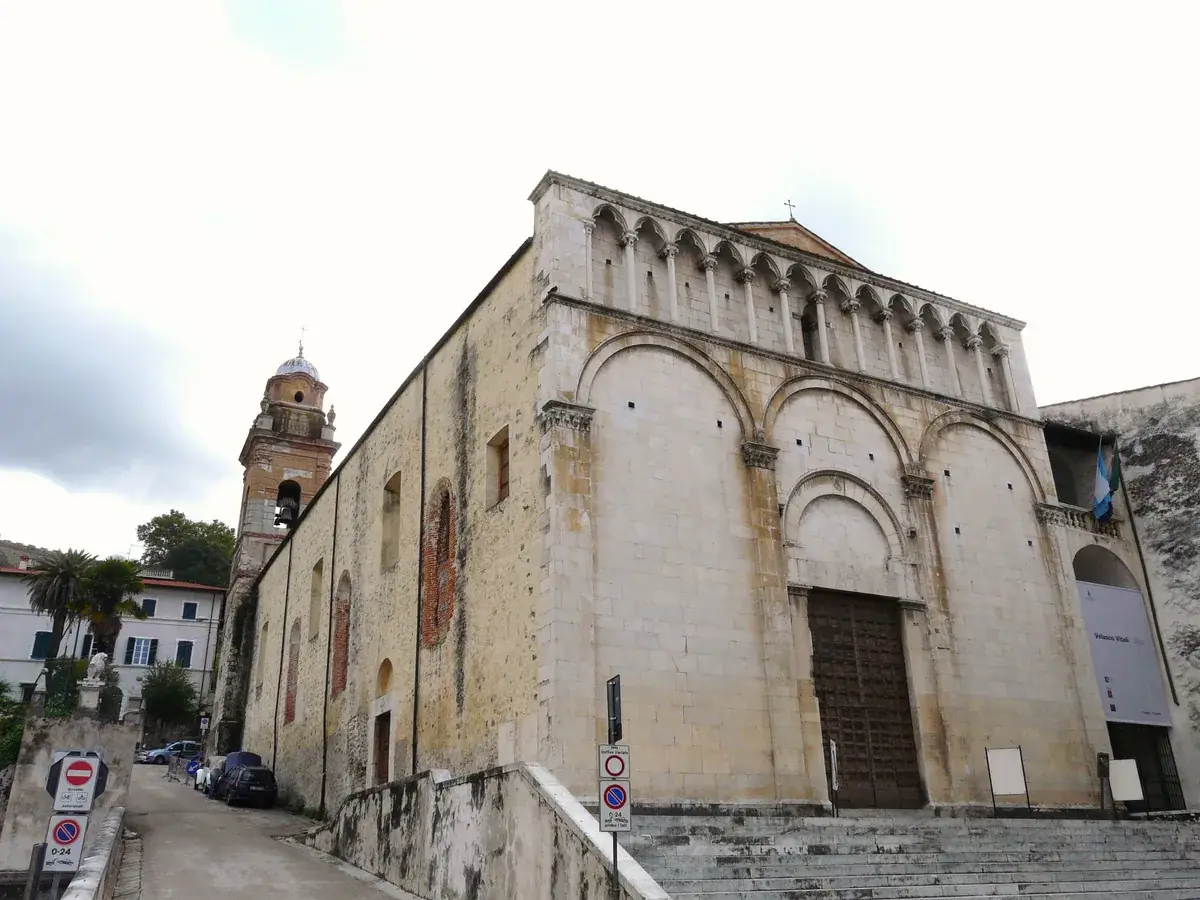
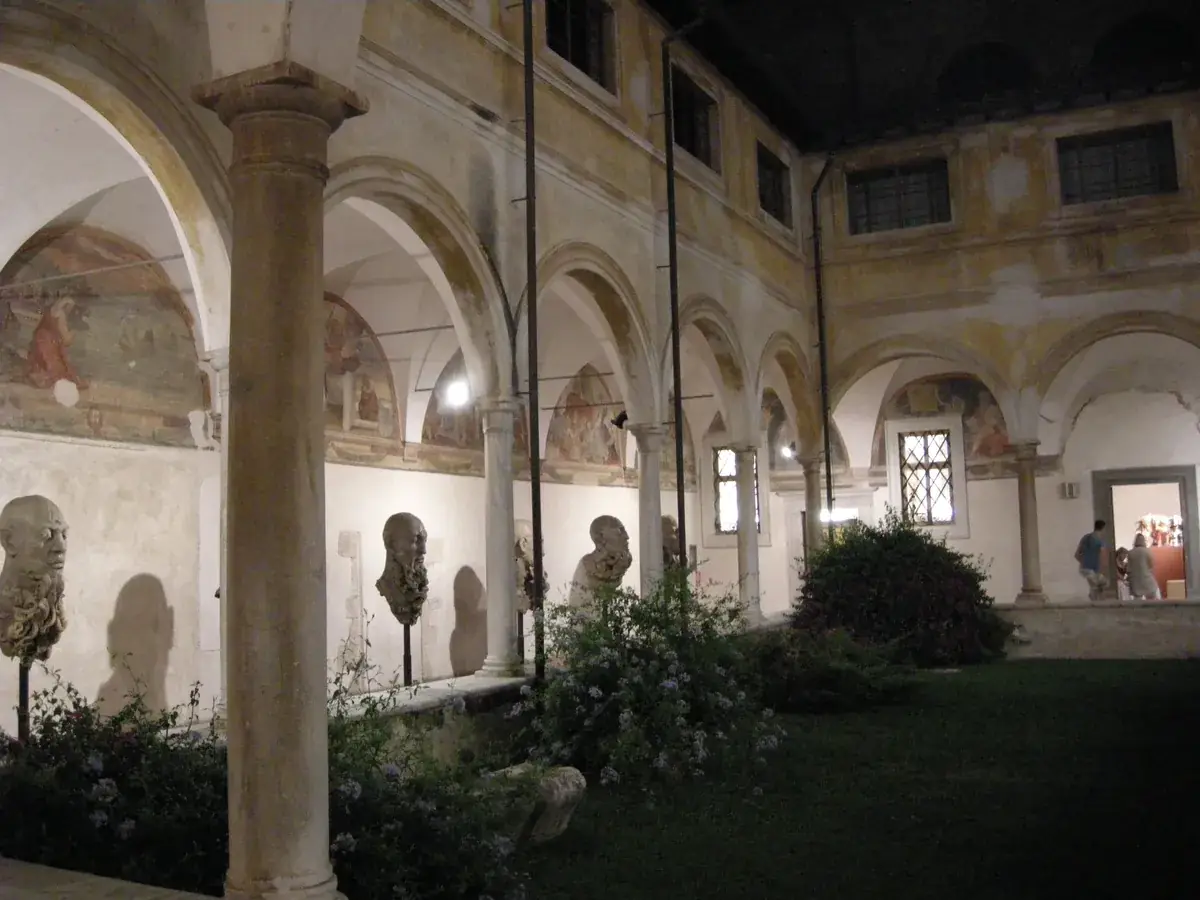
Throughout the historic centre of Pietrasanta itself — the Piazza del Duomo, the Collegiata di San Martino, and the surrounding streets — Mitoraj works are integrated into the urban fabric. The city has functioned as an outdoor gallery for his work and for the work of other sculptors who have maintained studios there.
Mitoraj Museum — Permanent Collection
In 2023 — nine years after the artist's death — a permanent Mitoraj Museum was established in Pietrasanta to house a dedicated collection of his works and to serve as the primary institutional reference point for the study of his art. The museum brings together bronzes, marbles, works on paper, and documentary material in a single permanent location.
The establishment of the museum reflects the sustained growth of Mitoraj's posthumous market and critical reputation. Since his death in 2014, auction results for his works have consistently increased, with the PLN 6.89 million sale of the Warsaw Tindaro in 2025 setting a new record. The museum provides an institutional framework for this continued interest.
For collectors, the museum is the definitive reference point for questions about attribution, condition, and edition history. Its location in Pietrasanta — the city where the works were made — gives it a particular authority that a museum in a major metropolitan centre would not have.
The Versilia Foundries & Mitoraj's Bronze Production
The quality of Mitoraj's bronzes is inseparable from the Versilia foundry tradition. The foundries of Pietrasanta and the surrounding towns — Querceta, Seravezza — had been casting bronze for sculptors since the Renaissance, and by the twentieth century had developed technical capabilities that attracted artists from around the world: Henry Moore, Fernando Botero, Joan Miró, and many others worked with Versilia foundries at various points in their careers.
Mitoraj's editions were cast in the Versilia foundries under his direct supervision. The quality of the patinas, the precision of the surface textures, and the accuracy of the numbering and signing were all controlled at the Pietrasanta end. When assessing a Mitoraj bronze, the condition of the patina — which reflects the quality of the original casting and the care of subsequent ownership — is the primary indicator of quality alongside the edition number and the presence of the original documentation.
For reference: the foundries documented on authentic Mitoraj bronzes include the Fonderia Mariani, Fonderia Massimo Del Chiaro, Fonderia Tesconi (which cast several Artcurial series editions), and Fonderia Petroni — all in the Pietrasanta–Versilia area. The presence of any of these foundry names on a piece is consistent with authentic Mitoraj production; the absence of a foundry mark is not automatically disqualifying but warrants additional scrutiny alongside the signature and edition number.
Visiting Pietrasanta
Pietrasanta is accessible by train on the Genoa–Pisa line, with a station (Pietrasanta–Tonfano) about 2 km from the historic centre. The nearest airports are Pisa (approximately 35 km) and Florence (approximately 100 km). The historic centre is compact and walkable — the Piazza del Duomo, the Collegiata, and the main streets can be covered on foot in a morning, with the atelier location on Via Santa Lucia nearby.
The best time to visit is spring or autumn, when the studios and galleries are most active and the summer tourist peak has not yet arrived. Many of the Versilia foundries offer visits by appointment.


The relationship between Mitoraj and the Versilia foundries produced some of the most technically demanding bronze editions of the late twentieth century. His long collaboration with the Fonderia Mariani in Pietrasanta — one of the few foundries in Europe capable of casting fragments at monumental scale — allowed him to develop the broken-figure vocabulary that defines his mature work. Pieces such as Ikaro and Perseo required multiple sequential casts, each section finished and patinated separately before assembly, a process that could take eighteen months from plaster model to completed edition. Because Mitoraj maintained strict control over edition sizes — typically between four and eight casts for large bronzes, occasionally as few as two for unique variants — the supply of primary market works was always constrained relative to institutional and private demand. Collectors who established direct relationships with the Atelier during the 1990s and early 2000s were often able to acquire works at prices substantially below what the same pieces commanded at auction a decade later. The Italian secondary market has been particularly active since 2015, with Sotheby's Milan and Cambi Casa d'Aste in Genoa handling the largest volume of resales. Works with documented Pietrasanta provenance — meaning direct acquisition from the studio or the estate — continue to carry a measurable premium over those with purely gallery histories.
The relationship between Mitoraj and Pietrasanta's artisan community produced a working method that remained consistent across four decades. He collaborated closely with the Fonderia Mariani, one of the Versilia district's most respected bronze foundries, whose craftsmen became fluent in the particular demands of his aesthetic — the deliberate fractures, the hollow recesses, the patinas that aged toward antique bronze rather than new casting. Marble editions were overseen at the Studio Nicoli workshop, where stonecutters interpreted his plaster models in Carrara bianco and occasionally in the darker, more striated marbles he favored for larger fragments. This division of labor — Mitoraj conceiving and modeling in plaster at the atelier, the foundry and the marble yards executing in their respective materials — meant that Pietrasanta could produce multiple concurrent editions without the sculptor being physically present at every stage. Collectors who visited the atelier in the 1990s and early 2000s frequently noted the simultaneous presence of crated bronzes awaiting shipment, marble works at various stages of completion, and plaster originals stacked against the walls of the courtyard. Works such as Eros Alato, Tindaro Screpolato, and Centurione passed through this production chain before entering collections across Europe, the Middle East, and the United States. The concentration of technical expertise in Pietrasanta — nowhere else could a sculptor of Mitoraj's ambition have found marble carvers, bronze casters, and patina specialists within a few kilometers of one another — made the city not merely a residence but an irreplaceable infrastructure for his entire body of work.
The relationship between Mitoraj and the Versilia workshops produced a working method that was unusually hands-on for an artist operating at his scale. Unlike sculptors who sent technical drawings to fabricators and received finished bronzes in return, Mitoraj was present at critical stages of production — supervising the chasing and patination of bronzes at foundries including Fonderia Mariani in Pietrasanta, and working directly with marble carvers to determine the precise degree to which a fragmentary surface should appear eroded or incomplete. This active involvement shaped the character of works such as Tindaro Screpolato, the monumental cracked bronze head that has become one of his most widely exhibited sculptures, and Eros Bendato, whose distinctive surface treatment reflects decisions made in situ rather than resolved on paper. For collectors, this proximity to production carries practical significance: works acquired directly from the atelier during Mitoraj's lifetime — particularly those where provenance documentation includes correspondence with the studio or records of the artist's personal approval — tend to attract stronger interest at auction and in private treaty sales than those which passed through the secondary market without such traceability. The Pietrasanta location also matters to the authentication question: the estate archive, now maintained alongside the museum, holds plaster models, edition records, and photographic documentation for the majority of bronze editions produced after 1983, making it the primary reference point for any serious due diligence. Collectors and institutions seeking to establish provenance for works from this period are advised to approach the estate directly, as the archive remains accessible for research purposes by appointment. Works that can be traced continuously from the Via Santa Lucia atelier through to their current location represent the most securely documented portion of Mitoraj's output — a consideration increasingly reflected in how the market prices comparable examples.
The relationship between Mitoraj and Pietrasanta's artisan workshops was unusually collaborative for an artist of his international standing. Rather than directing fabrication remotely, Mitoraj worked directly alongside the master craftsmen of the Versilia — particularly the bronze founders at Fonderia Mariani and the marble cutters who had trained across generations in the ateliers clustered between Pietrasanta and Querceta. This proximity to skilled labour shaped not only his process but the ambition of individual works. Eros Alato, the large winged bronze completed in the early 1990s, required months of patination work carried out in close consultation with the foundry, and the finished surface — its deliberate oxidation and layered waxing — became a signature of Mitoraj editions produced during this period. Collectors who acquired works directly through the Pietrasanta atelier during the 1990s and early 2000s received pieces with a documentary provenance trail linking specific production batches to named workshops, a detail that has become increasingly significant in the secondary market as authentication standards have tightened. Works with clear Versilia foundry records and original edition documentation from the atelier archive now command measurable premiums at auction over comparable Mitoraj bronzes lacking that chain of custody. The sculpture garden adjacent to the atelier, informal and never publicly advertised, served as a staging ground for monumental works awaiting installation or collection — Perseo, Ikaro, and several large Testa variants were photographed there in various states of completion, and these images, circulated among the collector community through gallery correspondence rather than formal publication, constitute some of the most instructive visual records of how Mitoraj thought about scale, placement, and the relationship between a finished bronze and the open air for which most of his major works were ultimately destined.
The relationship between Mitoraj and the Versilia casting community was not merely logistical — it shaped the formal vocabulary of his mature work in ways that are often underappreciated by collectors entering the market. The foundry Fonderia Mariani, based in Pietrasanta, collaborated with Mitoraj on some of his most ambitious bronze editions from the late 1980s onward, and it is the quality of their lost-wax casting — particularly the controlled surface oxidation and patination — that distinguishes authorized Pietrasanta-produced bronzes from later, unauthorized reproductions that have periodically appeared at regional European auctions. Collectors acquiring works from this period should request the foundry stamp and edition certificate, both of which were applied consistently from approximately 1988. The marble works produced in the Versilia studios during the 1990s represent a separate and arguably more rarefied strand of Mitoraj's output: pieces such as Eros Alato and Testa di Medusa exist in unique or near-unique carved versions that have never entered standard edition catalogues and whose provenance runs directly through the Atelier on Via Santa Lucia. These marbles — worked by local craftsmen under Mitoraj's direct supervision and frequently reworked by the sculptor himself — command significantly higher prices at auction than their bronze counterparts, partly because their uniqueness is verifiable and partly because the Apuan marble itself carries an art-historical resonance that sophisticated buyers respond to. The geographical density of Pietrasanta also meant that Mitoraj's market developed an unusual regional character: Italian, Swiss, and German collectors were acquiring work directly from the studio as early as the mid-1980s, building holdings that have rarely come to market and that represent some of the strongest private concent rations of his work anywhere in Europe — collections whose occasional dispersal at auction tends to attract particular attention from specialist dealers and Mitoraj scholars alike.
The relationship between Mitoraj and Pietrasanta's artisan workshops produced a body of work that serious collectors have come to understand in terms of distinct material periods. His earliest Versilia bronzes, cast at the Fonderia Mariani during the 1980s, tend toward darker, more heavily patinated surfaces — a quality that distinguishes them from the warmer, more luminous finishes achieved in his later collaborations with Fonderia Massimo Del Chiaro, where he worked extensively through the 1990s and into the 2000s. Marble editions and unique works carved in the Apuan stone — particularly the white statuary marble sourced from the Fantiscritti basin above Carrara — represent a separate category entirely, and command consistent premiums at auction over comparable bronze editions. Works such as Tindaro Screpolato, which exists in both large-scale bronze and in marble variants, illustrate how the same composition shifts in character depending on material: the marble versions, produced under Mitoraj's direct supervision at the workshops on Via Valdicastello, carry a tactile intimacy that photographs rarely convey. Collectors who visited Pietrasanta during the atelier years often acquired works before they were formally editioned or catalogued, and this pre-market provenance — documented through studio correspondence and purchase receipts issued directly on Via Santa Lucia letterhead — has become a meaningful point of authentication for the estate and for auction specialists assessing works that lack early exhibition history. The Museo dei Bozzetti, located in the former convent of Sant'Agostino a short walk from the cathedral square, holds a small but important group of Mitoraj plaster sketches donated during his lifetime — entry-level encounters with his process that serious researchers use alongside the Mitoraj Museum archive established in Pietrasanta in 2023, which together provide the closest thing available to an authoritative working record of his Tuscan period.
The relationship between Mitoraj and the Versilia bronze foundries was not merely logistical — it shaped the formal vocabulary of his mature work in ways that collectors and scholars have only begun to document systematically. The Fonderia Mariani in Pietrasanta, one of the most technically accomplished foundries in Europe, cast a significant portion of his large-scale bronze editions from the mid-1980s onward, including multiple versions of Eros Bendato and the monumental Ikaro series. Working in such close proximity to the casting process allowed Mitoraj to intervene at the patination stage with unusual precision — the distinctive warm ochre and verdigris surfaces that characterise his bronzes from the 1990s were developed in direct collaboration with the foundry's technicians rather than delegated to finishing workshops, as was common practice among sculptors working at comparable scale. This hands-on approach produced subtle tonal variations between otherwise identical editions, and experienced collectors have long noted that bronzes cast and finished in Pietrasanta during the period 1988 to 2000 tend to carry the most resolved surface quality. For the secondary market, provenance records indicating direct acquisition from the Atelier or from the Versilia foundries during Mitoraj's lifetime are considered a meaningful indicator of authenticity and condition, given that some later editions — produced after the artist's 2014 death under estate supervision — were cast from the same moulds but finished by different hands. The distinction matters less to casual buyers than to serious collectors building coherent holdings, but it has begun to influence pricing in auction rooms in Paris and London, where lot notes from Sotheby's and Christie's sales between 2016 and 2023 have increasingly flagged early casting dates and Pietrasanta provenance as material to lot description, a shift in catalogue practice that itself reflects the growing scholarly consensus around how the artist's mature production should be assessed.
The relationship between Mitoraj and Pietrasanta's craftsmen was reciprocal in ways that shaped the physical character of his mature work. The marble ateliers of the Versilia — among them Studio Sem, where Mitoraj had several key pieces enlarged and refined — employed skilled maestri scalpellini who could translate his plaster maquettes into monumental stone with a fidelity that foundries in Paris or Warsaw could not have matched. This proximity allowed Mitoraj to intervene at every stage: he was known to return to a nearly finished marble and request that the surface be reworked, softened, or deliberately left rough in places, producing the deliberate tension between refinement and fracture that became his signature. Works such as Eros Bendato and Testa di Ikaro exist in marble versions that differ subtly from their bronze counterparts precisely because of decisions made during carving sessions in Versilian workshops, conversations between sculptor and stone-carver that left their mark on the final surface. Collectors who acquired marble editions directly from the atelier during the 1990s and early 2000s were purchasing objects shaped by this hands-on process — a distinction that matters when considering provenance and condition in the secondary market. The bronze editions, meanwhile, were cast primarily at the Fonderia Mariani in Pietrasanta and the Fonderia Bonvicini in Verona, both of which maintained long working relationships with Mitoraj and hold technical records relevant to authentication. Editions are generally numbered in Roman numerals, with artist's proofs designated EA (épreuve d'artiste), and the estate has confirmed that casting records were transferred to the Mitoraj Museum archive upon its establishment in 2023
The relationship between Mitoraj and Pietrasanta's craftsmen was genuinely collaborative rather than merely contractual. At the Fonderia Mariani and other Versilia foundries, technicians who had spent careers casting for Henry Moore, Fernando Botero, and Jean Arp brought an accumulated knowledge of lost-wax bronze production that allowed Mitoraj to push his fragmentary figures toward a formal precision difficult to achieve elsewhere. The deliberate ruptures — the sightless eyes, the severed limbs, the torsos that end mid-sentence — required foundry workers who understood that the truncations were intentional, structural decisions rather than errors to be corrected. This mutual understanding produced editions of unusual consistency, which partly explains why condition reports on Mitoraj bronzes tend to be strong even for works cast in the 1980s and early 1990s: the original production standards were high, and the patinas applied in Versilia were designed to weather predictably over decades of outdoor exposure. Collectors acquiring works from those early Pietrasanta years — pieces such as Tindaro Screpolato, the large cracked bronze head that became one of his most recognizable images — will find that surface quality and structural integrity have generally held. The marble works present a different profile: carved in the quarries and workshops of Carrara and Querceta from Statuario and Bardiglio stone, they are unique objects with no edition structure, and their market behaviour reflects this scarcity. When a Pietrasanta-period marble does appear at auction — which happens rarely, perhaps three or four times per decade at major houses — it tends to attract serious competition from European private collectors and Italian institutional buyers who understand the significance of the material and provenance combination. Mitoraj's use of Statuario marble, in particular, allowed him to align his fragmentary figures with the same stone tradition that had served Michelangelo and Canova, an association that informed both how he positioned his work and how the market has come to value it.
The relationship between Mitoraj and the Versilia bronze foundries produced some of the most technically demanding cast work in late twentieth-century European sculpture. Fonderia Mariani, based just outside Pietrasanta in Pietrasanta's industrial fringe, collaborated with Mitoraj on many of his major monumental editions, developing patination methods — particularly the deep ochre and verdigris surfaces associated with his mature bronzes — that became inseparable from the work's identity in the secondary market. Collectors who acquired works directly from the atelier during the 1990s and early 2000s typically received documentation that named the foundry alongside the edition number, a detail that experienced buyers now treat as a positive provenance marker. Works cast at Versilia foundries under Mitoraj's direct supervision are generally distinguished from later posthumous editions by the consistency of surface finishing and by the weight tolerances maintained across an edition — discrepancies in either are among the first things a specialist examiner looks for. The monumental Eros Bendato, one of the most widely exhibited of his bronze fragments, exists in several scaled variants, and the provenance of each specific cast — which foundry, which year, whether Mitoraj approved the patina — materially affects both institutional interest and auction estimates. Sotheby's and Christie's have each offered significant Mitoraj bronzes in their Italian and European sales since 2015, and results have consistently shown that documented Versilia provenance, combined with exhibition history in major public placements, supports the upper range of pre-sale estimates. The marble works present a different set of considerations. Pietrasanta's workshops gave Mitoraj access to Carrara statuary marble of a quality that is increasingly difficult to source in consistent large blocks, and several of the unique marble carvings produced during the 1990s and early 2000s now represent some of the most sought-after holdings within his oeuvre, particularly when they retain original atelier documentation.
The relationship between Mitoraj and Pietrasanta's artisan community was not merely logistical — it was collaborative in a way that shaped the formal character of his mature work. The Versilia foundries, particularly Fonderia Mariani and Fonderia Massimo Del Chiaro, both based within a short distance of Pietrasanta, worked with Mitoraj across multiple decades and editions, developing a technical fluency with his surfaces that allowed him to push beyond conventional bronze finishing. The distinctive patinas on works such as Eros Bendato and Tindaro Screpolato — the warm ochres and cooler grey-greens that collectors frequently cite as integral to the works' emotional register — were refined through years of iterative experimentation between Mitoraj and the foundry teams, not imposed from outside as a purely aesthetic decision. This proximity mattered enormously to how editions were managed. Unlike sculptors who worked with industrial casting facilities at a remove, Mitoraj could walk from Via Santa Lucia to review a pour, adjust a chasing detail, or reject a patina at the wax stage. The consequence, for the collector market, is meaningful: works cast and finished under Mitoraj's direct supervision in Pietrasanta carry a demonstrably different production history from those assembled or finished elsewhere, and provenance documentation from the Atelier that confirms Pietrasanta oversight is consistently regarded as a positive factor in secondary market valuations. The marble works produced in the Versilia district carried a parallel significance. The area's tradition of pietra forte carving — using the dense, fine-grained marbles extracted from quarries above Carrara and Seravezza — gave Mitoraj access to blocks of a quality and scale unavailable elsewhere in Europe. Works such as the large carved heads from the Tindaro and Visage Voilé series, produced in close collaboration with local master carvers, would have been impractical to realise in any other geographic context.
The relationship between Mitoraj and the Versilia workshops was never simply transactional. Over the course of roughly three decades, he developed sustained working partnerships with a small number of specialist foundries and marble studios in and around Pietrasanta — among them Fonderia Mariani, which cast many of his major bronze editions, and several marble ateliers in the nearby Querceta and Seravezza areas that supplied and worked the Statuario and Bardiglio marble he favoured for his most significant carved pieces. These collaborations produced works that circulated through his primary gallery relationships — with Beaux Arts Gallery in London, with Galerie Breckner in Stuttgart, and with galleries in Paris and New York — but a meaningful proportion of significant pieces, particularly the large unique marbles and the artist's proofs, never formally entered the gallery system at all, moving instead through direct studio sales to collectors who had made the trip to Pietrasanta specifically. This pattern — the studio visit as a distinct acquisition channel — is one reason why provenance research on Mitoraj's work requires attention to documentation beyond standard gallery invoices. Works acquired directly in Pietrasanta were typically accompanied by a certificate issued from the atelier, sometimes hand-signed by Mitoraj himself in later years, and occasionally by a photograph taken in the studio before shipment. Collectors who visited in the 1990s and early 2000s frequently recount working directly with Mitoraj or with his long-standing studio manager to select and configure large outdoor commissions — deciding on patination, on the precise degree of weathering or polish, and on the scale variant within a given edition. The permanent works now distributed across Pietrasanta's piazzas and gardens represent only the most visible layer of this local production. The Tindaro Screpolato installed in the Piazza del Duomo, alongside the standing Eros Bendato, has functioned for over two decades as the most public expression of that production and as an informal civic identifier of Mitoraj's long association with the town.
The relationship between Mitoraj and the craftsmen of Versilia was not simply one of artist and fabricator — it was a sustained creative collaboration that directly shaped the character of the work itself. The foundry Massimo Del Chiaro, based in Pietrasanta, cast many of the large-scale bronze editions that now circulate on the secondary market, and understanding which foundry produced a given work remains one of the more consequential factors in assessing authenticity and edition integrity. Mitoraj worked primarily in limited editions — typically between two and eight casts for monumental bronzes, and occasionally up to twelve for smaller works — and the edition stamps, foundry marks, and accompanying certificates of authenticity issued by the Atelier during his lifetime are the primary documentary tools available to serious collectors. Works cast under Mitoraj's direct supervision carry a different provenance weight than posthumous casts authorized by the estate, even when both are strictly within the terms of the original edition. Collectors acquiring works at auction should note that the major houses — Christie's, Sotheby's, and Bonhams in particular — have handled Mitoraj bronzes with some regularity since the mid-1990s, and price records across these platforms show a consistent premium for works accompanied by documentation linking them to the Pietrasanta production period, roughly 1983 to 2014. Among the works most frequently encountered at auction and in specialist galleries are Tindaro Screpolato, the fragmented head that exists in multiple scales and materials; Eros Alato, a winged torso that became one of the most widely exhibited public works of his career; and Perseo, a masked head on a slender bronze column whose proportions vary meaningfully between editions. The marble versions of these same subjects, where they exist, are typically unique rather than editioned and have appeared at major auction houses only intermittently, reinforcing the scarcity premium that serious collectors associate with them.
The relationship between Pietrasanta's craft infrastructure and the physical character of Mitoraj's mature work is something collectors who visit the town quickly come to understand in ways that photographs cannot convey. The Versilia district's foundries — among them Fonderia Mariani and Fonderia Massimo Del Chiaro, both of which cast work for Mitoraj over extended periods — operate to tolerances and with a finish quality that shaped what Mitoraj could imagine. The cold-patination techniques developed collaboratively between Mitoraj and the local craftsmen produced the distinctive dark brown and verdigris surfaces that became signatures of works like Ikaro, Eros Bendato, and Tindaro Screpolato — surfaces that age differently depending on whether a work is installed outdoors in a northern European climate or kept in a climate-controlled interior, a distinction that informed collectors factor into acquisition decisions. Mitoraj worked in editions that were typically small — most bronze editions ran to six or eight numbered casts plus artist's proofs — and the edition size, the foundry of casting, and the year of execution all bear on secondary market valuations in ways that are not always transparent from auction catalogue entries alone. Works cast before approximately 2000 are generally considered to have greater patina depth and surface fidelity to Mitoraj's direct supervision; after his health began to decline in the later 2000s, studio management became more involved in overseeing the finishing stages, though the plaster originals remained his. The marble works, by contrast, were carved almost exclusively by Pietrasanta's master carvers working from Mitoraj's plaster models, a division of labour entirely consistent with historical Carrara workshop tradition and in no way diminishing their standing — indeed, the involvement of Pietrasanta's master carvers is itself part of what gives these marble works their particular authority within Mitoraj's mature output.
The foundries Mitoraj worked with most consistently in Versilia were Fonderia Mariani and Fonderia Battaglia — the latter based in Milan but with long ties to the Pietrasanta casting network — and it was through these collaborations that the technical vocabulary of his editions was standardised. Each bronze work was produced in a numbered edition, typically of seven or eight casts plus two artist's proofs, with the edition size and numbering recorded in the atelier's own registers rather than through a centralised catalogue raisonné, which means that provenance verification for works on the secondary market depends heavily on documentation held by the estate or by the original gallery of purchase. Collectors acquiring works at auction should note that Mitoraj did not authorise posthumous editions; any cast bearing a date after October 2014 warrants close scrutiny of its foundry stamp and accompanying paperwork. The bronzes cast during his lifetime are distinguished by a particular patination — often a deep, warm brown with selective oxidised green in recessed areas — that was applied under Mitoraj's direct supervision and differs noticeably from posthumous finishing work. Among the monumental bronzes placed in Pietrasanta itself, Eros Bendato — the bandaged, fragmented head that became arguably his most recognisable image — stands in the Piazza del Duomo alongside Tindaro Screpolato, the cracked archaic face that references both Greek kouros sculpture and the ruin aesthetic Mitoraj developed through the 1980s and 1990s. These outdoor placements were not incidental: Mitoraj was deliberate about situating major works in the public spaces of the city that had shaped his practice, and the Pietrasanta municipal installations function as a kind of open- air monograph for any collector or scholar approaching his work for the first time.
The bronze casting tradition that Mitoraj mastered in Pietrasanta relies on the lost-wax technique, a process that dates back thousands of years but was perfected in the Renaissance workshops of Tuscany. Unlike marble carving, which allows for direct manipulation of the stone, bronze casting demands meticulous planning through plaster models, multiple molds, and careful foundry work—a collaborative process between artist and craftspeople. Mitoraj's choice to base himself in Pietrasanta rather than Rome, Florence, or Milan was deliberate; the Versilia foundries had developed unparalleled expertise in handling large-scale figurative bronzes, particularly the monumental works that became his signature. The region's foundries, including the prestigious Fonderia Tommasi and Fonderia Artistica Mariani, possessed the technical capacity and institutional knowledge to realize his increasingly ambitious visions throughout the 1980s and 1990s. Mitoraj's partnership with these workshops resulted in works that collectors now recognize for their surface refinement and patina consistency—hallmarks of foundry work executed at the highest level. The artist's decision to remain deeply embedded in the local production ecosystem also shaped the economics of his practice; unlike contemporary sculptors who outsource casting internationally, Mitoraj maintained direct oversight of each stage, visiting the foundry regularly and making decisions about patination, assembly, and finishing. This hands-on involvement created a documented production history that contemporary collectors value highly, as provenance records from the foundries themselves provide authentication that supplements standard documentation. The marble works produced at his atelier followed a parallel logic: Pietrasanta's quarries in the nearby Apuan Alps supply the white Carrara marble and the more exotic varieties—Bardiglio, Arabescato, and colored marbles—that Mitoraj incorporated into his later works.
Own a Mitoraj Work from Pietrasanta?
Works acquired directly from the Atelier or from Pietrasanta galleries often carry the strongest provenance. I buy directly and privately — discreet, prompt, fair price.
Any other Mitoraj work also welcome — any subject, condition, or format.
See also: Mitoraj in Rome · All bronzes wanted · Auction prices · Interactive Europe map
Pietrasanta — Mitoraj's Creative Home
Pietrasanta, a small Tuscan city near Lucca, has been the world capital of marble sculpture for centuries, hosting workshops that have served Michelangelo, Henry Moore, and Fernando Botero. Mitoraj first visited in the late 1970s and established his studio there in 1983; in 1987 he acquired a large atelier that became the Atelier Mitoraj — the official foundation overseeing his estate and archive. The town's foundries and marble yards gave Mitoraj access to unparalleled craftsmanship, and many of his most important works were realised in collaboration with local artisans. He is buried in Pietrasanta's cemetery. The Atelier Mitoraj remains the primary authority on authenticity, provenance, and posthumous edition documentation.
Interested in this work?
Inquire about this work →Thinking of selling a Mitoraj? See our dedicated sell page →