อ่านประมาณ 10 นาที
Igor Mitoraj — Persée

เพื่อเปิด WhatsApp จากนั้น
ส่งภาพถ่ายโดยตรง


Persée เป็นประติมากรรมสัมฤทธิ์ที่นักสะสมรวบรวมกันมากที่สุดของ Mitoraj — ฉบับ 1000 ชิ้นที่ยังคงเป็นผลงานที่นักสะสมส่วนใหญ่ได้พบกับภาษาของ Mitoraj เป็นครั้งแรก สามทศวรรษหลังจากสร้างขึ้น เป็นศีรษะที่สวมหมวก ใบหน้าหายไปบางส่วน ผิวมีการแกะสลักแบบเฉพาะของ Mitoraj: สัมฤทธิ์ที่โบราณและเสียหายในเวลาเดียวกัน รูปที่ทั้งวีรบุรุษและไม่สมบูรณ์ในเวลาเดียวกัน Persée มีอยู่ในผิวสีหลายแบบ — น้ำตาล เขียว-ดำ และเงิน — และในรุ่นที่จับคู่กับ Asclépios ซึ่งเป็นหนึ่งในคำประกาศทางการประพันธ์ที่สำคัญที่สุดของศิลปิน
เกี่ยวกับ Persée
Perseus — วีรบุรุษกรีกผู้สังหาร Medusa และช่วยเหลือ Andromeda — เป็นหนึ่งในรูปพื้นฐานของเทพปกรณัมตะวันตก ในมือของ Mitoraj เขากลายเป็นสิ่งที่เฉพาะเจาะจงและน่ากังวลกว่า: ไม่ใช่วีรบุรุษที่ได้รับชัยชนะ แต่เป็นผลพวงของความเป็นวีรบุรุษ หมวกอยู่รอดในขณะที่ใบหน้าถูกลบไปบางส่วน สัมฤทธิ์รักษาทั้งชุดเกราะและบาดแผลในเวลาเดียวกัน นี่เป็นลักษณะของโปรแกรมเทพปกรณัมทั้งหมดของ Mitoraj แต่ Persée ระบุด้วยความชัดเจนและความประหยัดทางรูปแบบที่ไม่มีผลงานอื่นในแคตาล็อกเทียบเท่า
ฉบับ 1000 ชิ้นถูกเผยแพร่ในปี 1988 ทำให้ Persée อยู่ในช่วงสุกงอมของ Mitoraj — หลังจากฉบับ Artcurial ในช่วงปลายทศวรรษ 1970 และต้นทศวรรษ 1980 แต่ก่อนงานสาธารณะขนาดอนุสาวรีย์ที่จะครอบงำอาชีพในยุคหลังของเขา ในปี 1988 Mitoraj ได้สถาปนาตนเป็นประติมากรชั้นนำของรุ่นในชุมชน Pietrasanta และ Persée กลายเป็นผลงานที่ทำให้การปฏิบัติของเขาเป็นที่รู้จักในระดับสากล


Persée — รายละเอียดทางเทคนิค
A helmet-wearing male head — the Persée is typically 25–35 cm in height in the standard edition, mounted on a separate stone or bronze base. The signature appears engraved at the base of the neck or on the lower edge, with the edition number on the reverse. The bronze surface shows Mitoraj's characteristic treatment of helmet and facial features: the helmet is resolved and detailed; the face is partially present, partially erased. Three principal patina variants are documented: warm brown (most common), green-black (oxidised, antiqued appearance), and silver (burnished, metallic). Provenance for documented examples spans private collections across France, Italy, Germany, Poland, and the United Kingdom.
ผิวสีสามแบบที่แตกต่างกัน
ความแตกต่างที่สำคัญที่สุดสำหรับนักสะสมในฉบับ Persée คือผิวสี ผิวสีหลักสามแบบแสดงลักษณะทางสายตาที่แตกต่างกันอย่างมีนัยสำคัญ และมูลค่าในตลาดรองสะท้อนถึงเรื่องนี้
ผิวสีน้ำตาล — สีทองแดงน้ำตาลอบอุ่น คล้ายกับฉบับ Centurione และ Kea — เป็นแบบที่พบบ่อยที่สุดและเป็นสี "คลาสสิก" ที่สุดของ Mitoraj อ่านได้เป็นความต่อเนื่องโดยตรงกับสัมฤทธิ์โบราณ และนักสะสมส่วนใหญ่ที่พบ Persée ในบริบทแกลลอรีในช่วงทศวรรษ 1990 และ 2000 รู้จักฉบับผิวสีน้ำตาล
ผิวสีเขียว-ดำ เป็นแบบที่ดูตื่นเต้นที่สุดและหายากที่สุด ผิวที่ออกซิไดส์ลึกชวนให้นึกถึงสภาพจริงของสัมฤทธิ์โบราณที่ค้นพบในบริบททางโบราณคดี — Mitoraj ใส่ใจอย่างลึกซึ้งกับสัมฤทธิ์ Etruscan และโรมัน และผิวสีเขียว-ดำวาง Persée ในประเพณีทางสายตานั้นอย่างชัดเจนที่สุด ตัวอย่างเขียว-ดำได้ราคาประมูลที่สูงกว่าตัวอย่างผิวสีน้ำตาลที่มีสภาพเทียบเท่าอย่างสม่ำเสมอ
ผิวสีเงิน — ขัดเงา โดยพื้นผิวโลหะเปลือยปรากฏ — เป็นแบบที่ร่วมสมัยที่สุดในระนาบทางสายตาและสร้างความเห็นต่างมากที่สุดในหมู่นักสะสม สำหรับบางคน สีเงินดูเป็นเครื่องประดับเกินไป สำหรับคนอื่น ความตัดกันระหว่างพื้นผิวที่ขัดและใบหน้าที่เสียหายเป็นการอ่านที่ทรงพลังที่สุดจากสามแบบ ตัวอย่างสีเงินมีน้อยกว่าผิวสีน้ำตาลในตลาดรอง
Persée & Asclépios — คู่ผลงาน
การจับคู่ Persée & Asclépios ถูกบันทึกไว้ในคอลเลกชันบนเว็บไซต์นี้ หน้าเฉพาะที่ครอบคลุมคู่นี้โดยละเอียด: Persée & Asclépios →


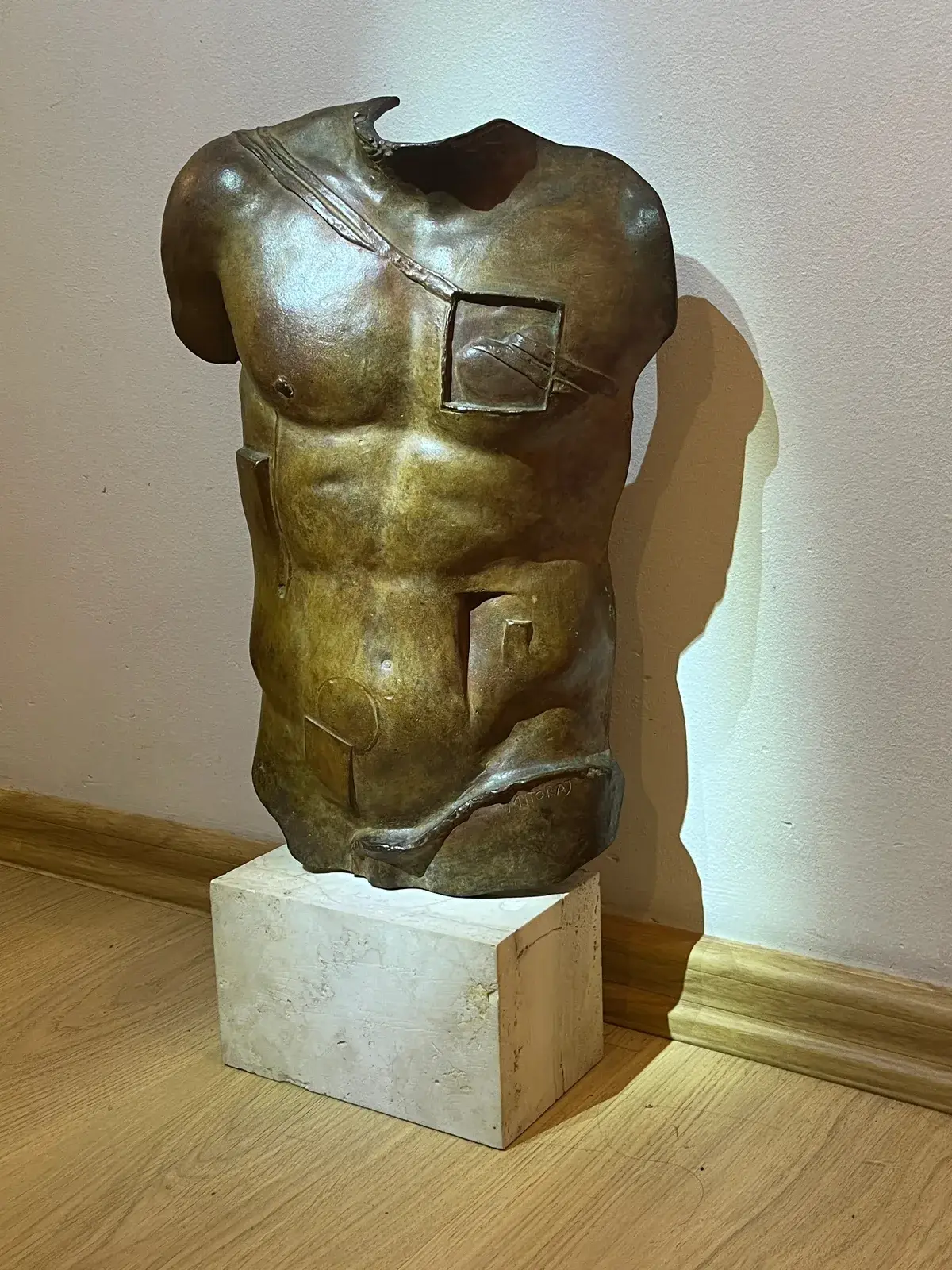
ภาพมุมเพิ่มเติมเจ็ดมุมของลำตัวเปอร์ซีอุสในคราบสีน้ำตาลอุ่นของคอลเลคชันนี้ ถ่ายบนฐานหินทราเวอร์ทีน ชุดภาพแสดงรายละเอียดที่ฝังในหน้าอกและช่องท้อง ขอบไหล่ที่ฉีกขาด และอุปกรณ์ยึดด้านหลัง — รายละเอียดที่มองเห็นได้ยากในภาพคาตาล็อกทั่วไป
ลำตัวเปอร์ซีอุส — ภาพเพิ่มเติม


ภาพถ่ายห้าภาพของเปอร์ซีอุสคู่กับงานบรอนซ์อื่นของมิโทราจในคอลเลคชันส่วนตัวเดียวกัน — ศีรษะหมวกเล็กคราบเขียวดำบนฐานหินอ่อนและลำตัวบรอนซ์ที่ห่อหุ้ม การจัดกลุ่มเหล่านี้บันทึกอัตราส่วนสัมพันธ์ของลำตัวเปอร์ซีอุส (40–50 ซม.) เทียบกับงานคู่กัน ภายใต้แสงธรรมชาติบนพื้นไม้โอ๊ก
เปอร์ซีอุสในคอลเลคชัน


Persée ในพื้นที่สาธารณะ
หมายเหตุเรื่องสภาพของ Persée
การระบุ Persée ของคุณ
ท่าที่มีการเคลื่อนไหว เป็นอีกหนึ่งข้อสังเกต: ไม่เหมือน Centurione ที่อยู่ในมุมหน้าตรงและนิ่งกว่า ศีรษะของ Persée หมุนบนแกน คอเอียง สื่อถึงการเคลื่อนไหวที่หยุดชะงัก ไม่ใช่ความนิ่งที่ตั้งใจ
ผิวสีแบบต่าง ๆ
- Dark black-brown: the most common variant; deep oxidised surface, approaching black in shadow, revealing warm brown on raised surfaces. Associated with Pietrasanta production from the mid-1980s onwards.
- Warm gold-brown: a lighter patination, the bronze colour more visible, giving a warmer and more immediately "classical" appearance. Common in commercial gallery editions.
- Green verdigris: the most archaeological in register — the surface patinated to recall excavated ancient bronze. Rarest of the three and consistently commands the strongest prices in the secondary market.
ลายเซ็นและเครื่องหมายโรงหล่อ
การแยก Persée ออกจาก Persée & Asclépios
Perseus ในตำนานของ Mitoraj
หัวเรื่อง Persée เชื่อมโยงโดยตรงกับผลงานอีกสองชิ้นในคอลเลกชัน Persée & Asclépios จับคู่วีรบุรุษกับผู้รักษา — การทำลายและการซ่อมแซมเป็นคำประกาศทางการประพันธ์เดียว Eros Bendato (Eros ที่ถูกผูกมัด) อยู่ในหัวข้อใกล้เคียง: รูปอีกตัวจากเทพปกรณัมคลาสสิกที่ปั้นในช่วงเวลาของการยับยั้งหรือผลพวง พลังของตำนานถูกหยุดและหันเข้าด้านใน
ทำไมผู้ขายจึงเลือกขายตรงแทนการประมูล
กรณีล่าสุด: นักสะสมที่มี Persée (1988) ได้รับการประเมินการประมูล €3,000 หลังจากคำนวณตัวเลขแล้ว เขาขายให้ผมแทน
| ประมูล | ขายตรงที่นี่ | |
|---|---|---|
| ประเมิน / ข้อเสนอ | €3,000 | สูงกว่าอย่างมีนัยสำคัญ |
| ค่าคอมมิชชั่นผู้ขาย | −20% (−€600) | ไม่มี |
| สุทธิให้ผู้ขาย | €2,400 | 100% ของราคาที่ตกลงกัน |
| เวลาในการชำระเงิน | 6–8 สัปดาห์หลังการขาย | ทันที (ธนาคารหรือเงินสด) |
| ความเสี่ยงหากผลงานไม่ขาย | ค่าธรรมเนียมรายการ เดือนที่สูญเสีย | ไม่มี |
การประเมินการประมูลนั้นอนุรักษ์นิยมโดยเจตนา — งานของบ้านประมูลคือดึงดูดผู้ประมูล ไม่ใช่เพิ่มเงินที่คุณได้รับให้สูงสุด ยิ่งกว่านั้น ค่าคอมมิชชั่นผู้ขาย 20–25% เป็นมาตรฐานอุตสาหกรรมที่ Christie's, Sotheby's, Artcurial และ Desa Unicum การชำระเงินมักจะมาถึง 6–8 สัปดาห์หลังค้อนเคาะ ซึ่งในเวลานั้นผลงานออกจากมือคุณแล้ว หากบรอนซ์ไม่ถึงราคาสำรอง คุณอาจต้องเสียค่าธรรมเนียมล็อตที่ไม่ขายด้วย
การขายตรงให้นักสะสมเฉพาะทางหมายถึงข้อเสนอที่มั่นคงที่มูลค่าตลาดที่ยุติธรรม การชำระเงินเต็มจำนวนเมื่อรับ และความสงบเรียบร้อยอย่างสมบูรณ์ ไม่มีค่าคอมมิชชั่นหัก ไม่มีการรอ ไม่มีความเสี่ยงล็อตที่ไม่ขาย
มีคำถามเกี่ยวกับผลงานนี้?
ถามผู้ช่วย AI — อิงตามหน้าคอลเลกชัน คำตอบในภาษาของคุณ
คุณเป็นเจ้าของ Mitoraj Persée?
Send me a photograph — I buy all patina variants and reply the same day.
ยินดีรับชมผลงาน Mitoraj อื่น ๆ ด้วย — ทุกหัวข้อ ทุกสภาพ ทุกรูปแบบ
See also: Persée & Asclépios (duo) · Centurione II · All Mitoraj bronzes wanted · Auction prices guide
เกี่ยวกับคอลเลกชันนี้
เว็บไซต์นี้บันทึกการค้นหาผลงานของ Igor Mitoraj (1944–2014) โดยนักสะสมส่วนตัวรายหนึ่ง — ประติมากรชาวโปแลนด์-ฝรั่งเศสที่มีชื่อเสียงจากผลงานรูปคนคลาสสิกที่แตกหักในสัมฤทธิ์และหินอ่อน Mitoraj เรียนที่เมือง Kraków ภายใต้ Tadeusz Kantor ฝึกฝนที่กรุงปารีสที่ École nationale supérieure des beaux-arts และเปิดสตูดิโอถาวรที่ Pietrasanta ในแคว้น Tuscany ในปี 1983 ผลงานของเขาจัดแสดงในคอลเลกชันสาธารณะทั่วยุโรปและทวีปอเมริกา และสถิติประมูลของเขา — 6.89 ล้านยูโรสำหรับ Tindaro Screpolato ขนาดอนุสาวรีย์ที่ Sotheby's ปารีสในปี 2019 — จัดให้เขาอยู่ในกลุ่มประติมากรยุโรปยุคหลังสงครามที่เป็นที่ต้องการมากที่สุด หากคุณมีผลงาน Mitoraj อยู่ในครอบครอง กรุณากดปุ่มติดต่อเพื่อพูดคุยกับเรา
สนใจผลงานนี้?
สอบถามเกี่ยวกับผลงานนี้ →คุณอาจมีผลงานเหล่านี้ด้วย


กำลังคิดจะขายงาน Mitoraj? ดูหน้าขายโดยเฉพาะของเรา →