Meklēju
Igora
Mitoraja
Darbus
Kolekcionārs meklē Mitoraja darbus
jebkādā stāvoklī, jebkādā izmērā — perkam tieši
no jums, vienkārši un bez sarežģījumiem.


Kolekcionārs meklē Mitoraja darbus
jebkādā stāvoklī, jebkādā izmērā — perkam tieši
no jums, vienkārši un bez sarežģījumiem.

No pārdevējiem
Daudzus gadus man bija Mitoraj bronza, un es nezināju, kā to pārdot privāti. Atbilde bija tūlītēja un piedāvājums godīgs. Viss tika nokārtots diskrēti.
Pārdevu zdēdētu Centurione. Kolekcionārs precīzi zināja, kas tas ir, un 24 stundu laikā izteica nopietnu piedāvājumu. Vienkārši un profesionāli.
Nav izsoļu komisijas, nav gaidīšanas. Nosūtīju fotogrāfijas un saņēmu piedāvājumu tajā pašā dienā. Maksājums bija ātrs un drošs. Ļoti iesaku ikvienam Mitoraj darbu īpašniekam.
Izsoles nami no pārdevējiem iekasē 10–18% komisijas maksu no izsoles cenas — plus 4–12 nedēļas konsignācijas apstrādei, pēc tam vēl vienu mēnesi līdz maksājumam. Process aizņem mēnešus un komisija tiek atskaitīta no jebkuras sasniegtas cenas. Tieša pārdošana nozīmē piedāvājumu tajā pašā dienā un samaksu dažu dienu laikā, bez komisijas atskaitījuma.
Maksāju, balstoties uz pašreizējiem izsoles tirgus līmeņiem. Es nemeklēju izdevīgus piedāvājumus — es meklēju darbus, ko pievienot nopietnajai kolekcijai, un maksāju attiecīgi. Katrs jautājums tiek apstrādāts ar pilnīgu diskrētumu: jūsu identitāte un jebkura darba detaļas, ko kopīgojat, nekad netiek atklātas trešajām pusēm, ne pie kādiem apstākļiem.
Aplūkoju visus darbus: bronzas, marmorus, litogrāfijas, zīmējumus un unikālus objektus. Tiek ņemti vērā visi stāvokļi, visi formāti no mazākā Artcurial multiplā līdz monumentāliem pasūtījumiem. Ja neesat pārliecināts, vai tas, kas jums pieder, ir autentisks, es sniegšu jums godīgu vērtējumu bez maksas un bez saistībām pārdot.
Esmu Varšavā dzīvojošs kolekcionārs, kurš mīl Mitoraja darbus un vēlas papildināt personīgo kolekciju. Pērku tieši no cilvēkiem — neatkarīgi no tā, vai jūs mantojāt gabalu, nopirkāt to gadus atpakaļ vai vienkārši uzskatāt, ka ir pienācis laiks to nodot tālāk.
Neviens darbs nav pārāk pieticīgs vai pārāk mazs — mani vienlīdz interesē maza litogrāfija, kā arī lielāka bronza. Sazinieties brīvi, bez jebkāda spiediena.
Visi izdevumi un izmēri. Asclépios, Perseus, Tindaro, Eros — visi tiek apskatīti.
Oriģināli cirsti darbi. Pietrasanta gabali īpaši laipni gaidīti.
Zīmējumi, skices, litogrāfijas, drukāti darbi un parakstīti multiplēji.
Lampas, keramika un citi atsevišķi darbi.
Darbu piemēri, ko meklēju un esmu iegādājies — bronzas, medaļas, kristāla gabali, galvas un torsi raksturīgajā Mitoraja stilā.
Rāda 51 no 51 darbiem

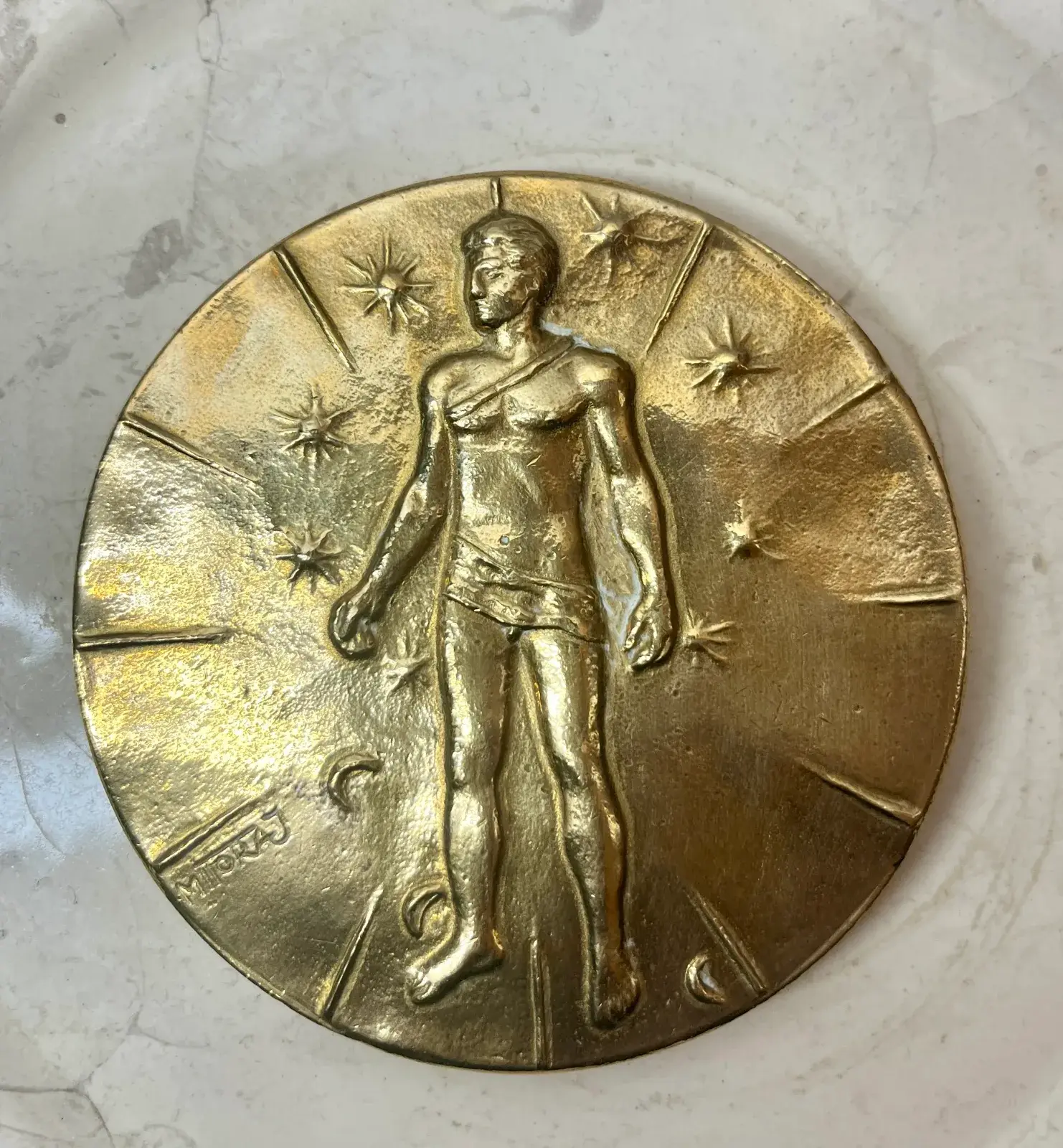
Gold-tone cast bronze medal with a standing figure amid stars and crescent moons — signed Mitoraj on the reverse. ~12 cm diameter

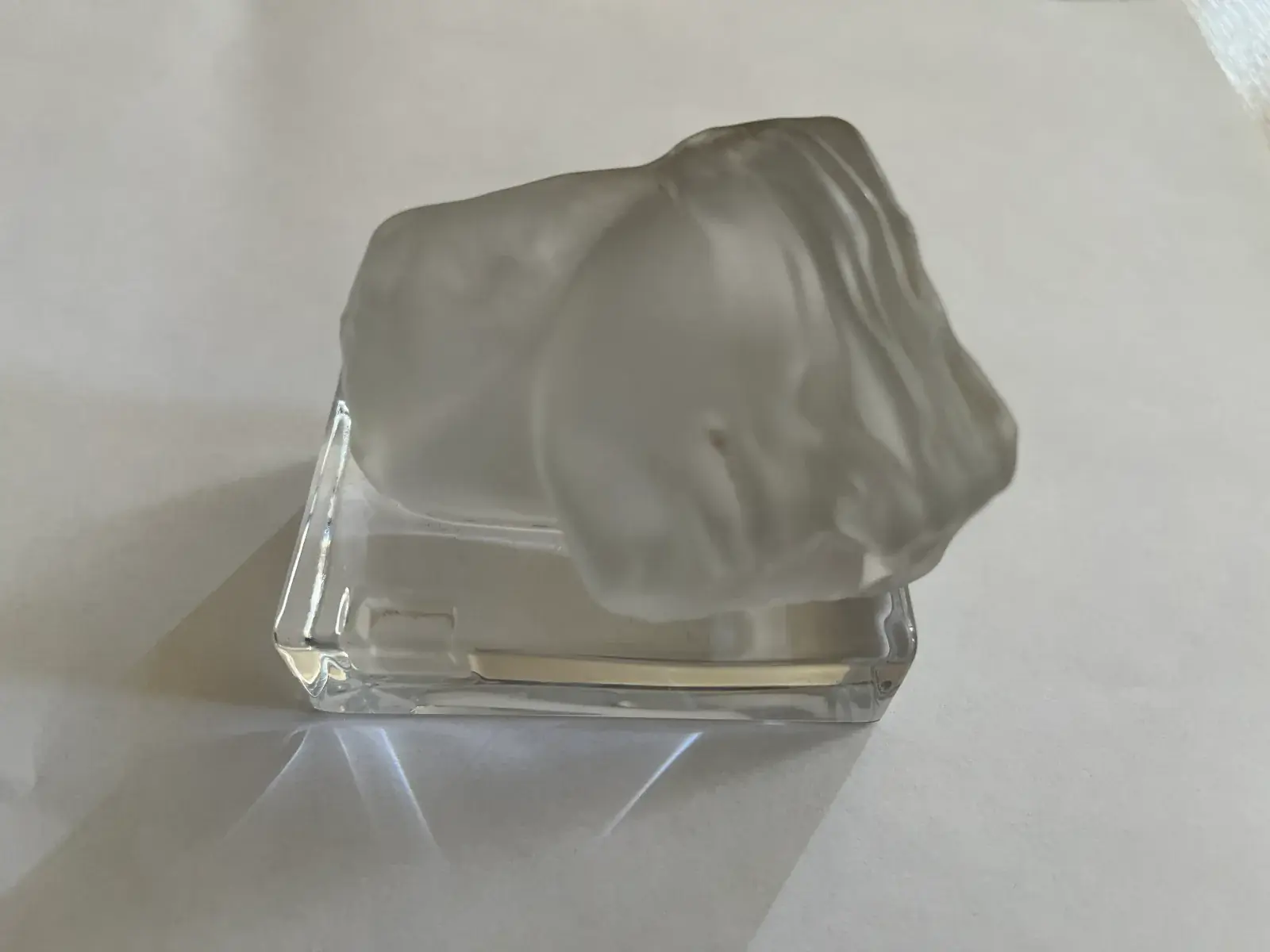
A rare pâte de verre crystal sculpture commissioned by the legendary French glassmaker Daum (founded 1877). Depicting a fragmented head in Mitoraj's signature style, this numbered piece bridges his classical themes with the luxury craft tradition of Nancy. 7.5 × 8 × 4.5 cm

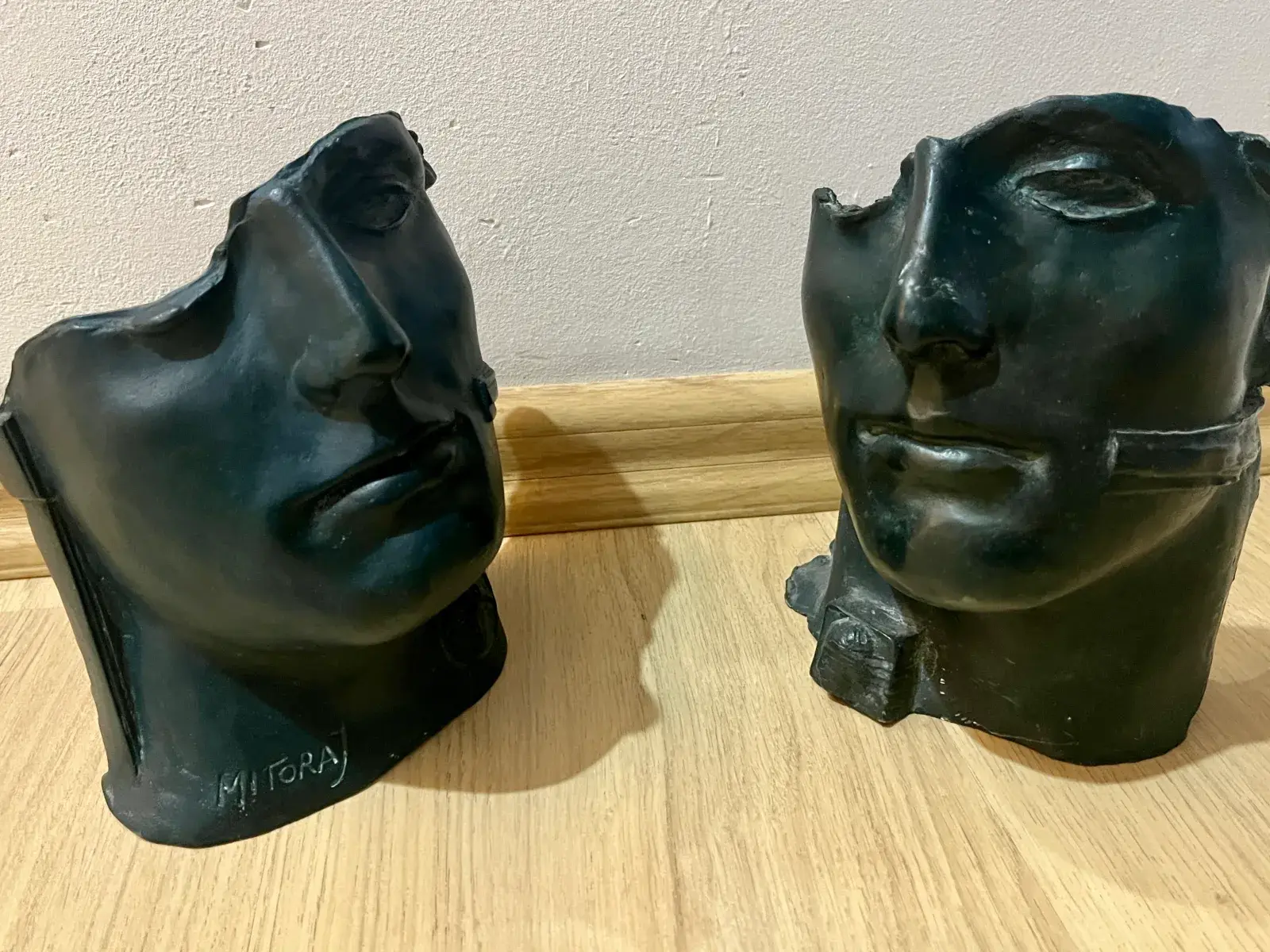
Two dark-patinated bronze head fragments — Centurione I (1987, ed. 250) and Centurione II (1987, ed. 1500) — from Mitoraj's celebrated Centurione series. Each piece depicts a partial face evoking the damaged grandeur of ancient Roman statuary, signed and from limited editions of 1500. I: ed. 250 · II: ed. 1500 · each approx. 19 cm height

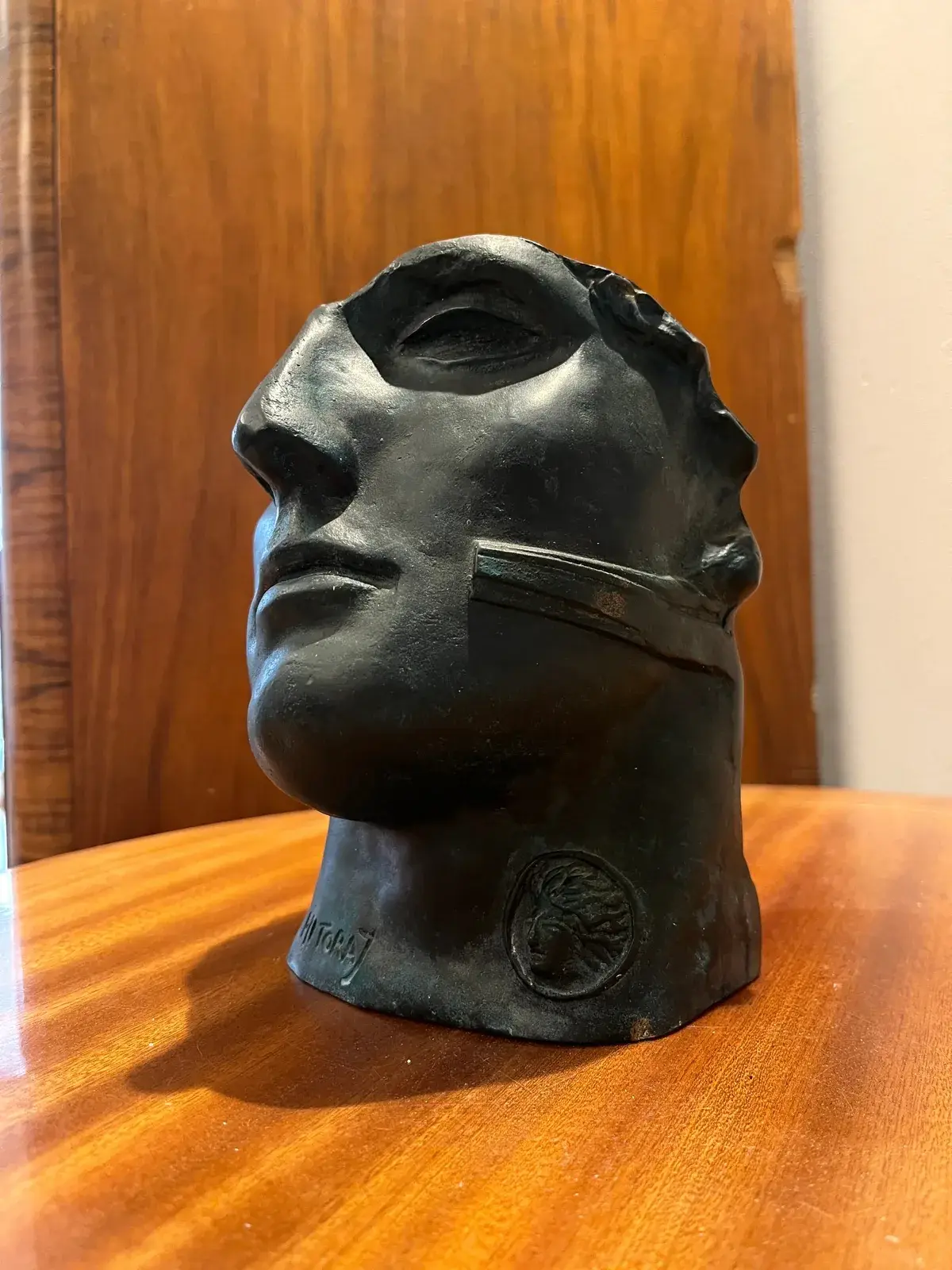
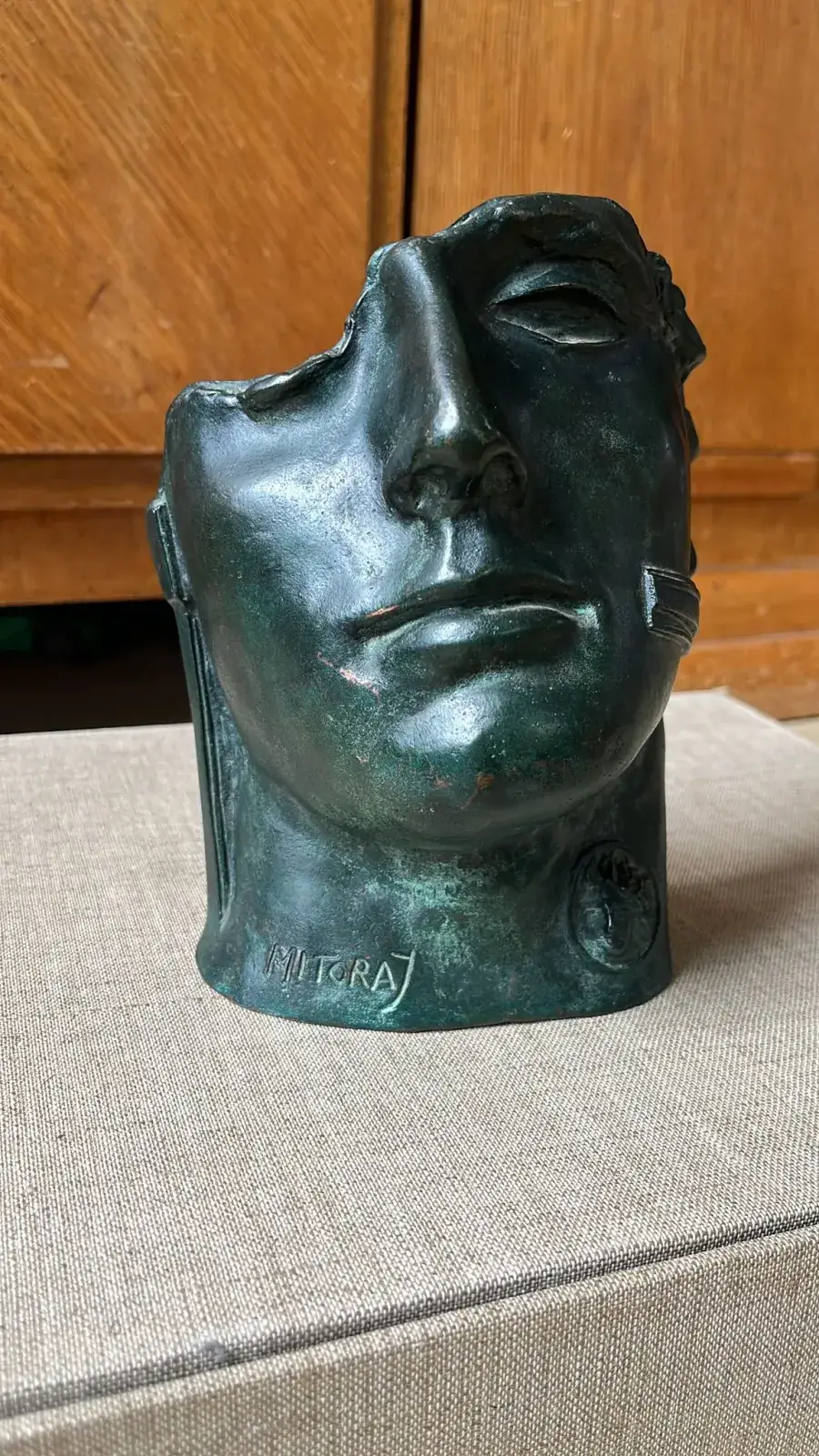
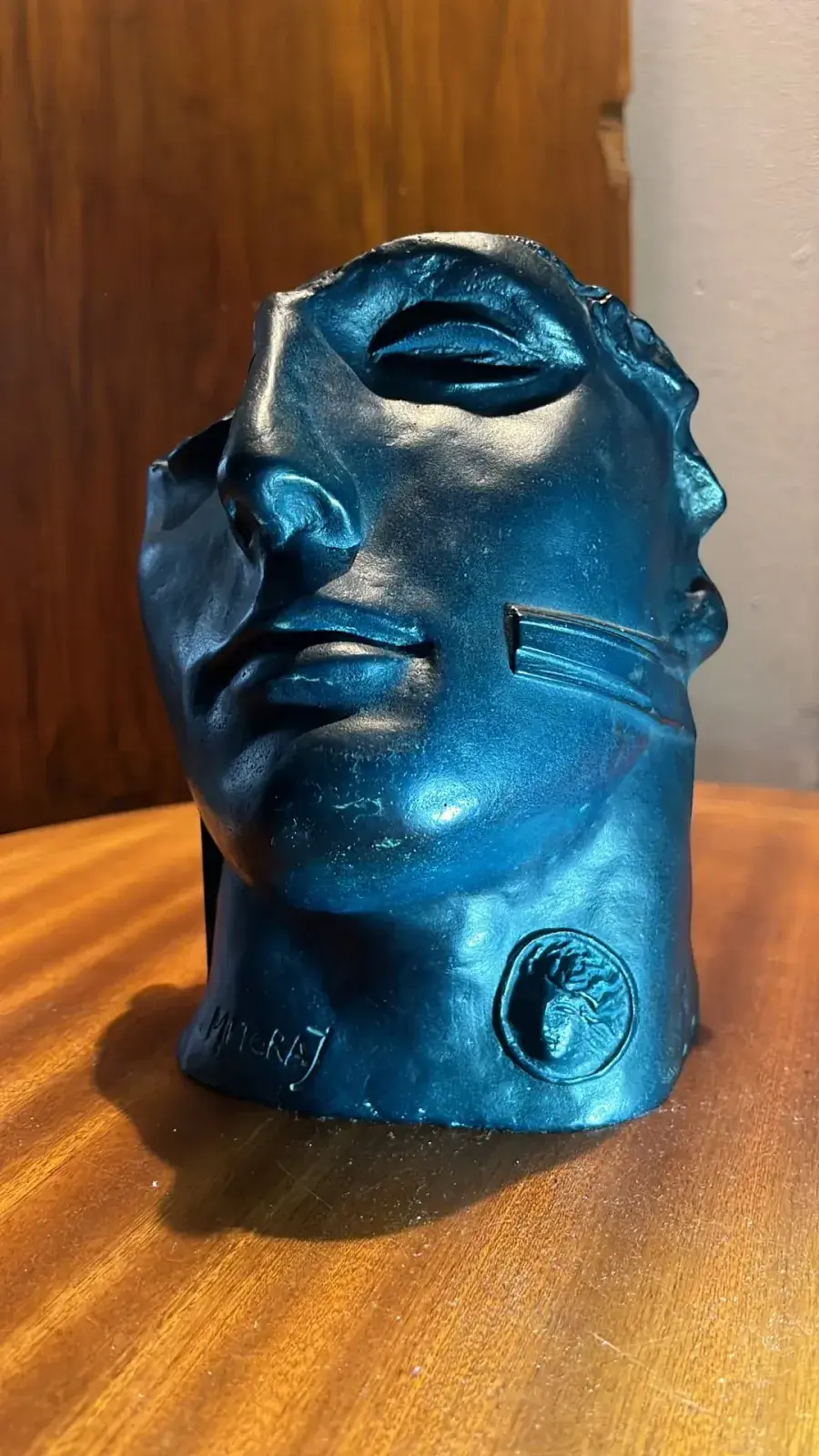
A single dark bronze head from the Centurione II series (1987), green-patinated and signed Mitoraj at the neck, numbered from an edition of 1500. The horizontal band across the face — a recurring Mitoraj motif — alludes to blindness, mystery, and the passage of time. 18.5 × 14 × 6 cm

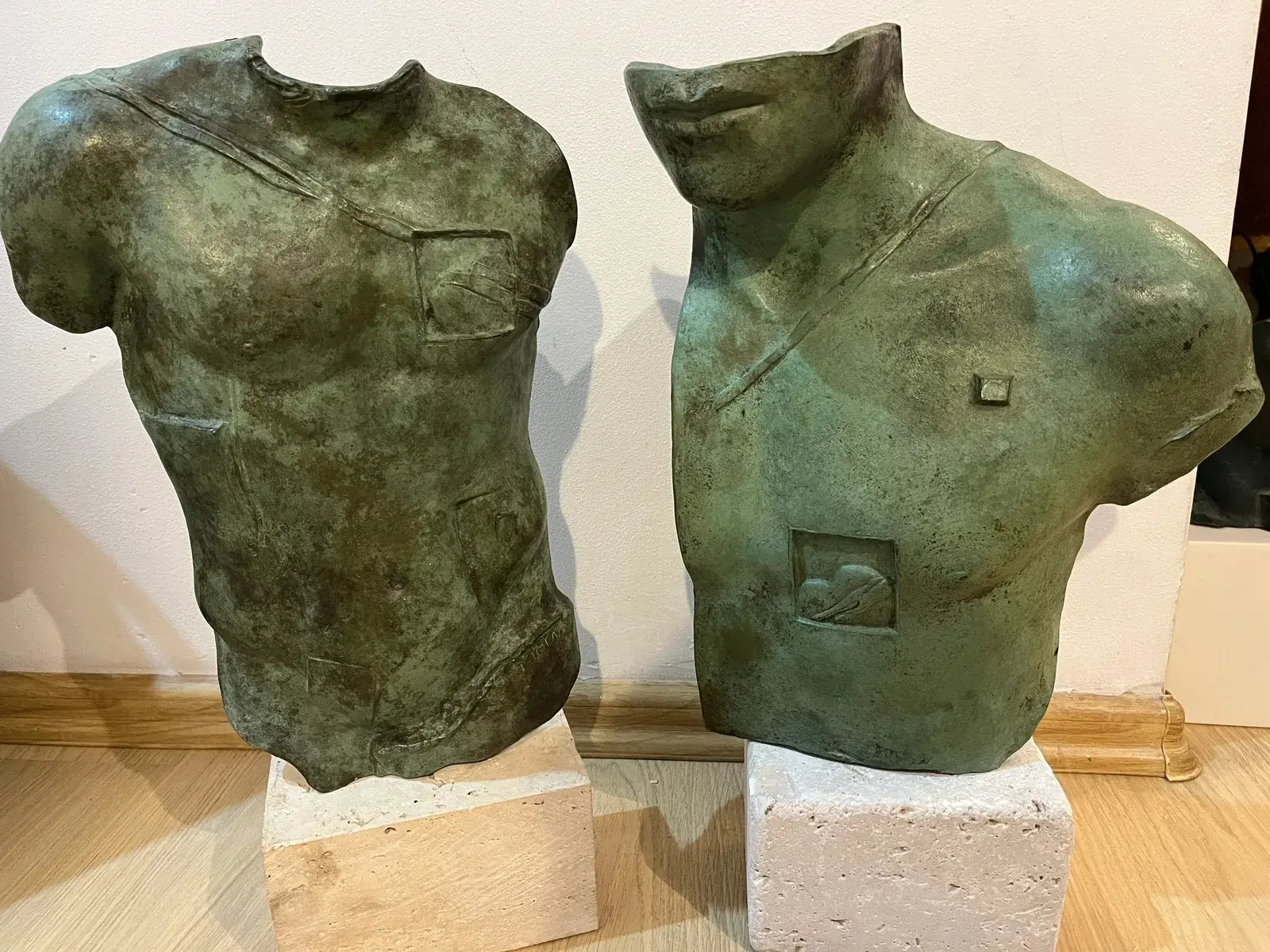
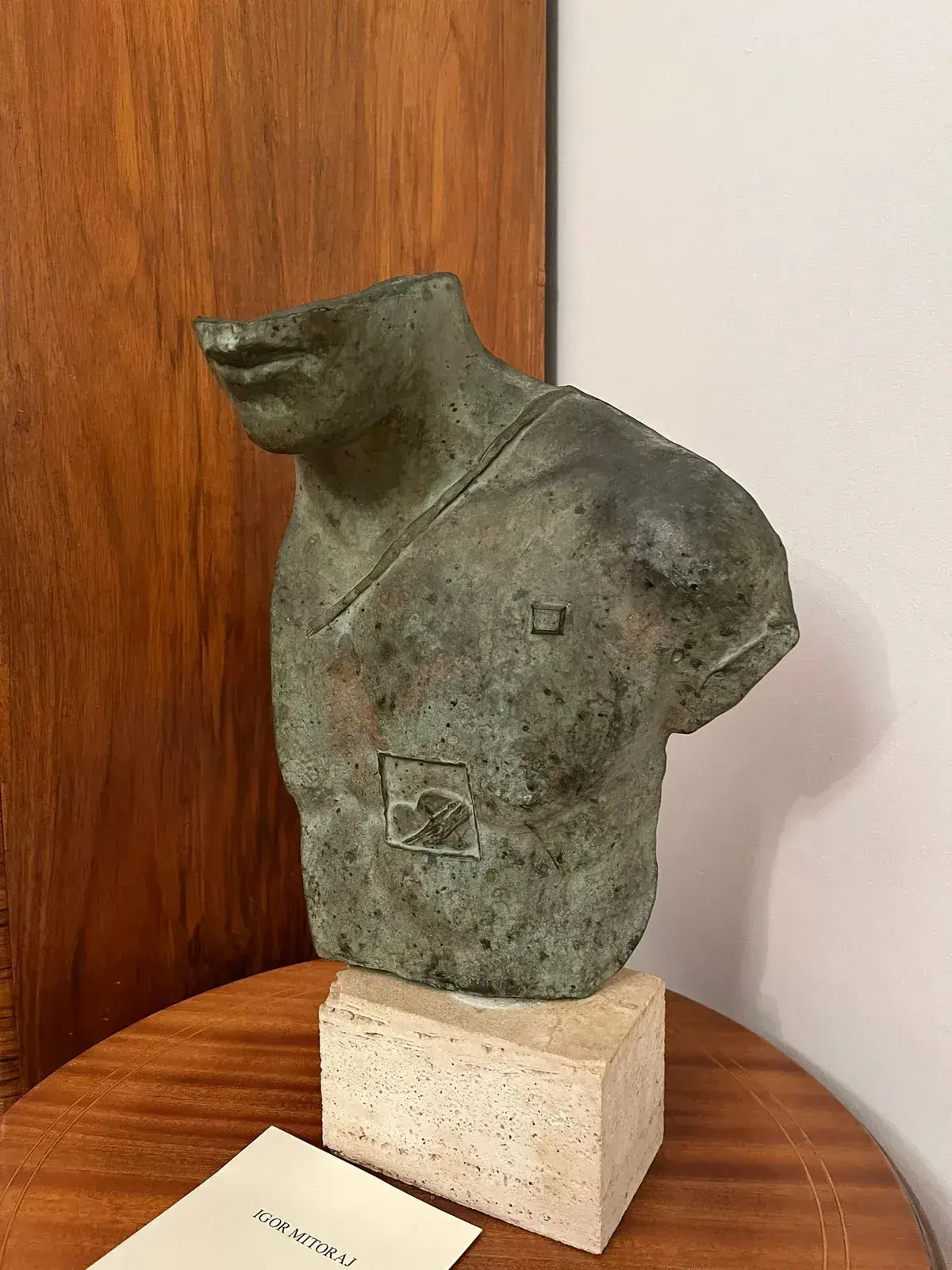
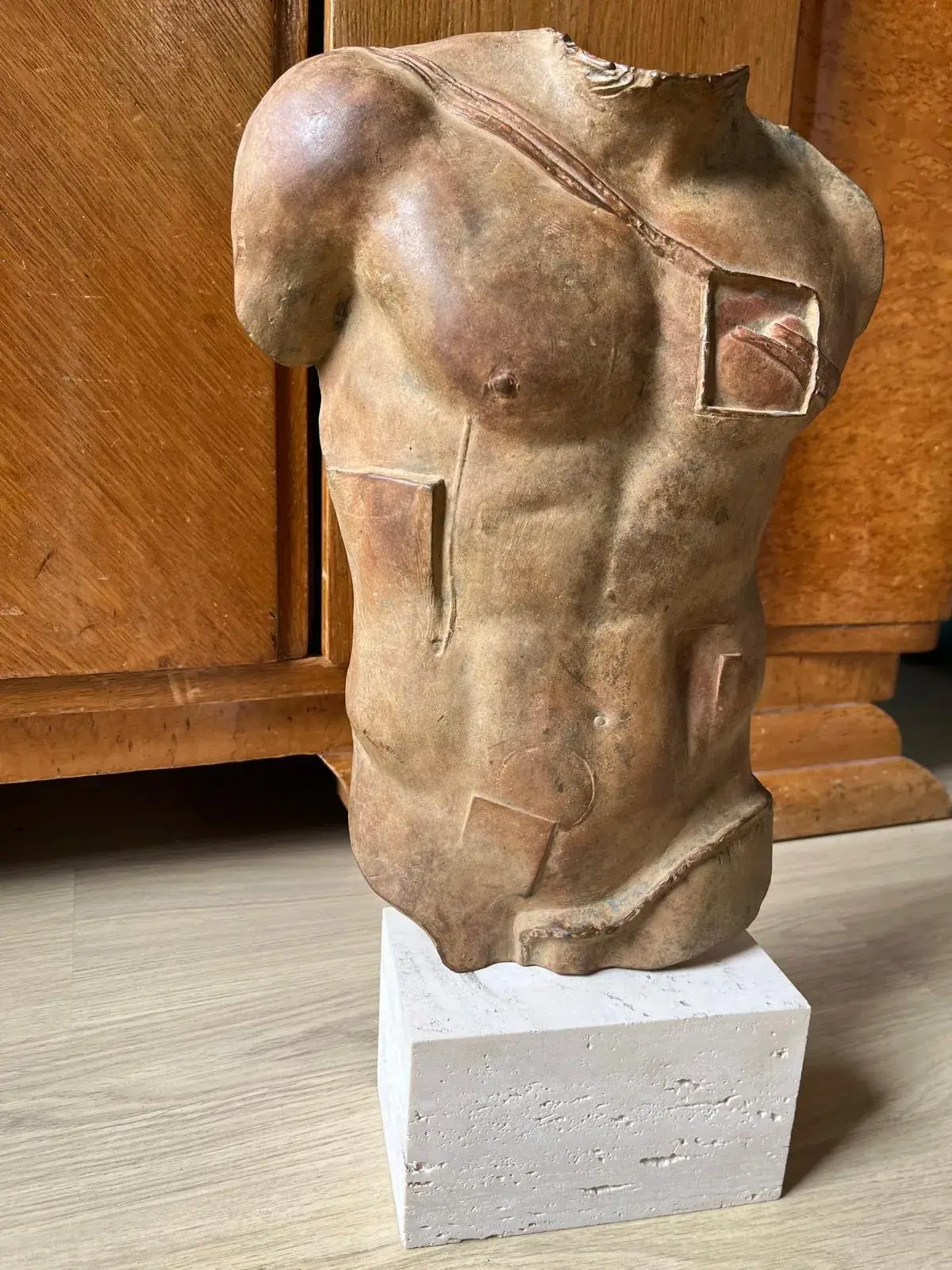
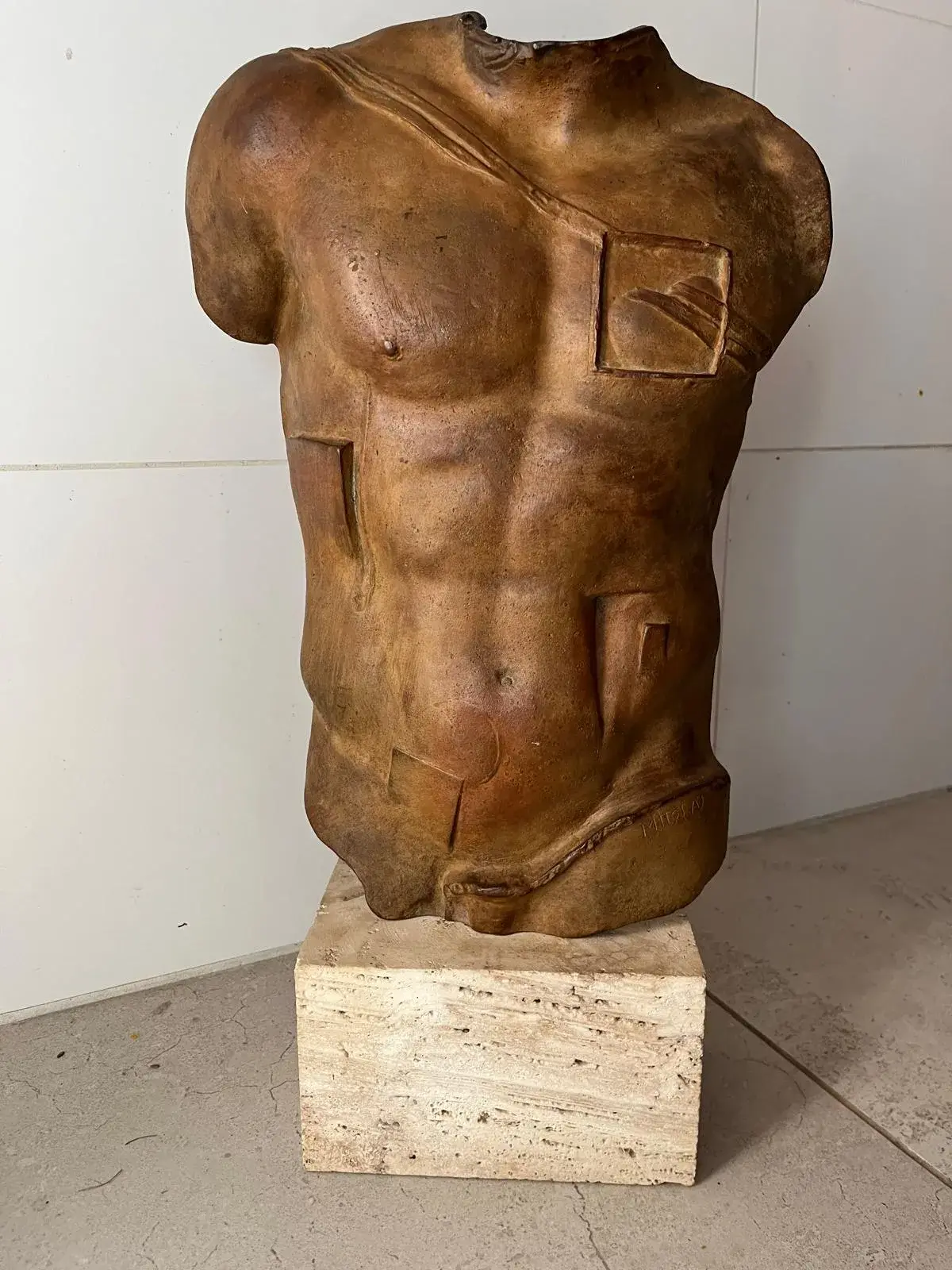
Two iconic bronze torsos from 1988 — Persée (Perseus) and Asclépios — each on a travertine base, signed and from numbered editions of 1000. The square apertures piercing chest and collarbone are Mitoraj's hallmark: windows into the mythological soul, merging classical beauty with postmodern fragmentation. 38 cm (without base) · 48 cm total

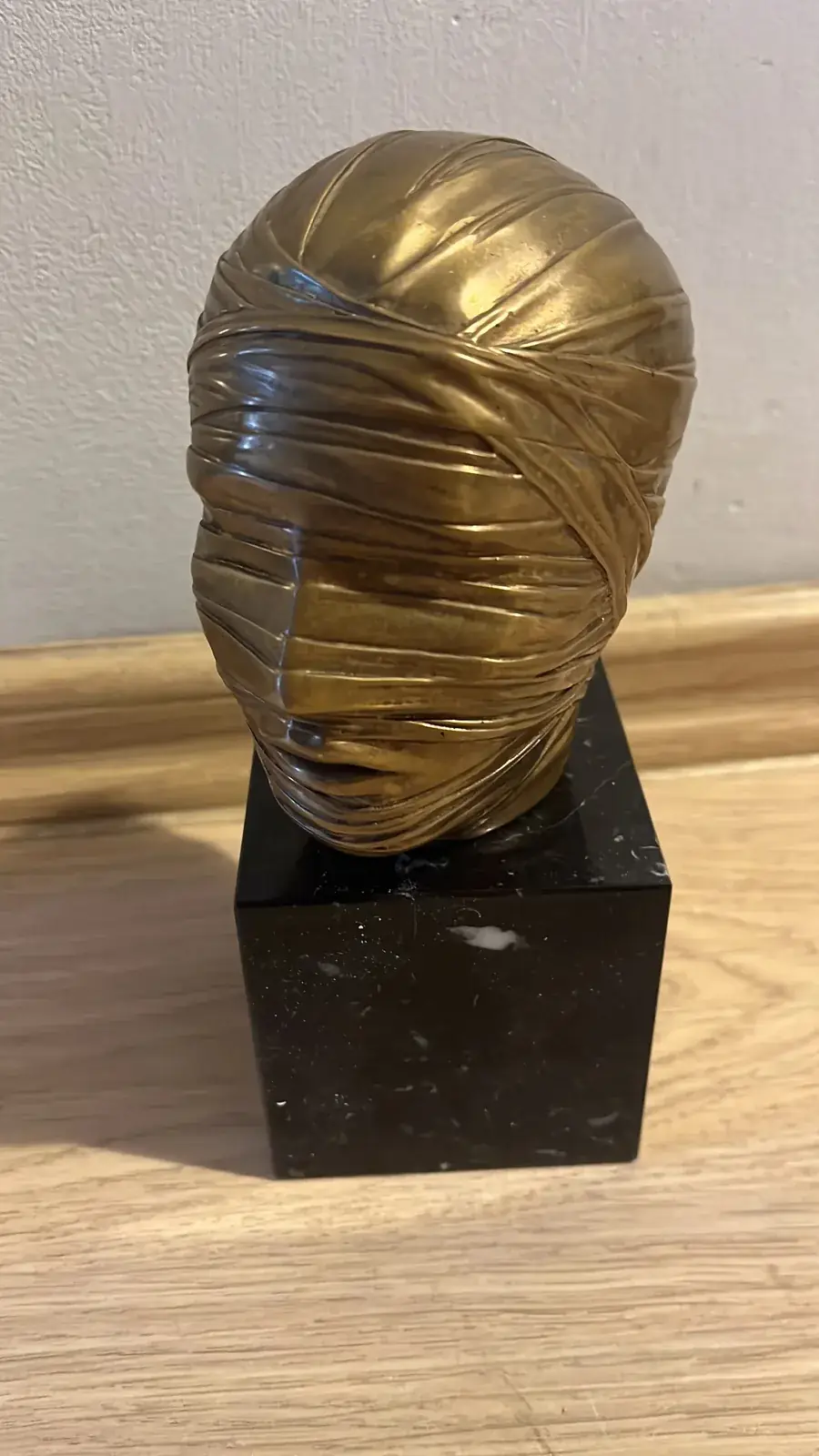
One of Mitoraj's most intimate early works (1978). A polished golden-patina bronze head entirely enveloped in bandages — the ultimate expression of concealment and interiority. Signed and numbered from an edition of 250, published by Artcurial, Paris. On its original black marble base. 12 cm (without base) · 20 cm total

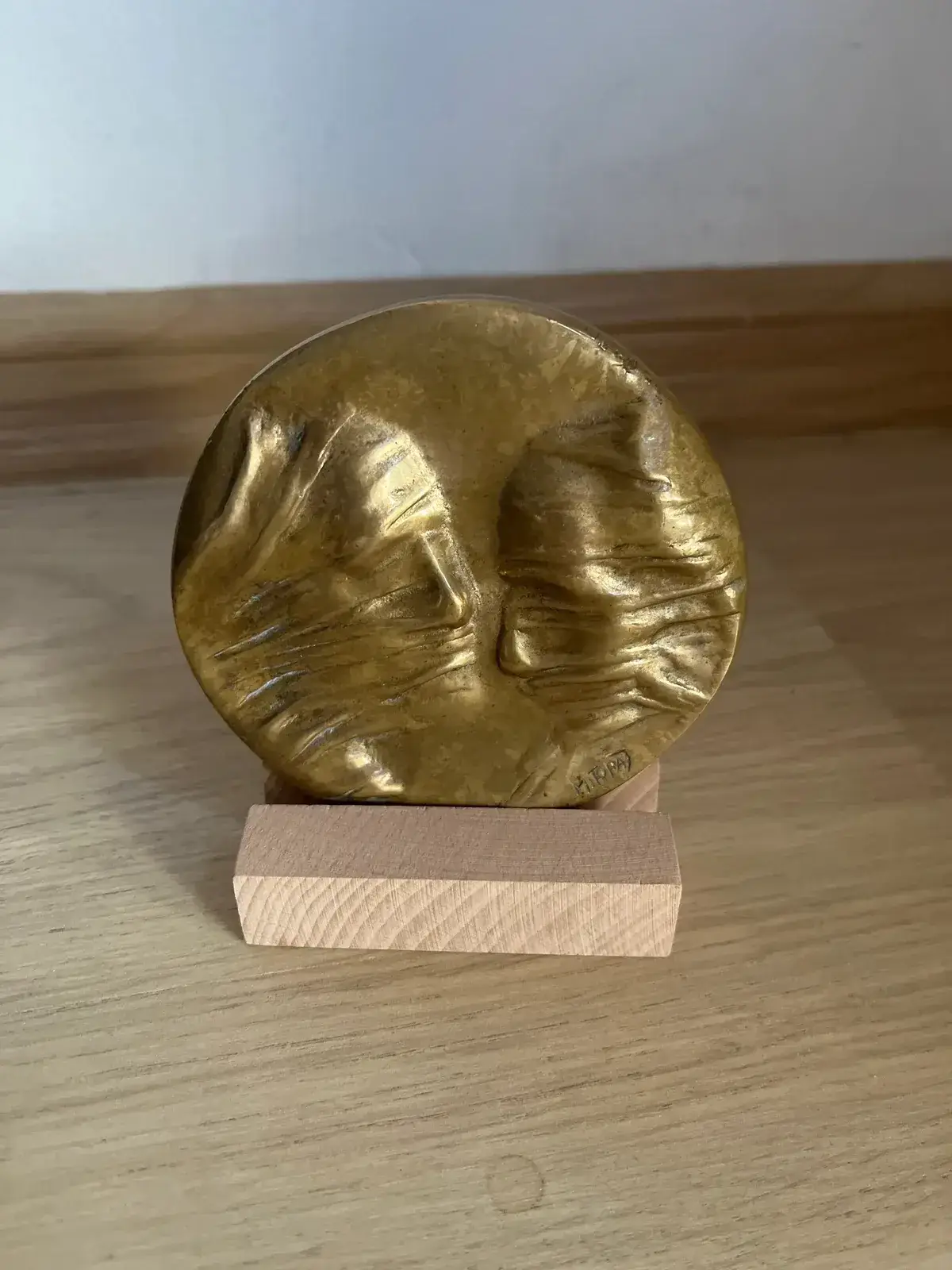
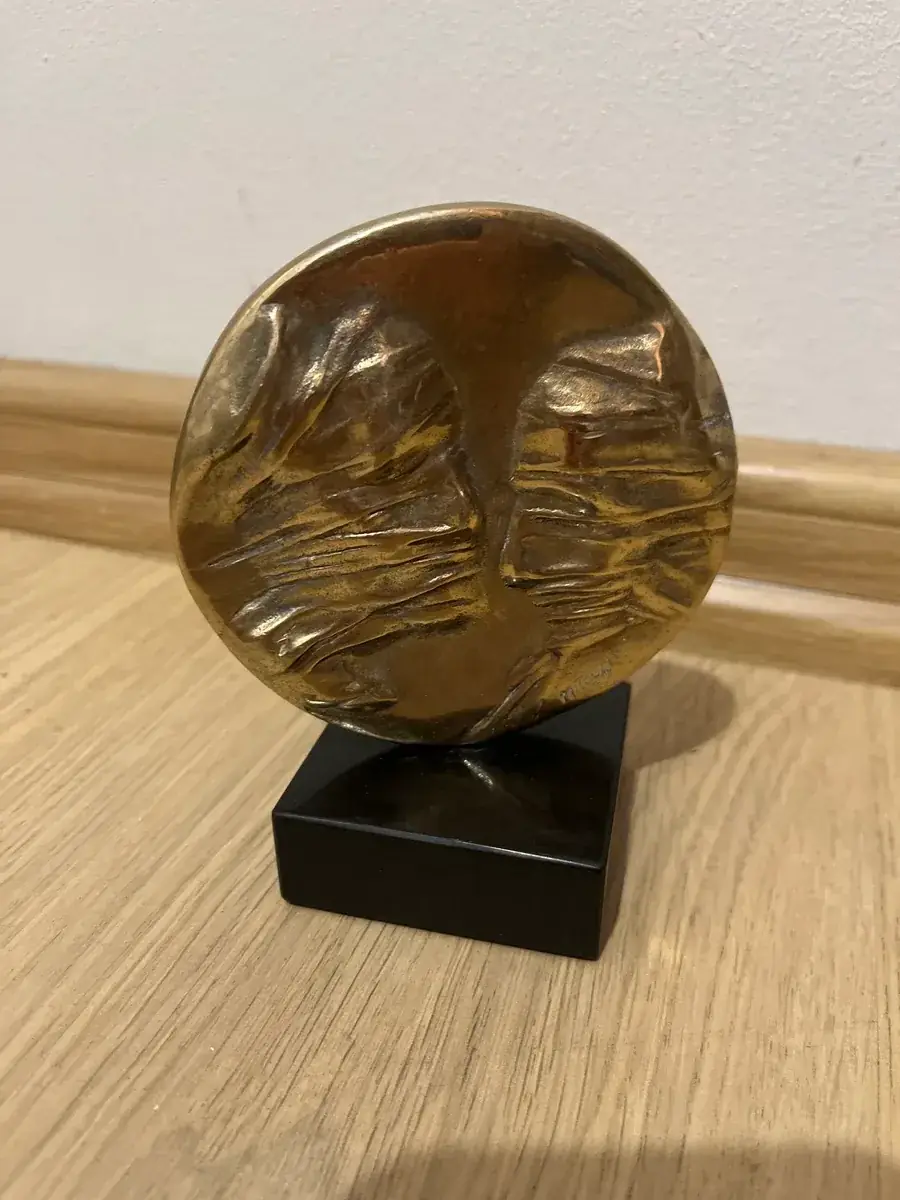
A small circular gold-patinated bronze relief (c. 1980s), signed Mitoraj, set on a wooden base. Two faces emerge in subtle profile — noses and lips barely surfacing through the swathed surface — in a quiet dialogue across the disc. A rare and intimate multiple from a limited edition. ~9 cm diameter

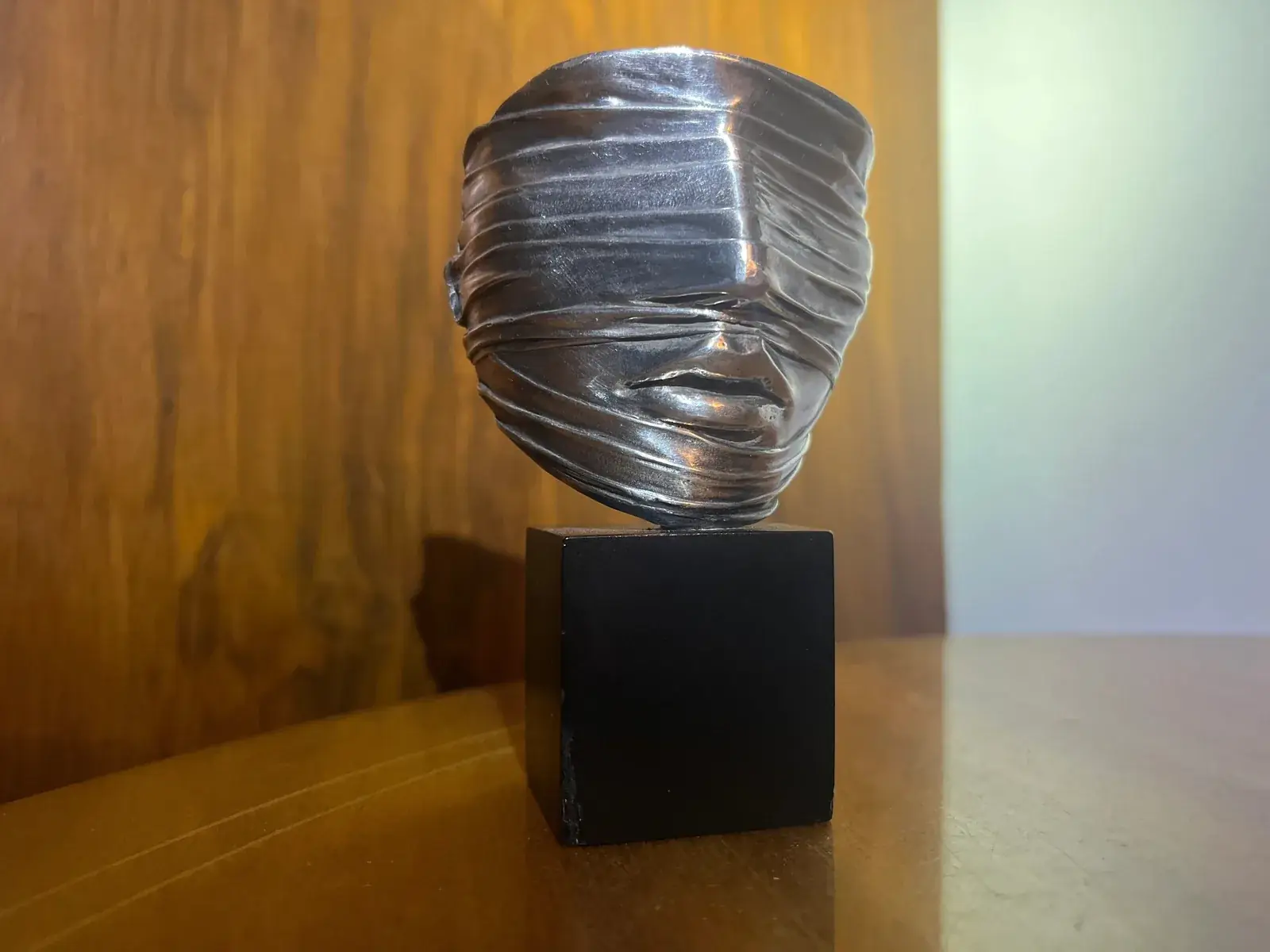
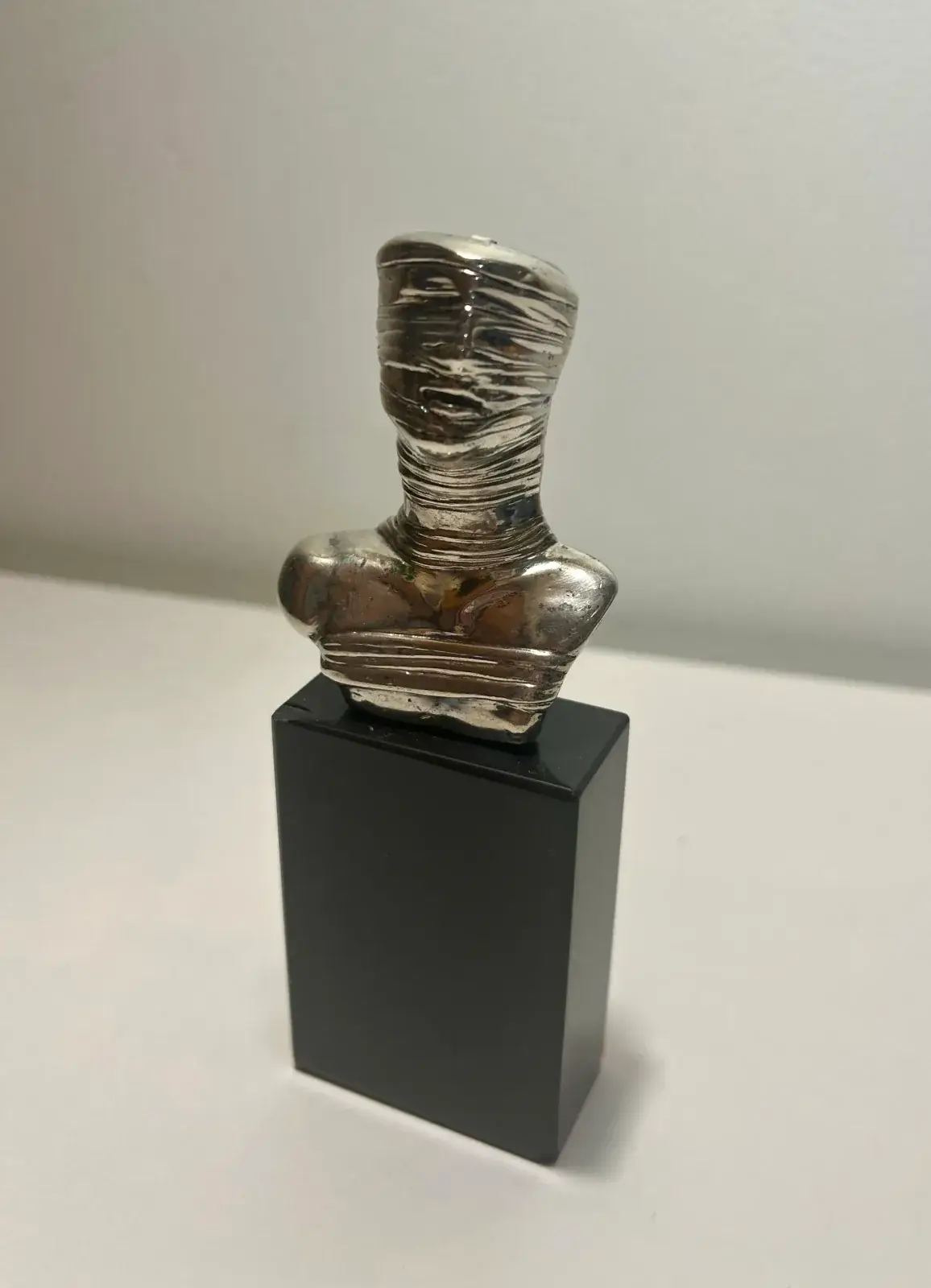
A silver-patinated bronze head entirely enveloped in tightly wound horizontal bands — one of Mitoraj's most powerful recurring motifs. Only the lips break through the wrapping, evoking silence, mystery, and concealed identity. Signed and from a limited edition of 250, published by Artcurial, Paris. On its original black cubic base. 11.5 × 11 × 7 cm (without base) · approx. 20 cm total

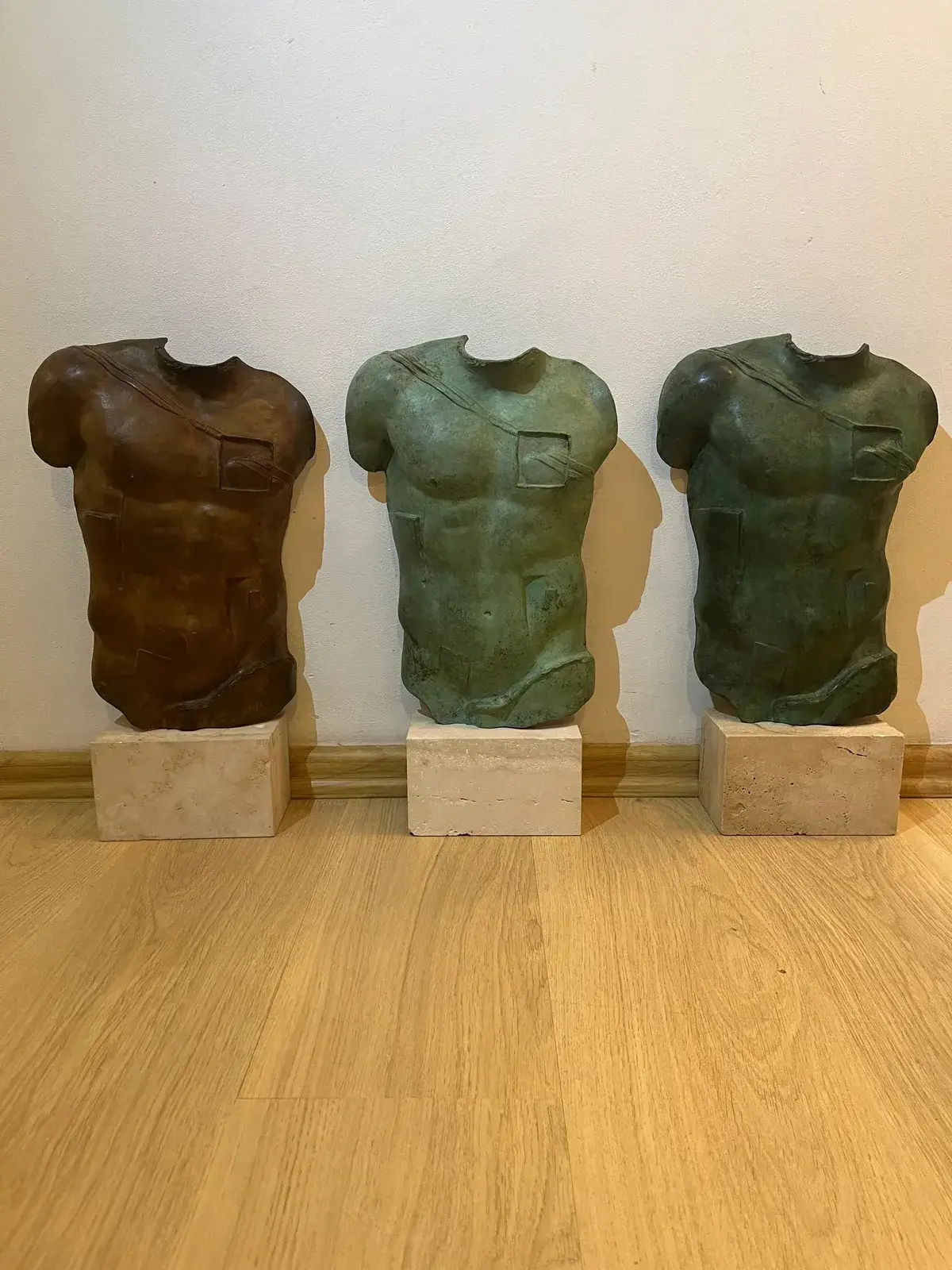
Three Persée bronzes side by side: left in warm brown patina, centre and right in green patina — all from the 1988 edition of 1000 + HC. Each shows the characteristic rectangular chest aperture at the upper left pectoral and sits on a travertine base. 38 cm without base · 48 cm total.

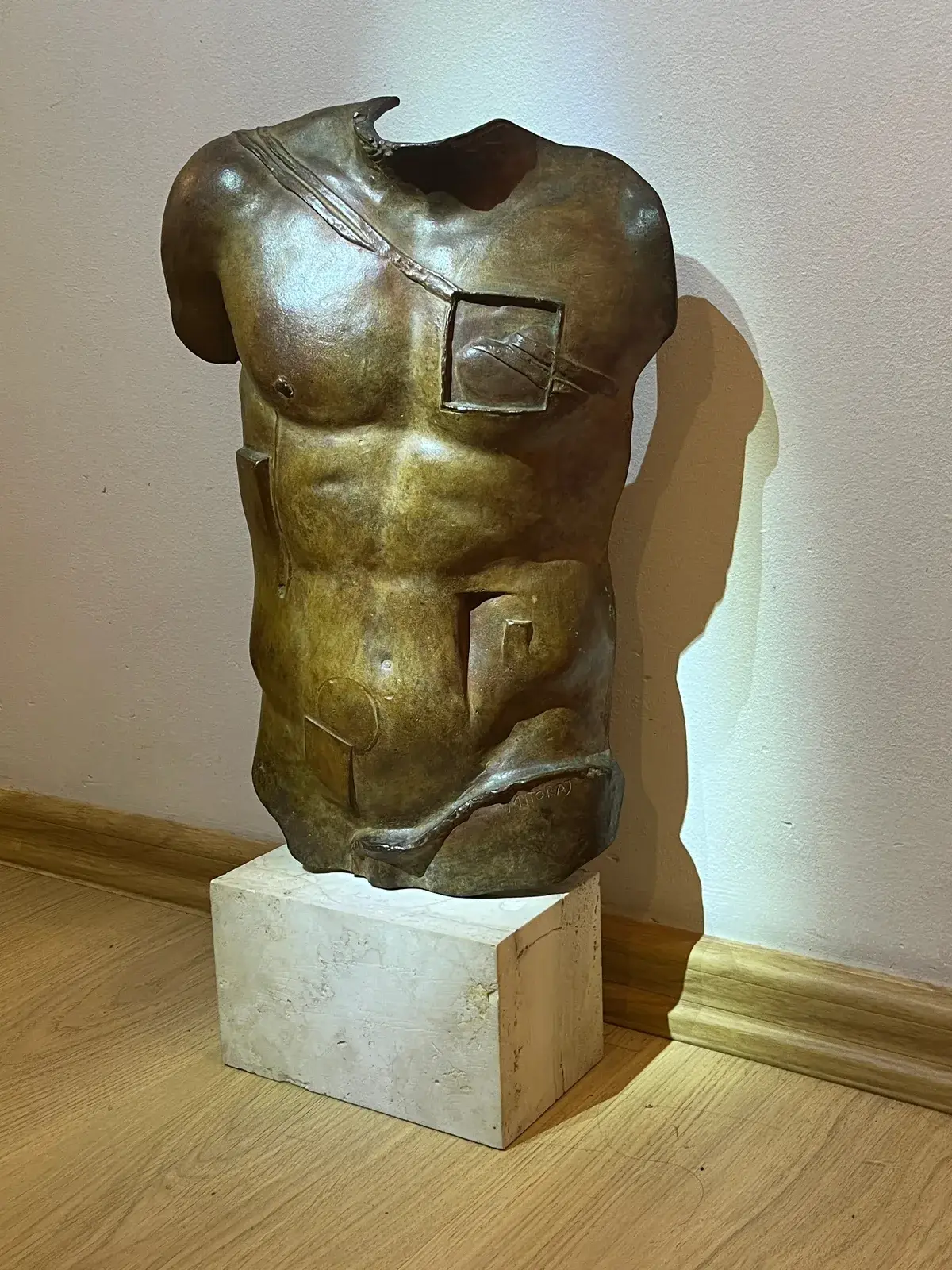
The warm brown-patina Persée from 1988 — upper-left chest aperture confirms the identification. Signed MITORAJ on travertine base, numbered from edition of 1000 + HC. 38 cm without base · 48 cm total.

A small, intensely observed bronze portrait head from 1984 — medal patina, signed at the base, from an edition of 1000. 14.5 × 7 × 5 cm. One of Mitoraj's rare non-mythological subjects. The rectangular aperture in the chest is characteristic of both Persée and Asclépios.

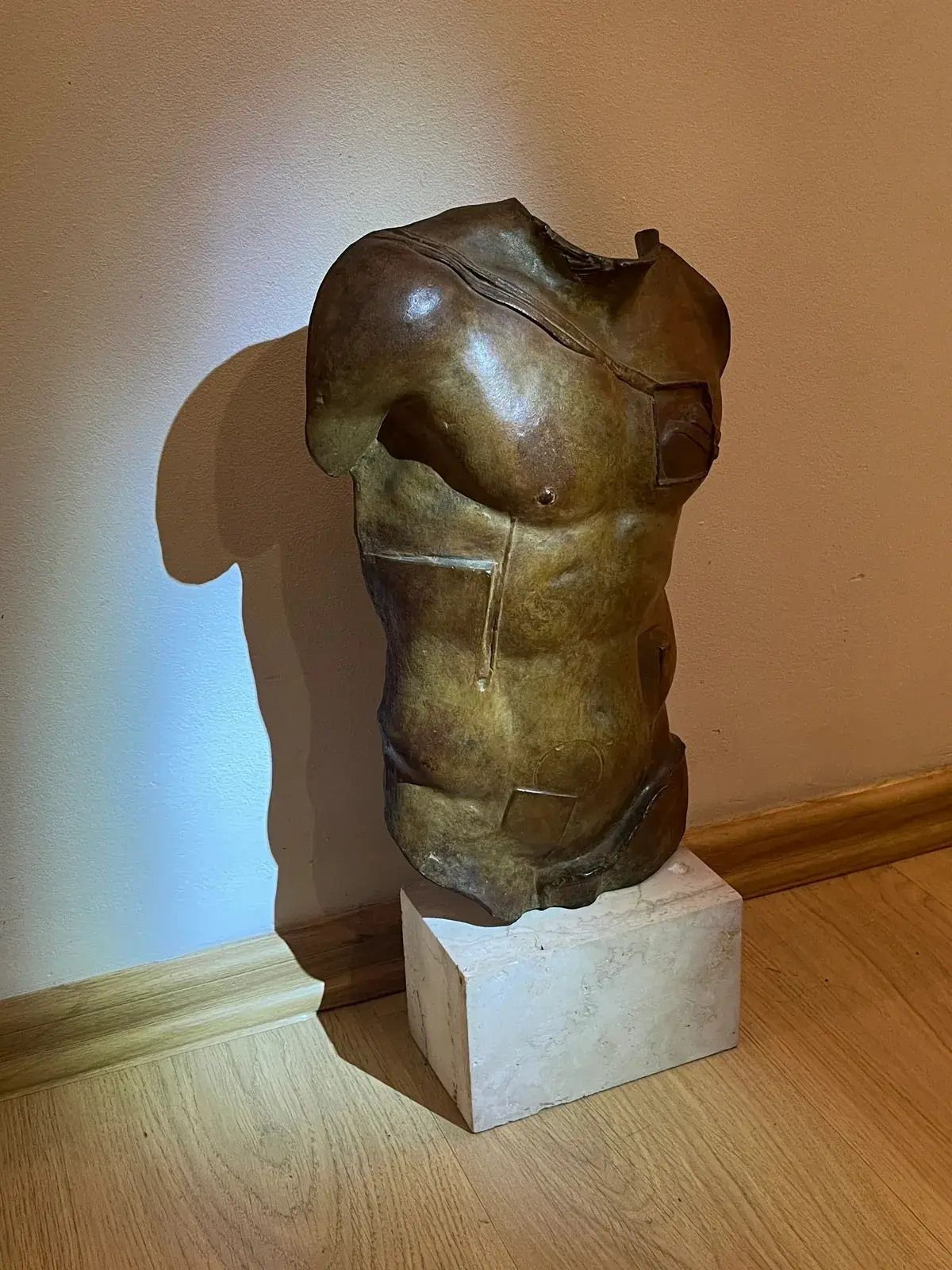
Second Persée bronze, 1988 — showing the sculpture from a different angle, emphasising the depth of the chest void and the quality of the green oxidised patina. Signed MITORAJ. 38 cm without base · 48 cm total.
The warm brown-patina variant of Asclépios 1988 — same edition (1000 + HC) as the standard green. The central chest aperture — symbol of the god of medicine — is clearly visible. Signed MITORAJ, numbered on reverse. 38 × 28 × 14 cm without base · 48 cm total.

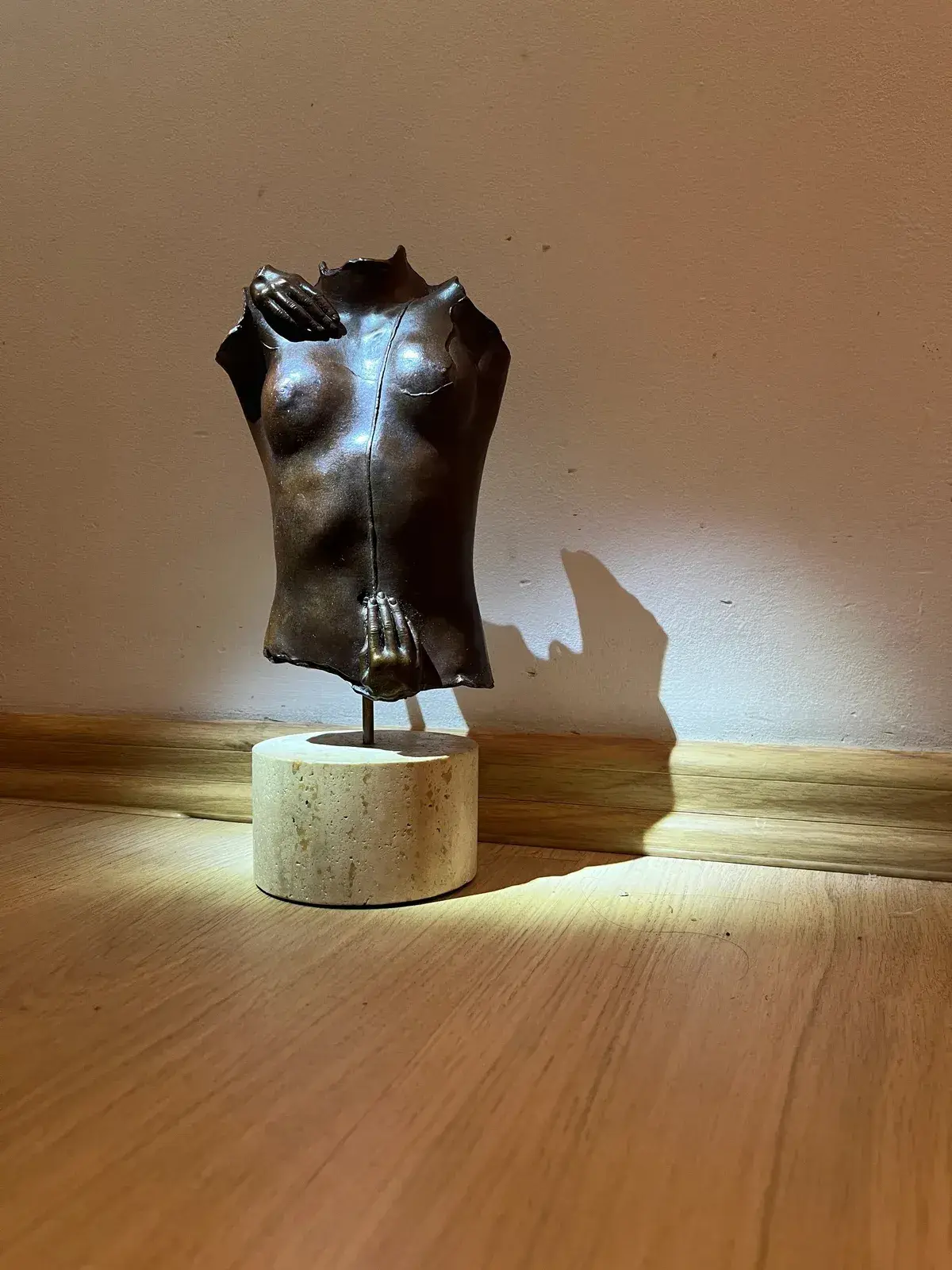
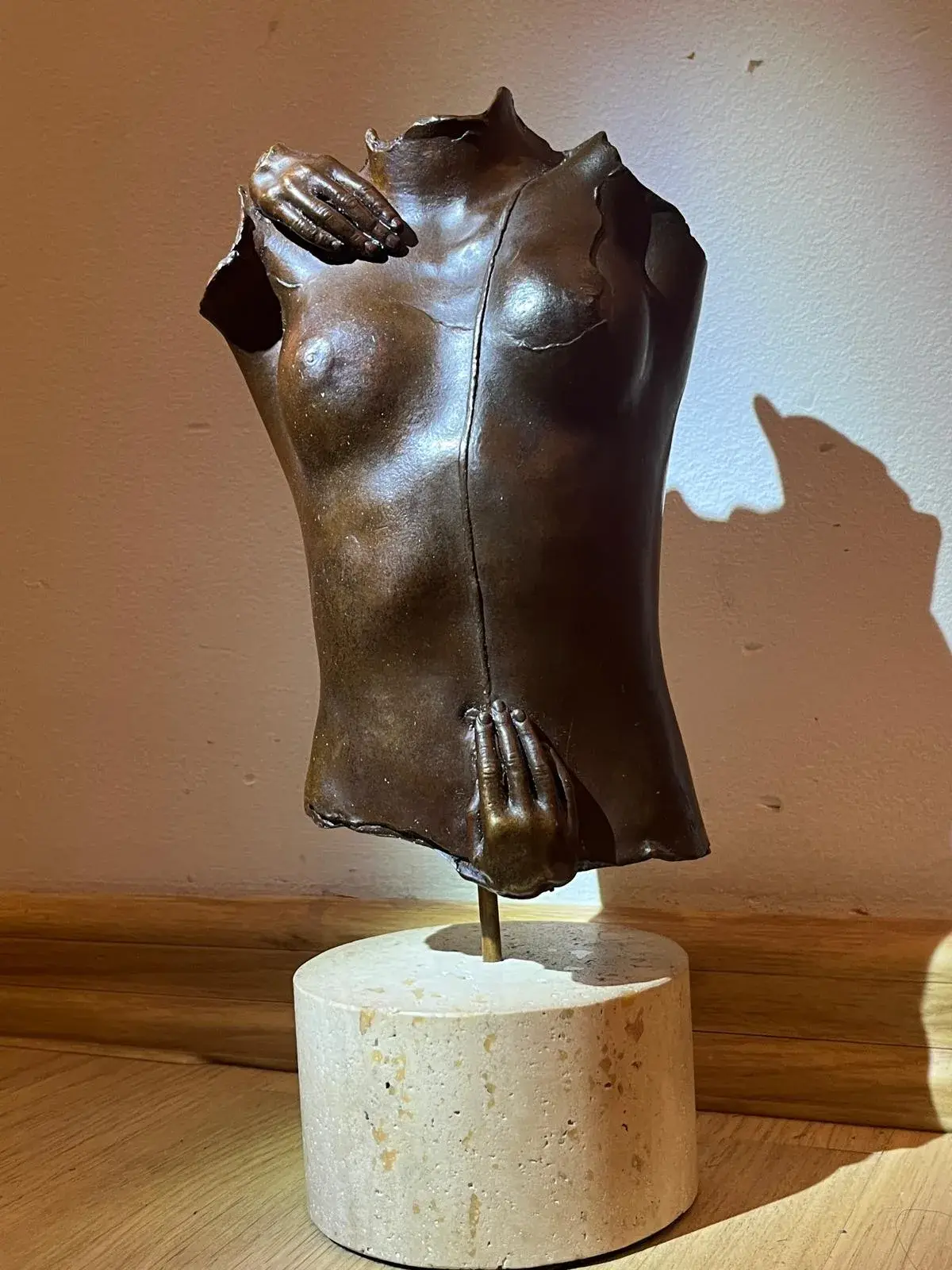
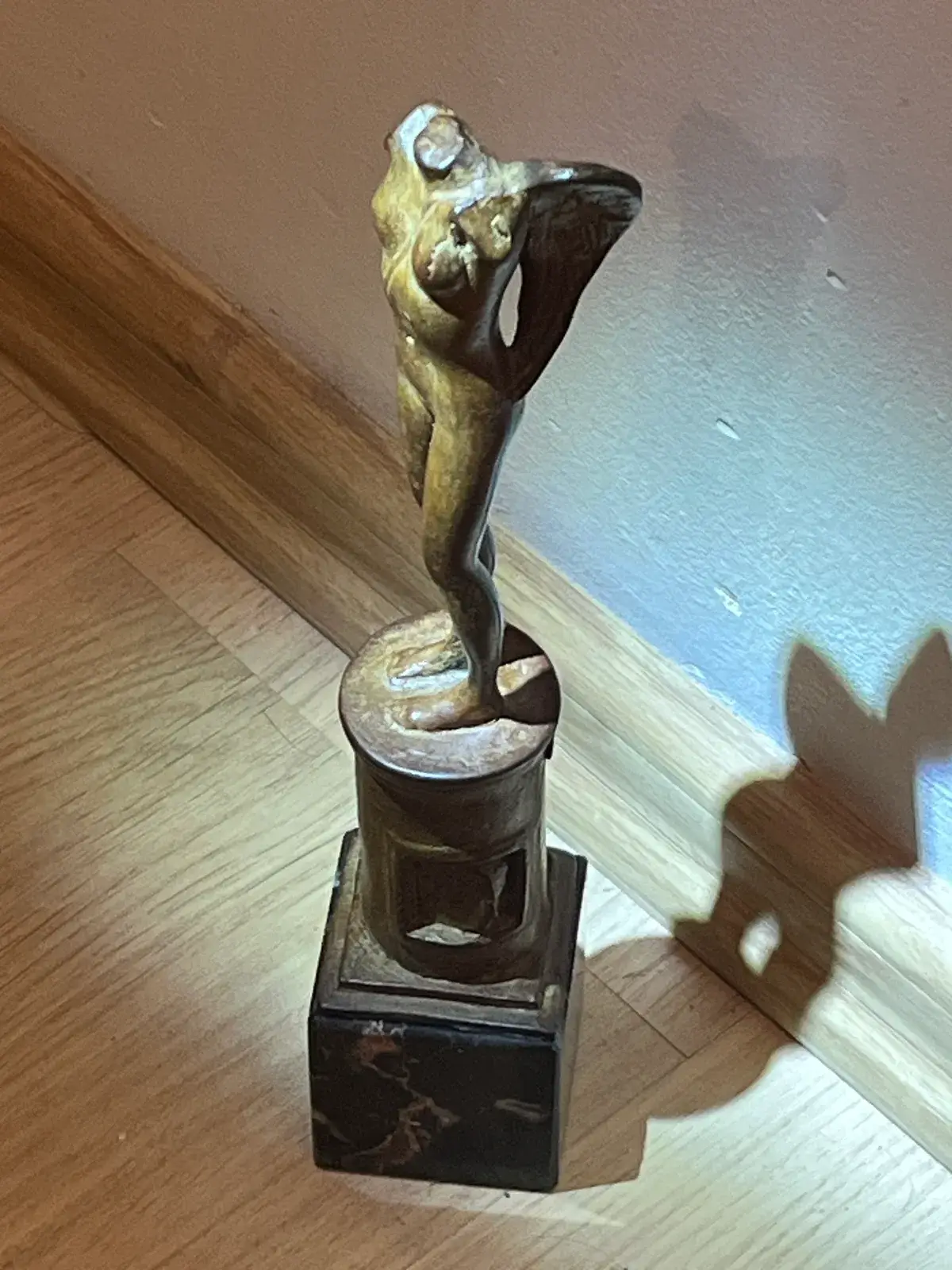
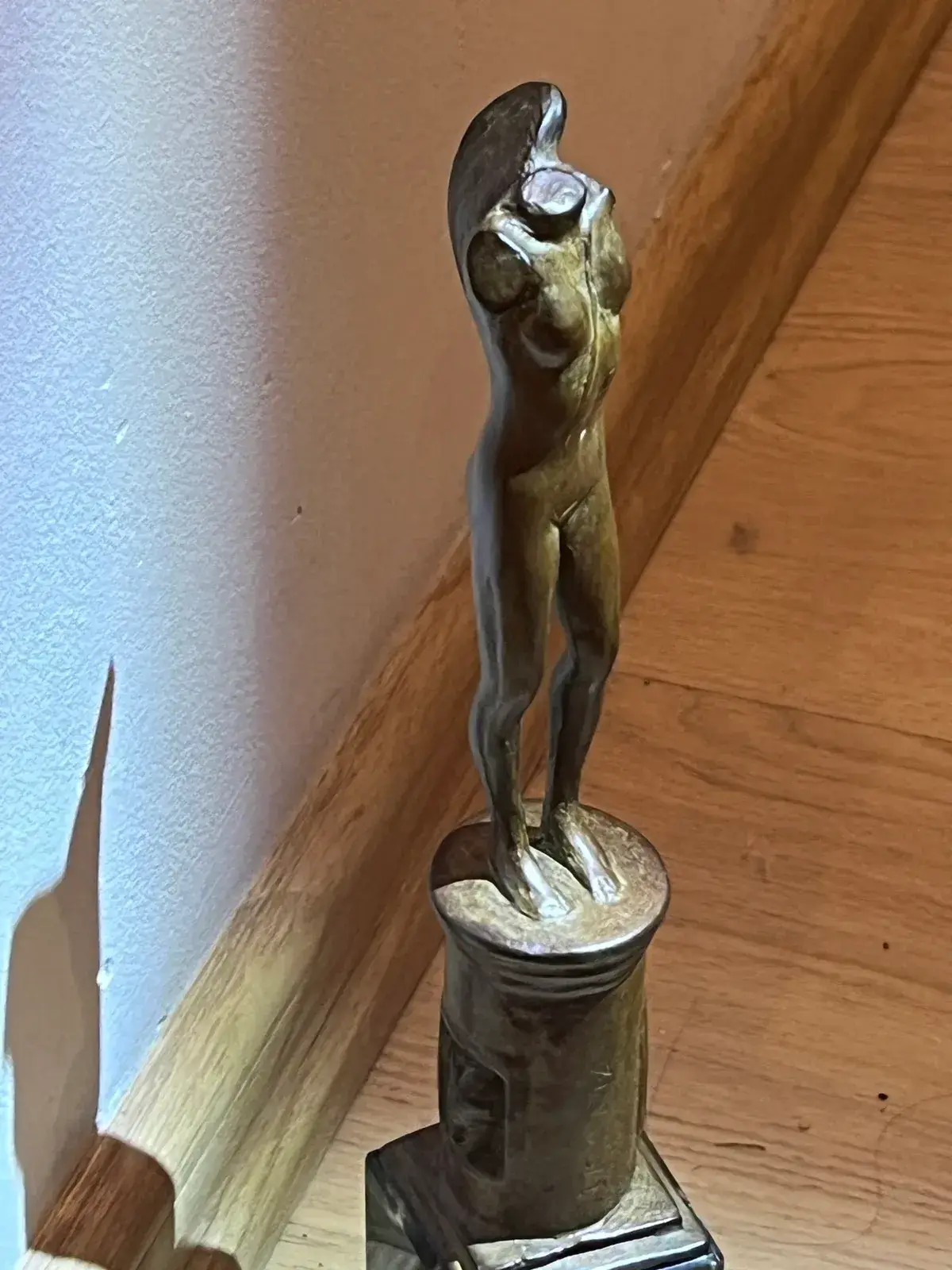
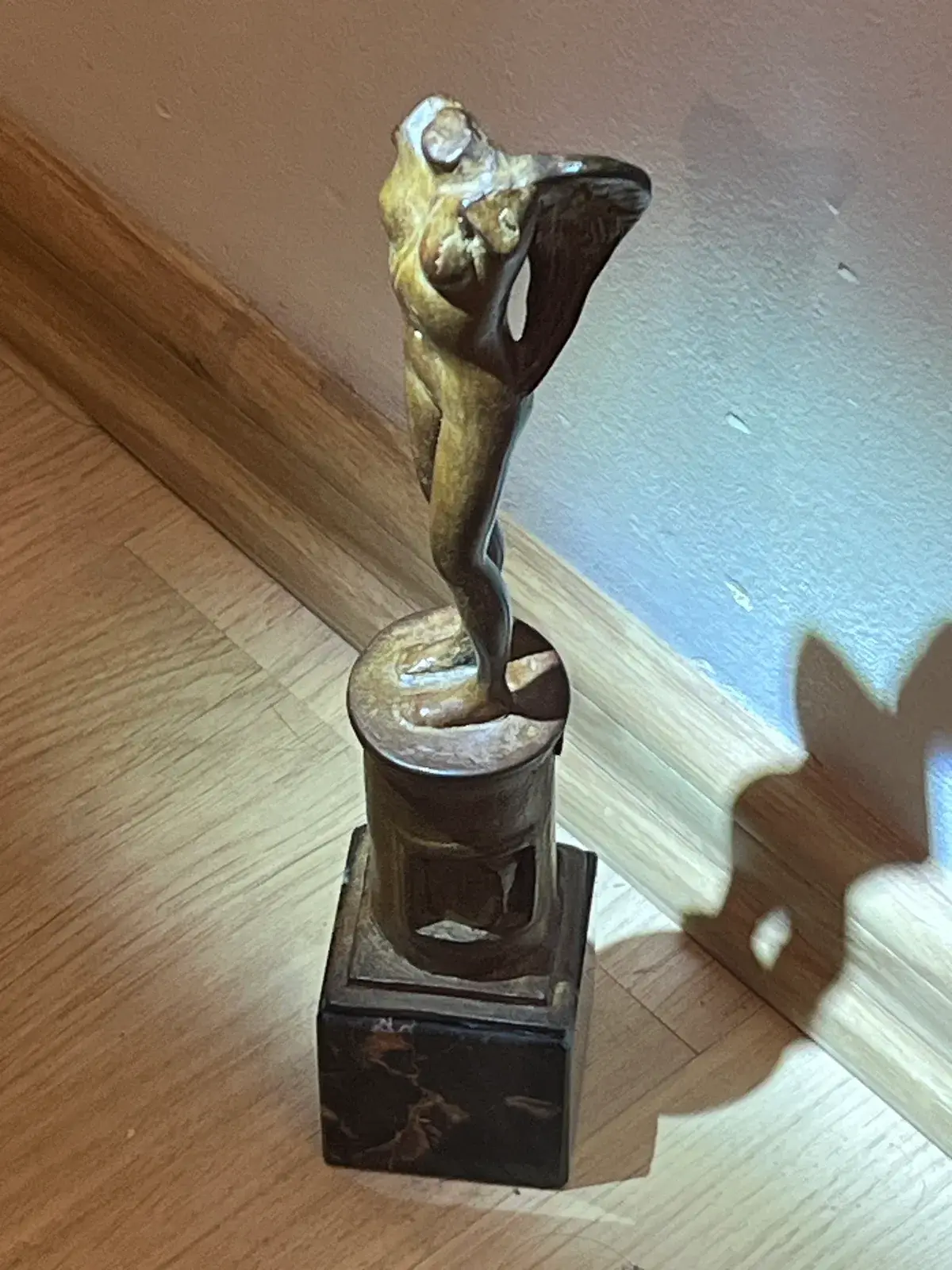
A female torso in dark copper-brown bronze — two delicate hands emerge from the fragmentary body, one cupping the chest, one at the waist, in an intimate gesture of self-embrace. Artcurial edition, 1979. Signed and numbered from an edition of 250, on an original round travertine base. 20 × 14 × 7 cm (sculpture) · 28.5 × 14 × 10 cm overall

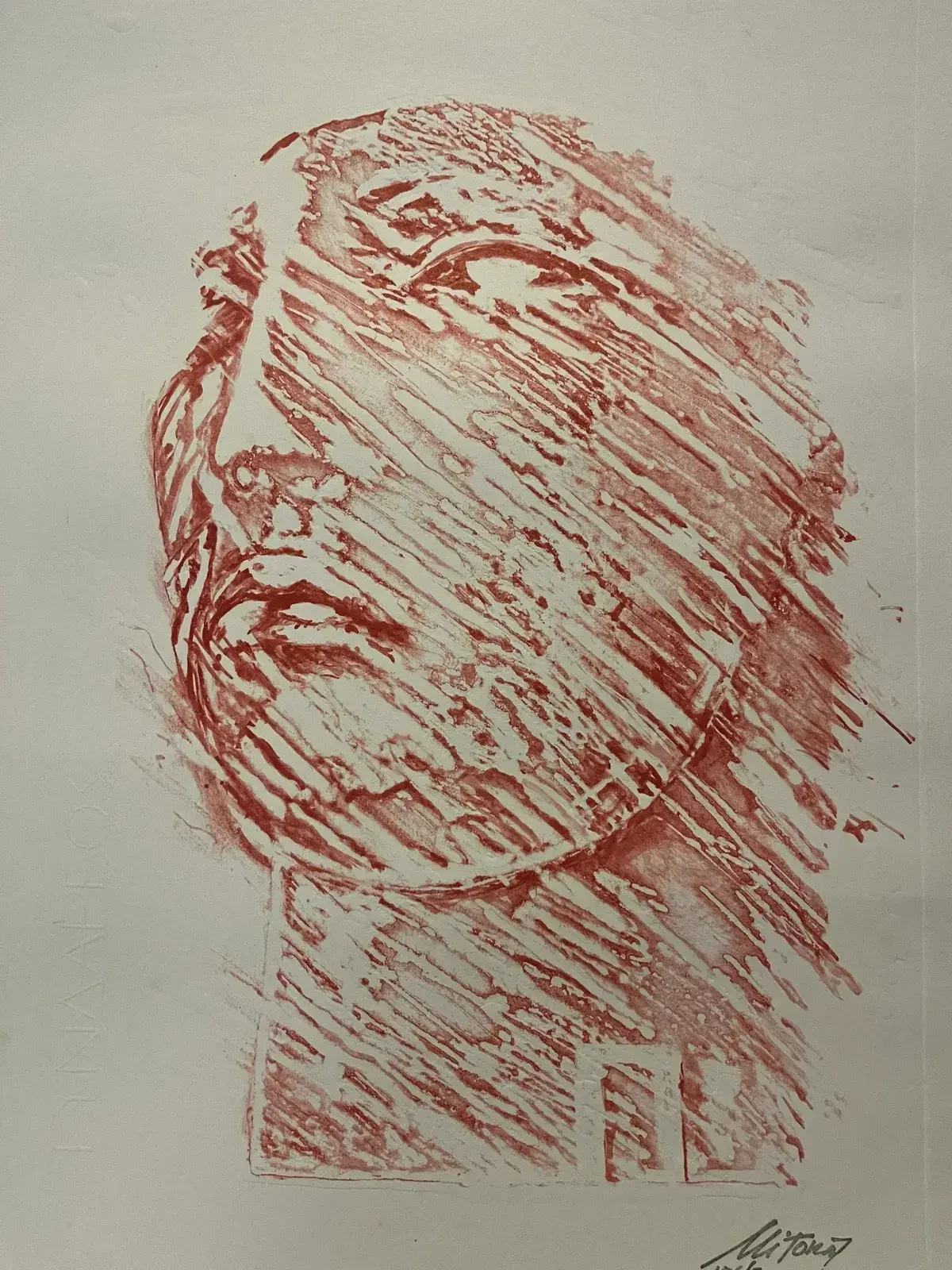
A striking sanguine (red chalk) lithograph depicting Tindareos — the mythological King of Sparta and father of Helen of Troy, rendered as a bandaged and fragmented head in fluid, gestural sanguine strokes on white paper. Signed Mitoraj lower right in pencil. A rare original signed print — Mitoraj's graphic works on paper are considerably scarcer than his bronzes.

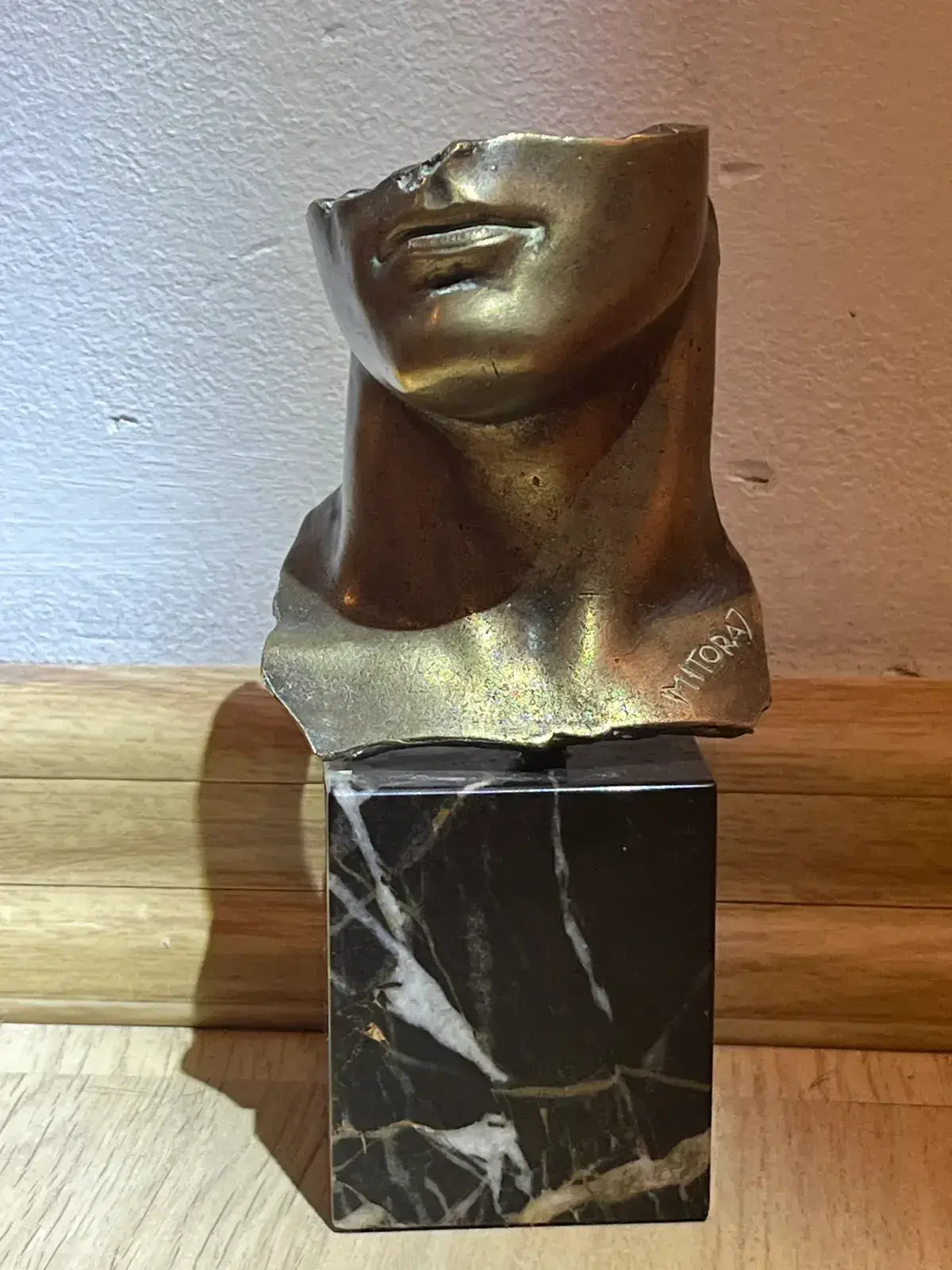
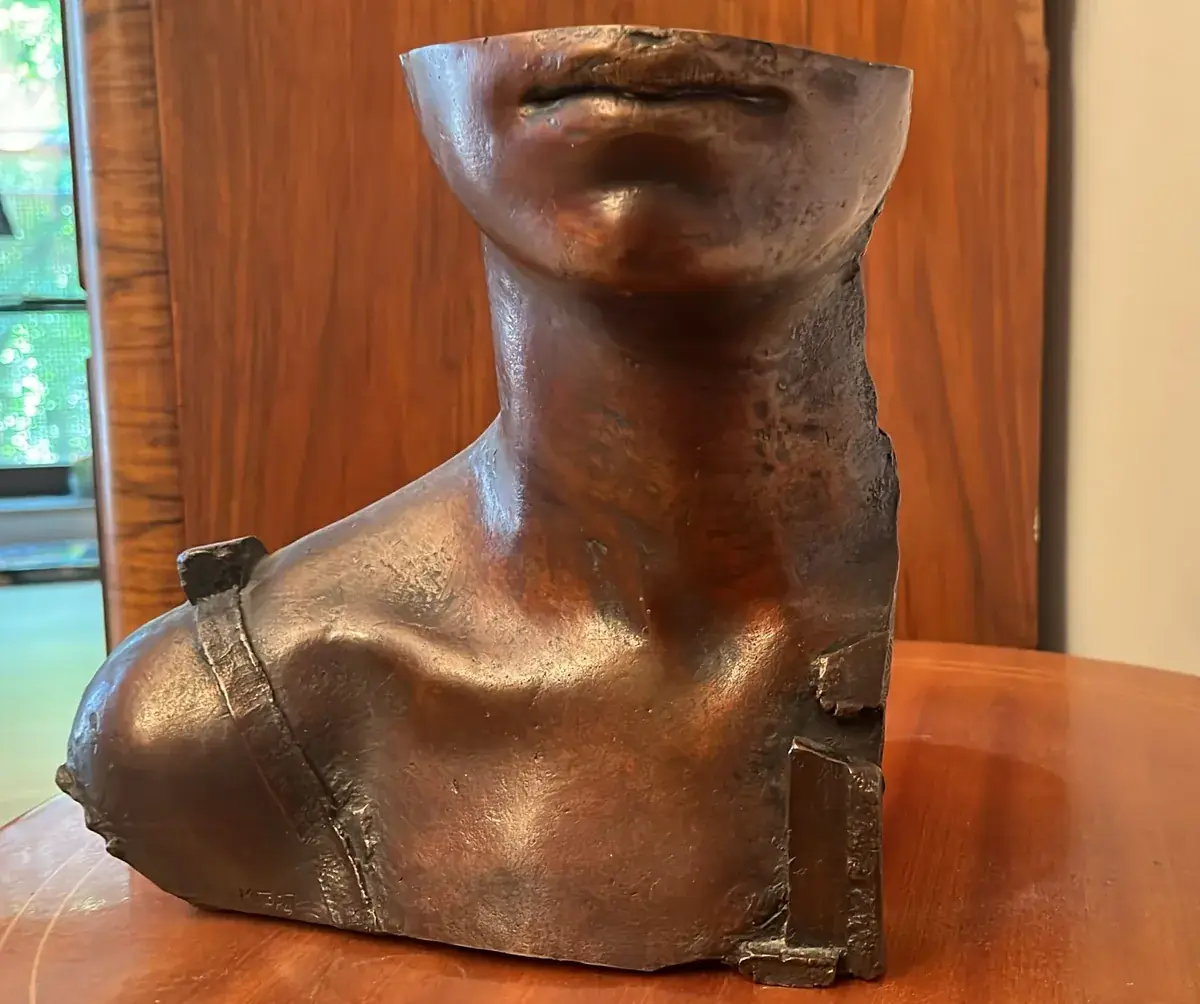
A fragment of a lower face — lips, chin, neck merging into an upper torso — in warm reddish-brown patina. Signed MITORAJ at the lower left edge of the base. A collector bronze meant to be encountered at close range: complete despite its incompleteness.

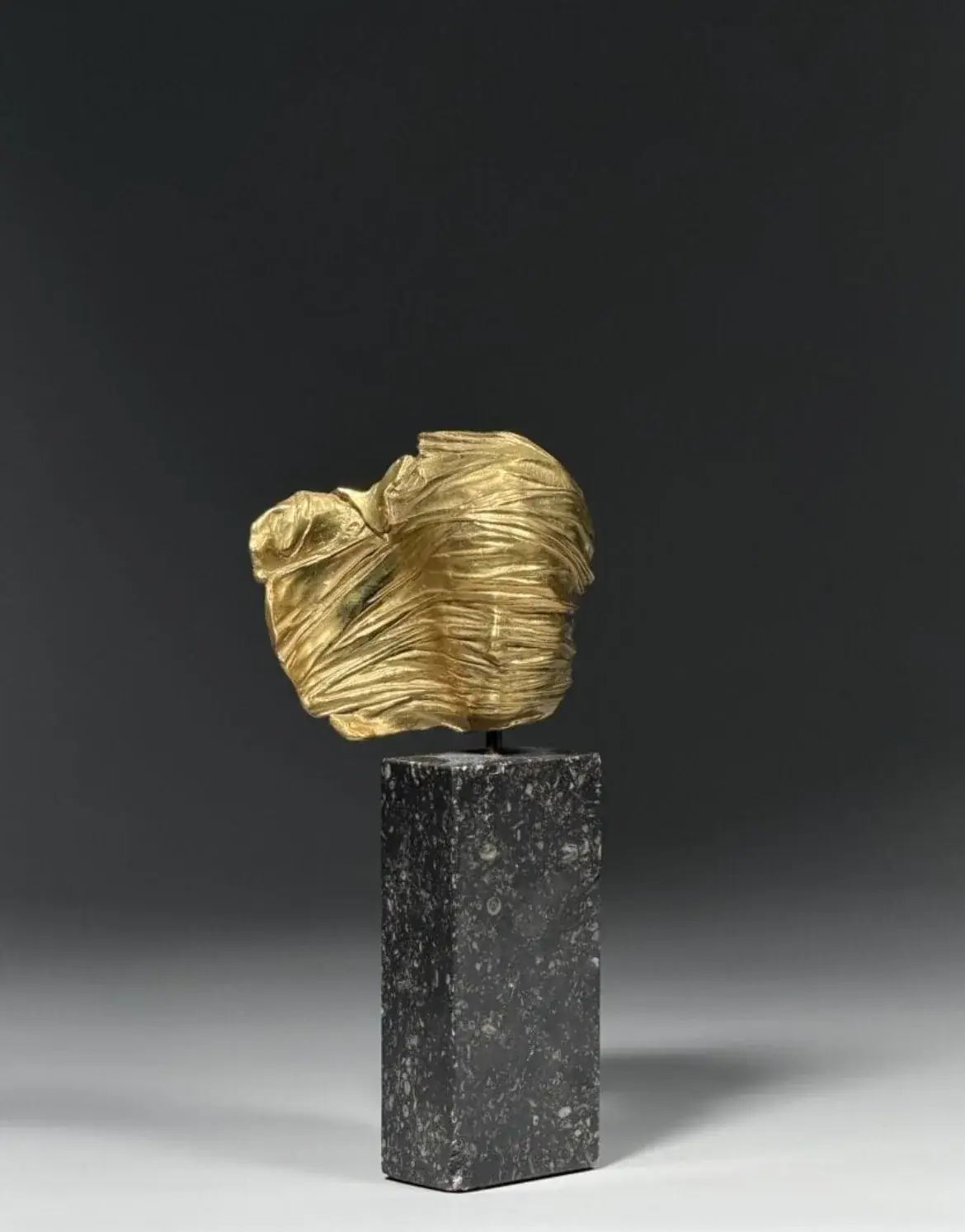
A gilded bronze head entirely enveloped in draped fabric, mounted on a dark veined marble base. The gold patina and abstract rounded form of fabric folds make this one of Mitoraj's most enigmatic works — concealment as its own revelation.

A small silver-plated bronze bust — wrapped head and bound torso on a black marble base. The high-mirror chrome patina is exceptional among Mitoraj editions; the binding motif here reads as both punishment and protection, faithful to the myth of Prometheus chained. Signed MITORAJ.

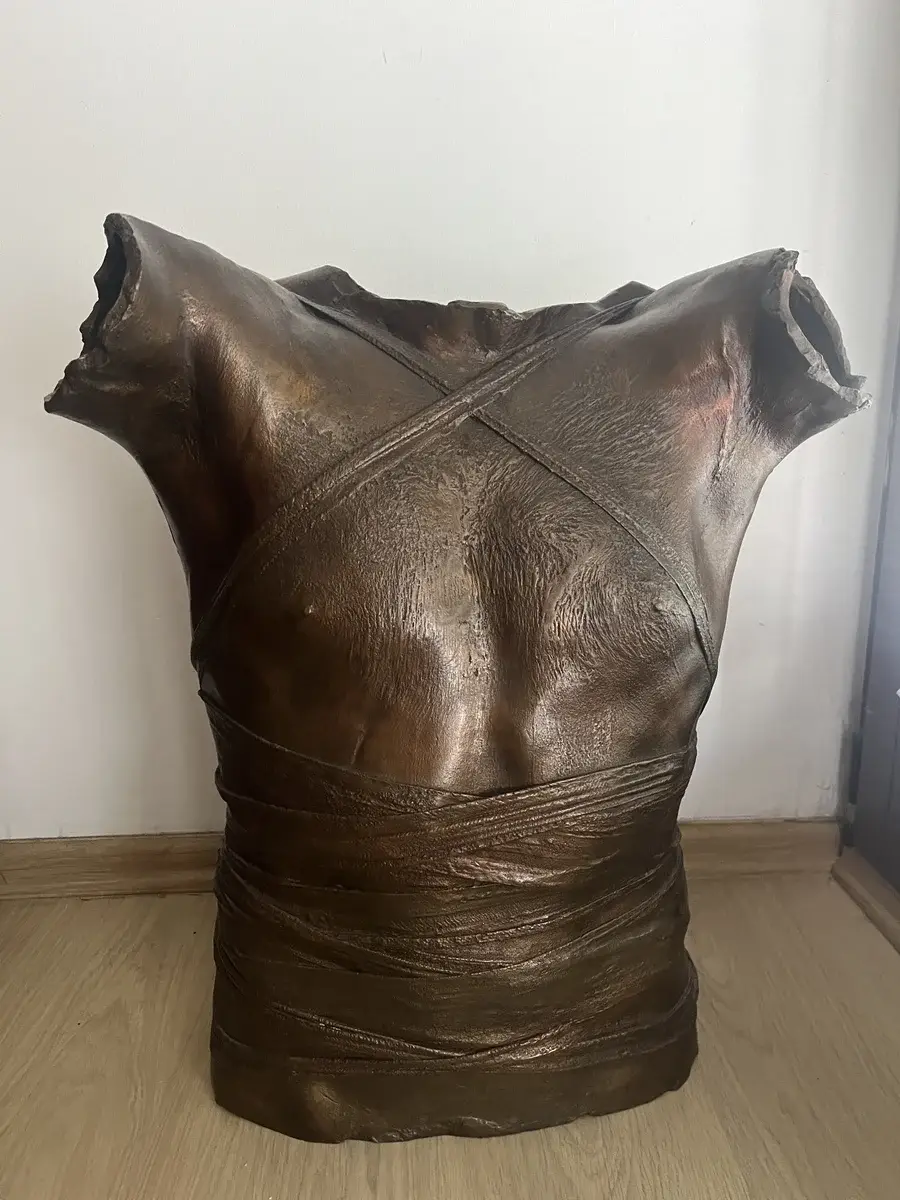
A bronze breastplate (corazza) from 1987 — one of only five cast. The Corazza belongs to Mitoraj's late-1980s series of armoured and bound forms, in which the body is simultaneously protected and constrained by the same gesture. Signed MITORAJ. Edition of 25. approx. 25 × 29 × 10.5 cm

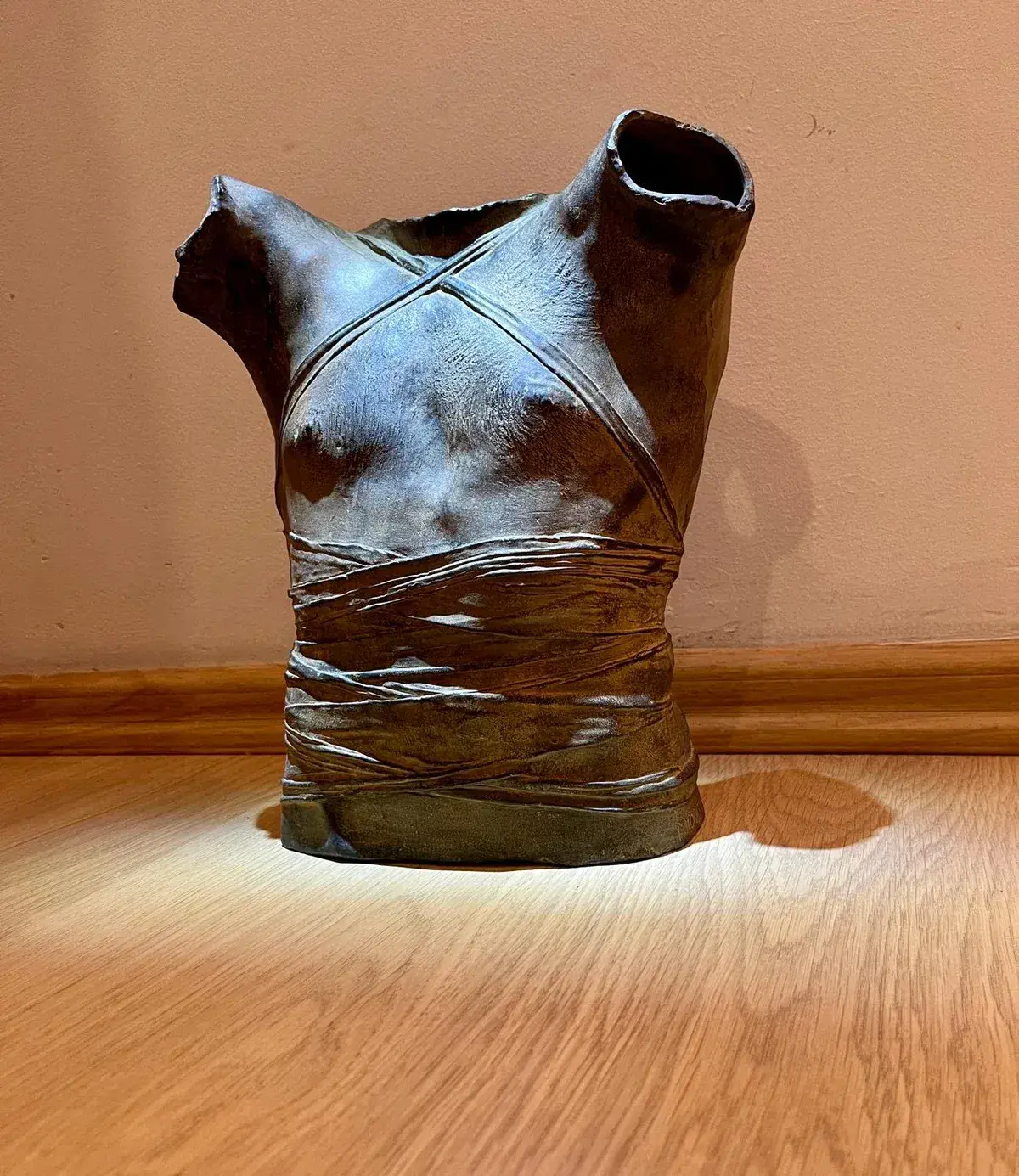
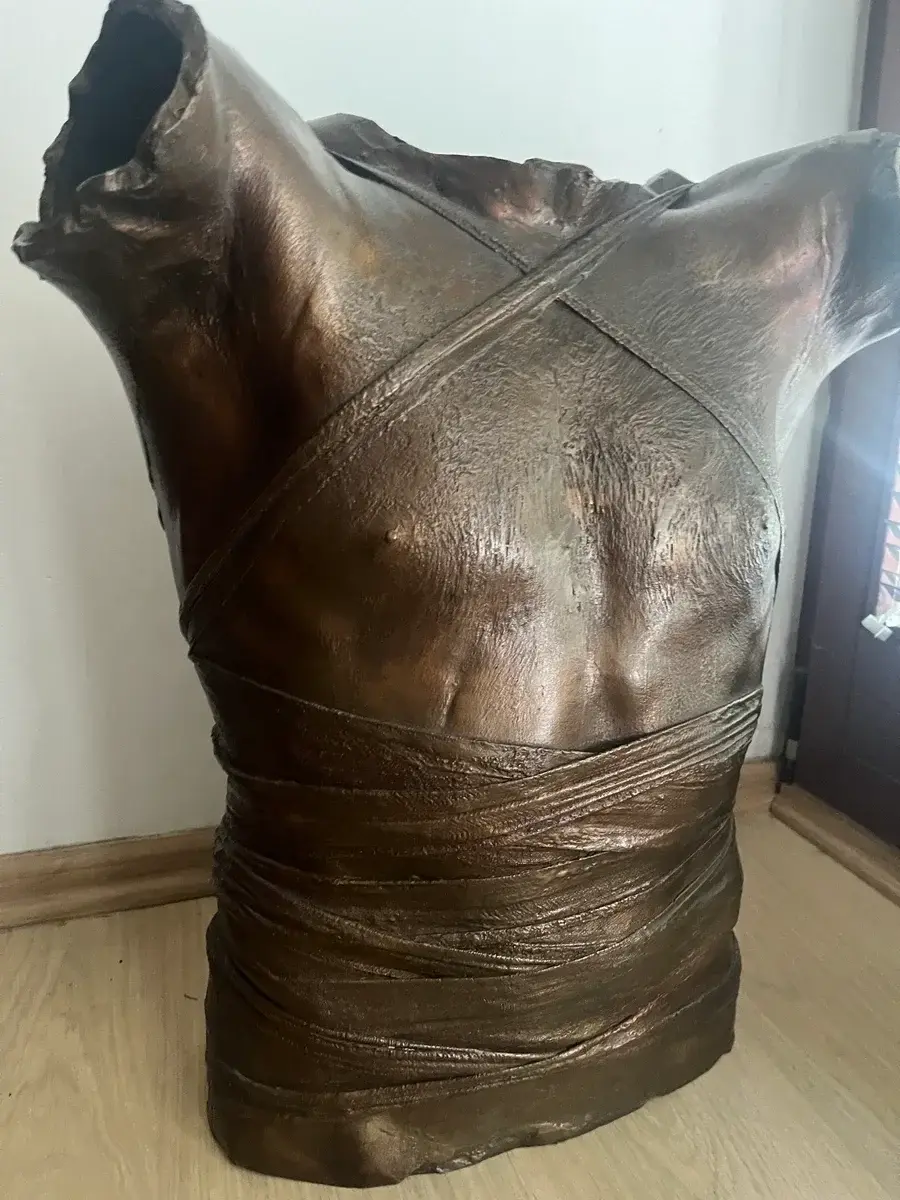
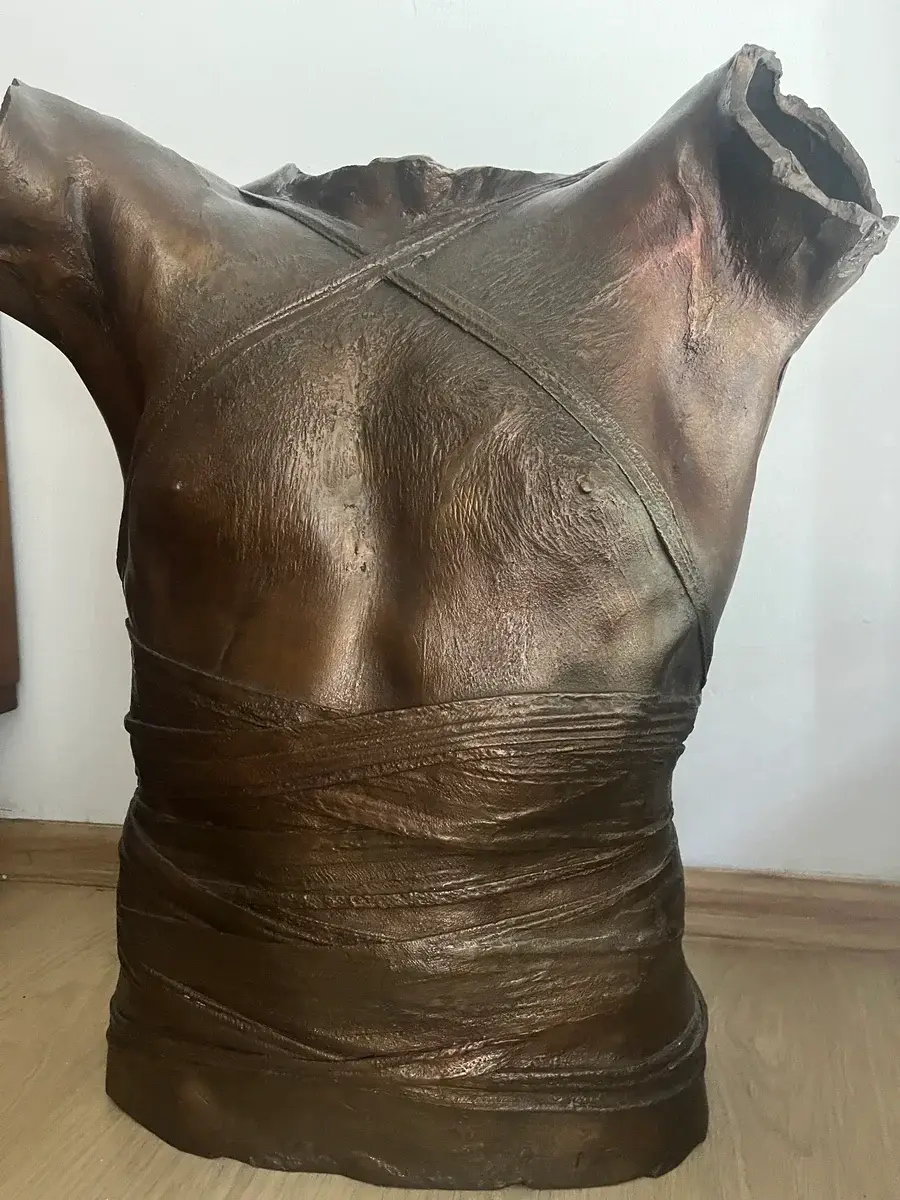
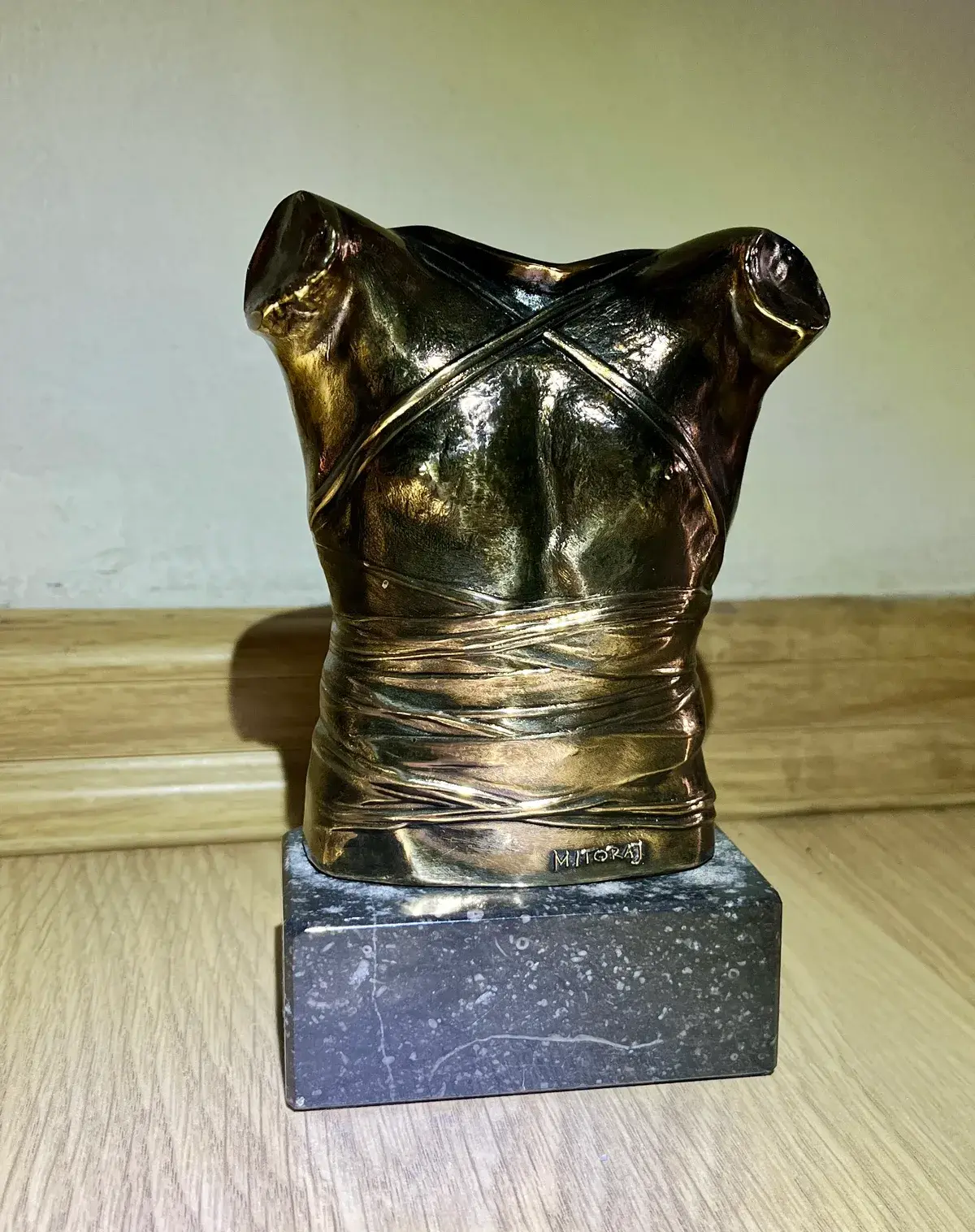
The wrapped bronze torso upright — the X-crossing of the binding straps across the chest clearly visible. Warm golden-brown patina. Signed MITORAJ. approx. 28–30 cm height

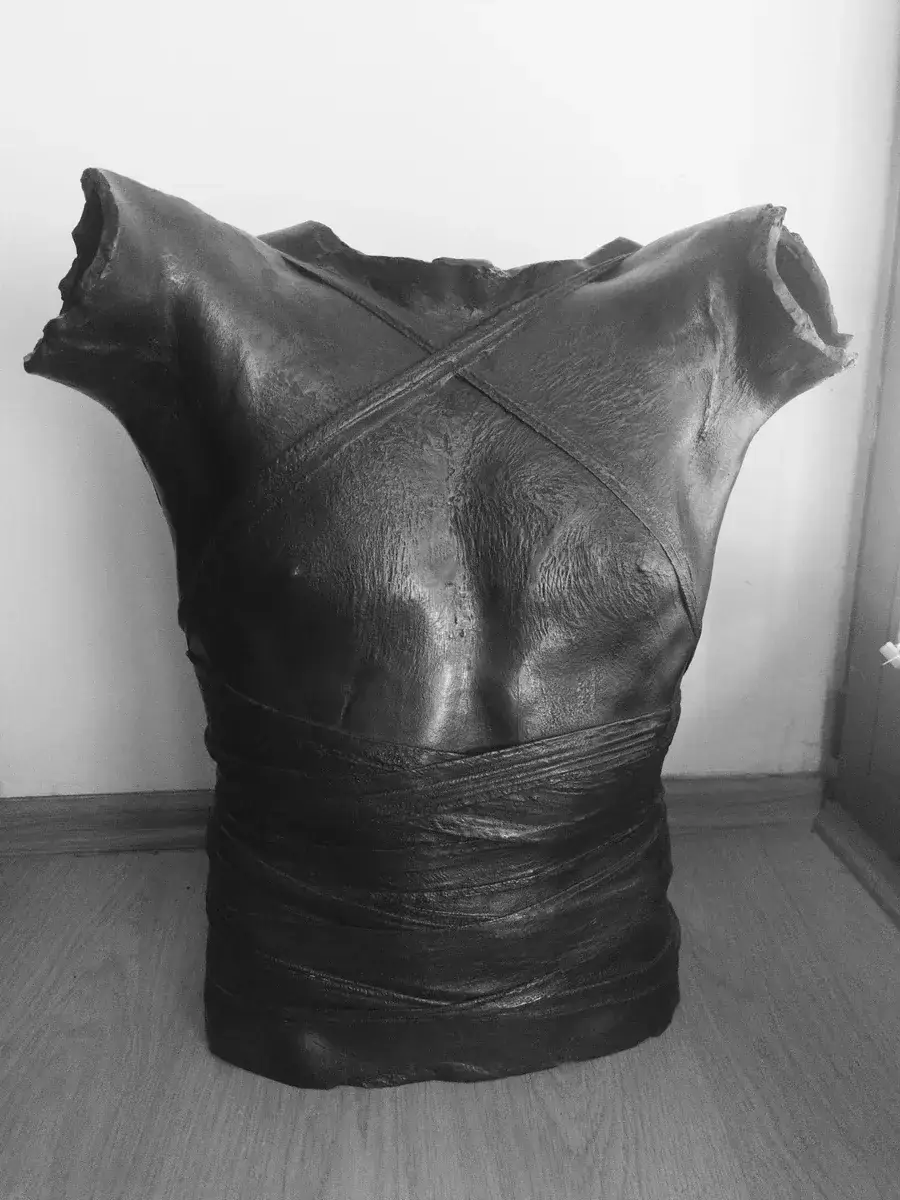
High-contrast monochrome of the wrapped torso — the diagonal X-crossing of the binding straps reads as pure geometry against the dark patina. The sculptural tension between concealment and form is most visible here.

The torso from the side — the horizontal binding at the waist and the warm, polished bronze of the chest in full light. The deliberate fragmenting of neck and arms is particularly evident from this angle.

A second view of the torso lying on its side — the depth of the bronze casting and the layered wrapping at the lower body. The ragged, open neck and shoulder edges are characteristic of Mitoraj's broken-body aesthetic.

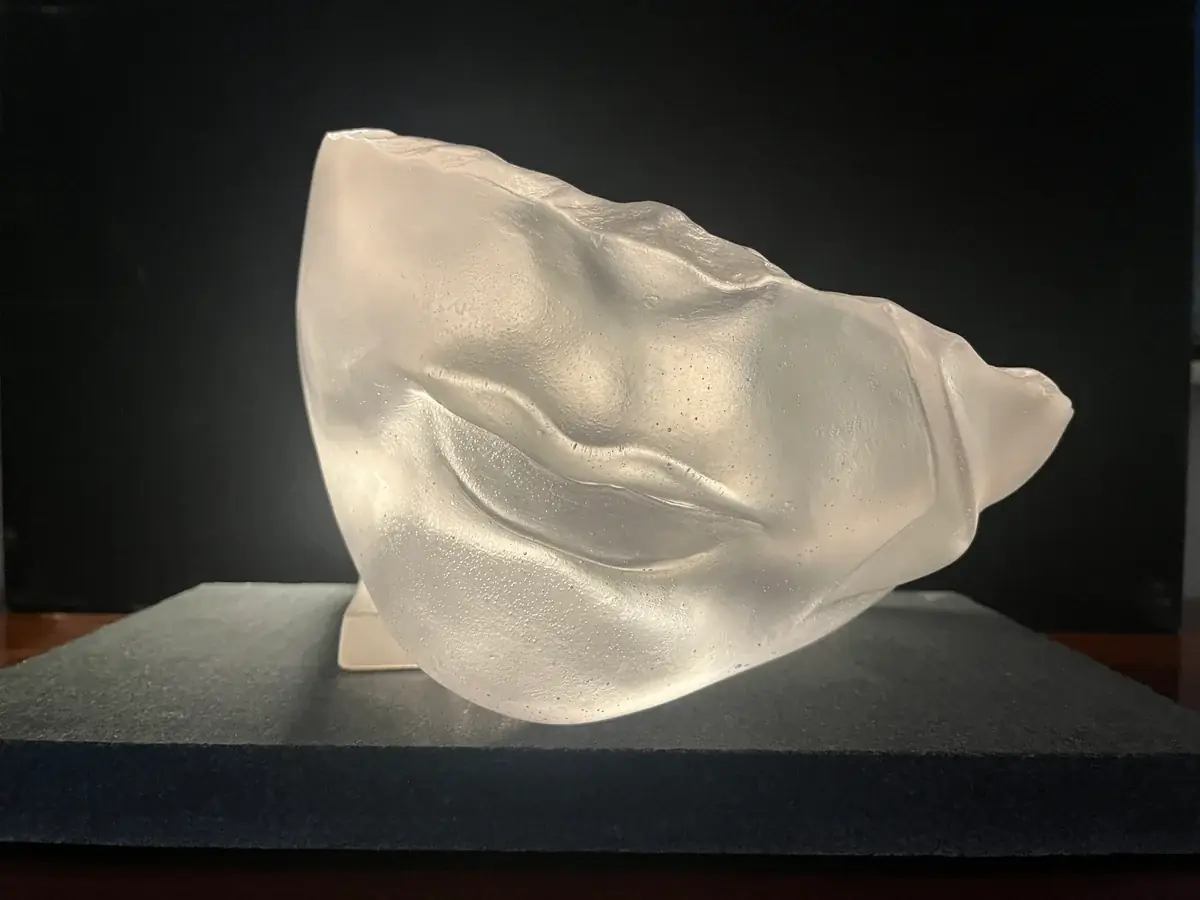
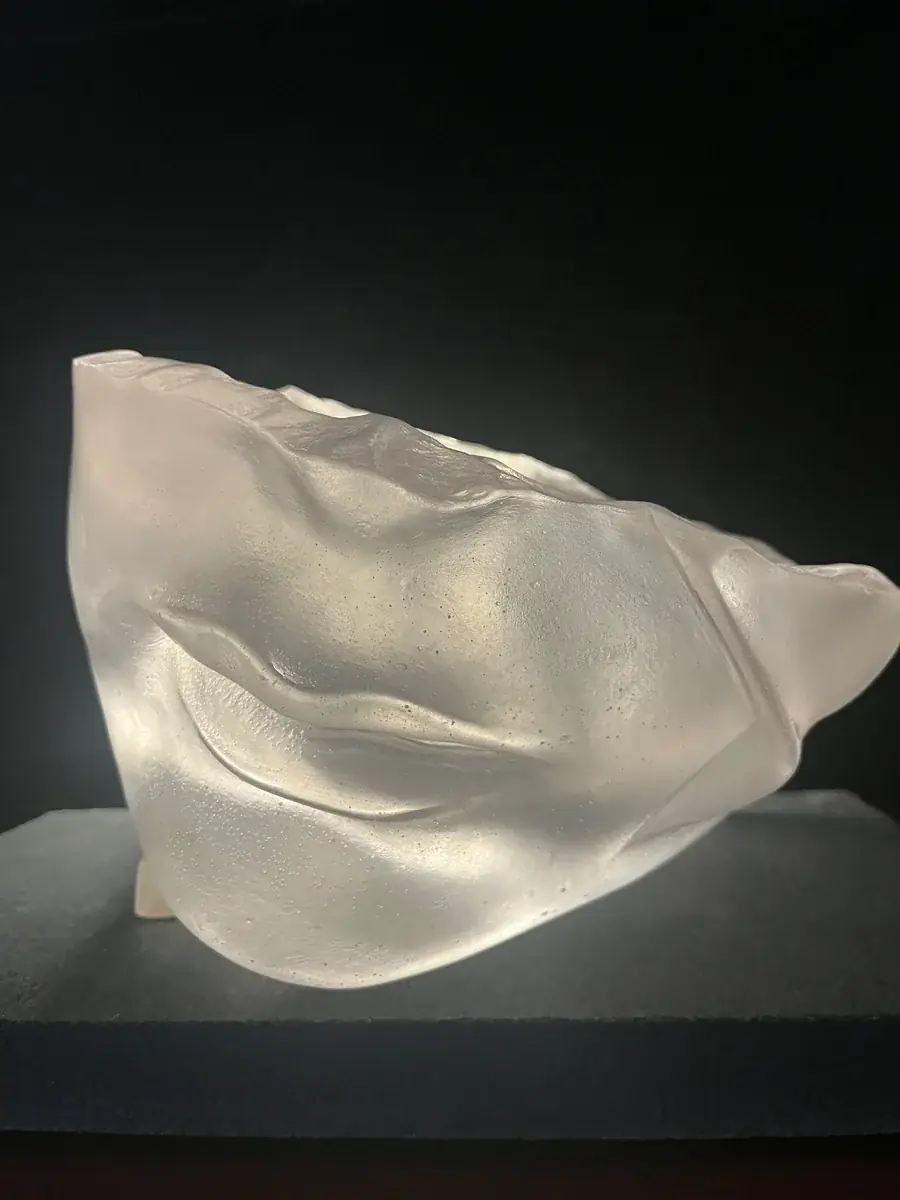
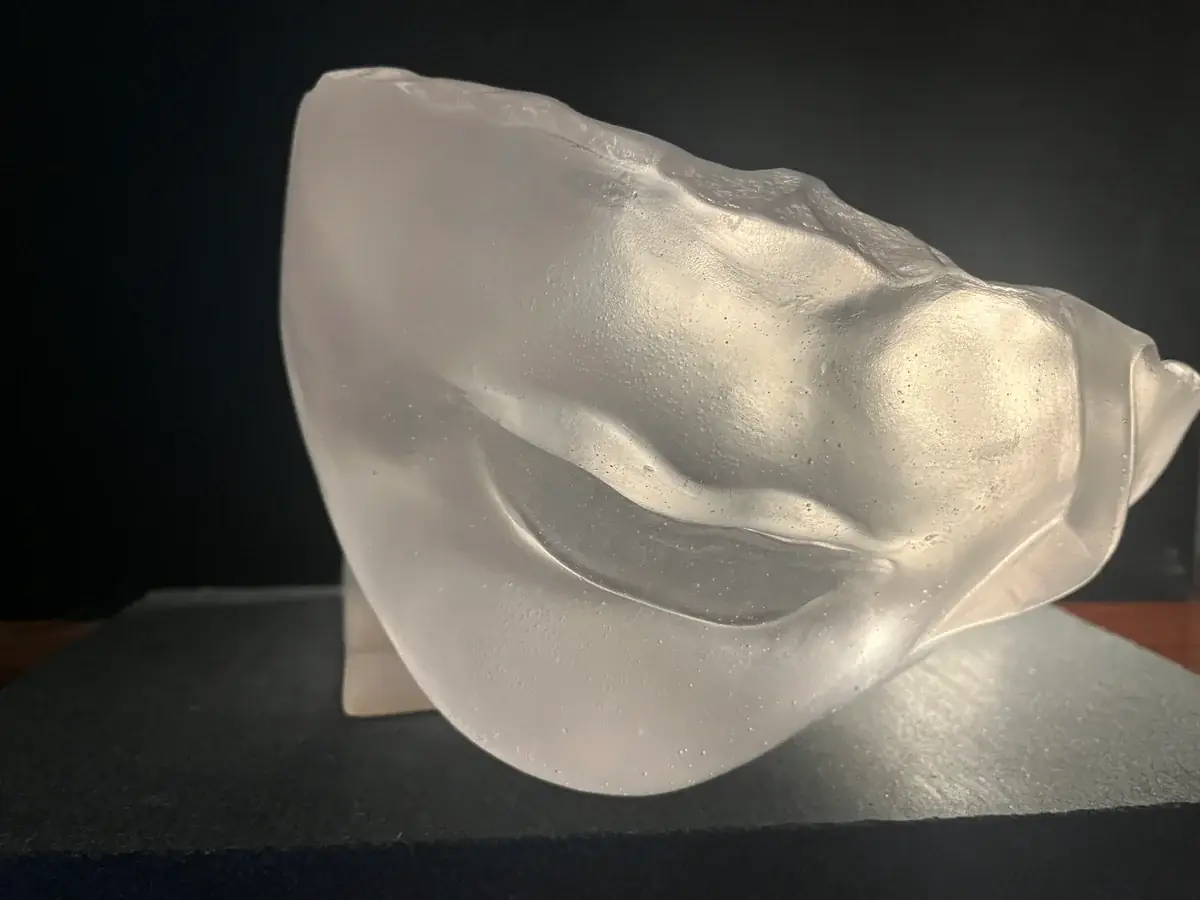
A large frosted crystal sculpture — lips, nose and cheekbone emerging from the translucent surface in characteristic Mitoraj profile. The matte glass gives the face an ethereal, luminous quality. On a dark display base.

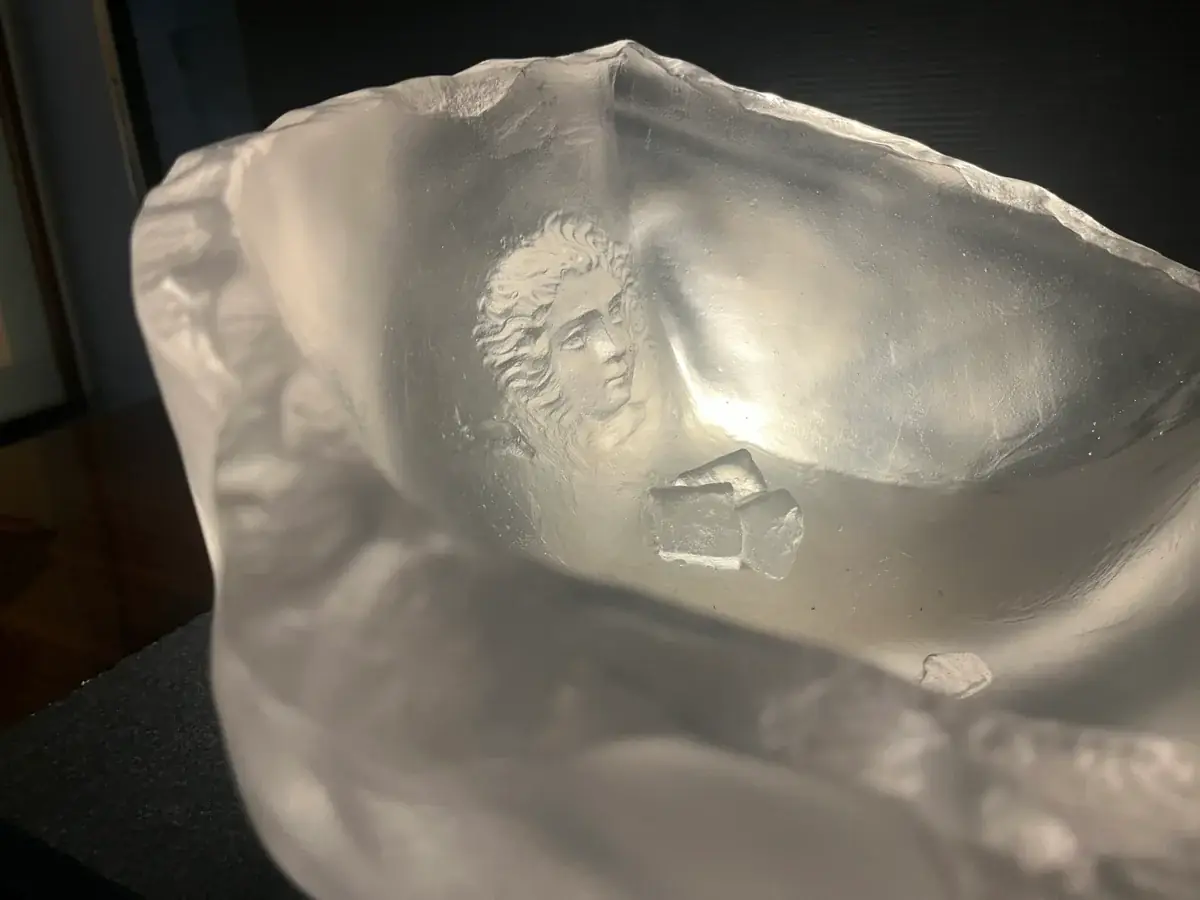
The most remarkable detail: a classical intaglio relief — a figure with flowing hair, looking upward — carved into the hollow interior of the crystal head. An interior world within the fragment.

The full form of Saturnia shown upright — the scale of the head fragment is clear. The ragged upper edge and the deep hollowing are the piece's defining features.

Light passing through the frosted crystal from behind — the translucent quality of the glass and the organic contours of the face lit from within. The sculpture transforms completely under backlighting.

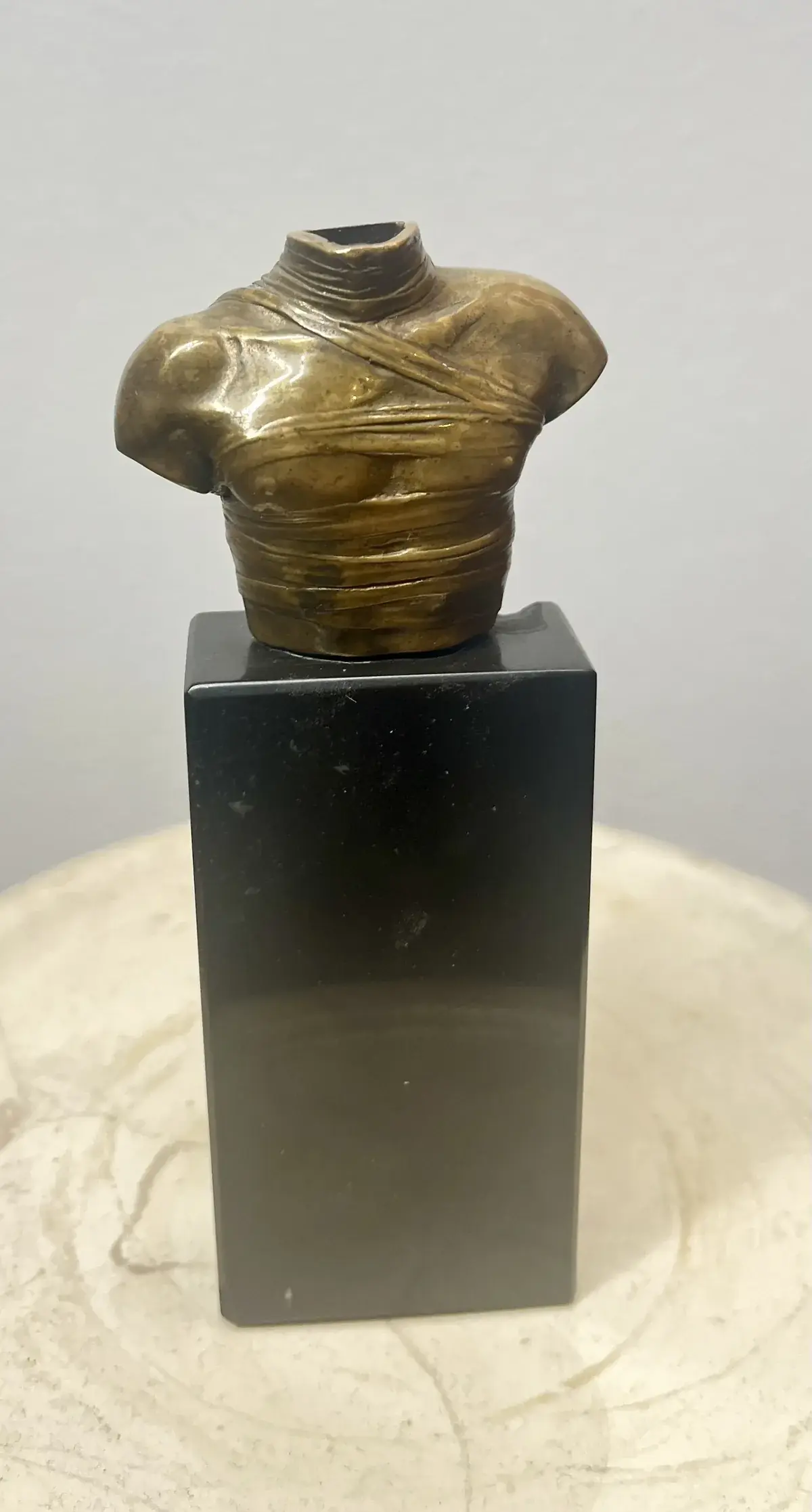
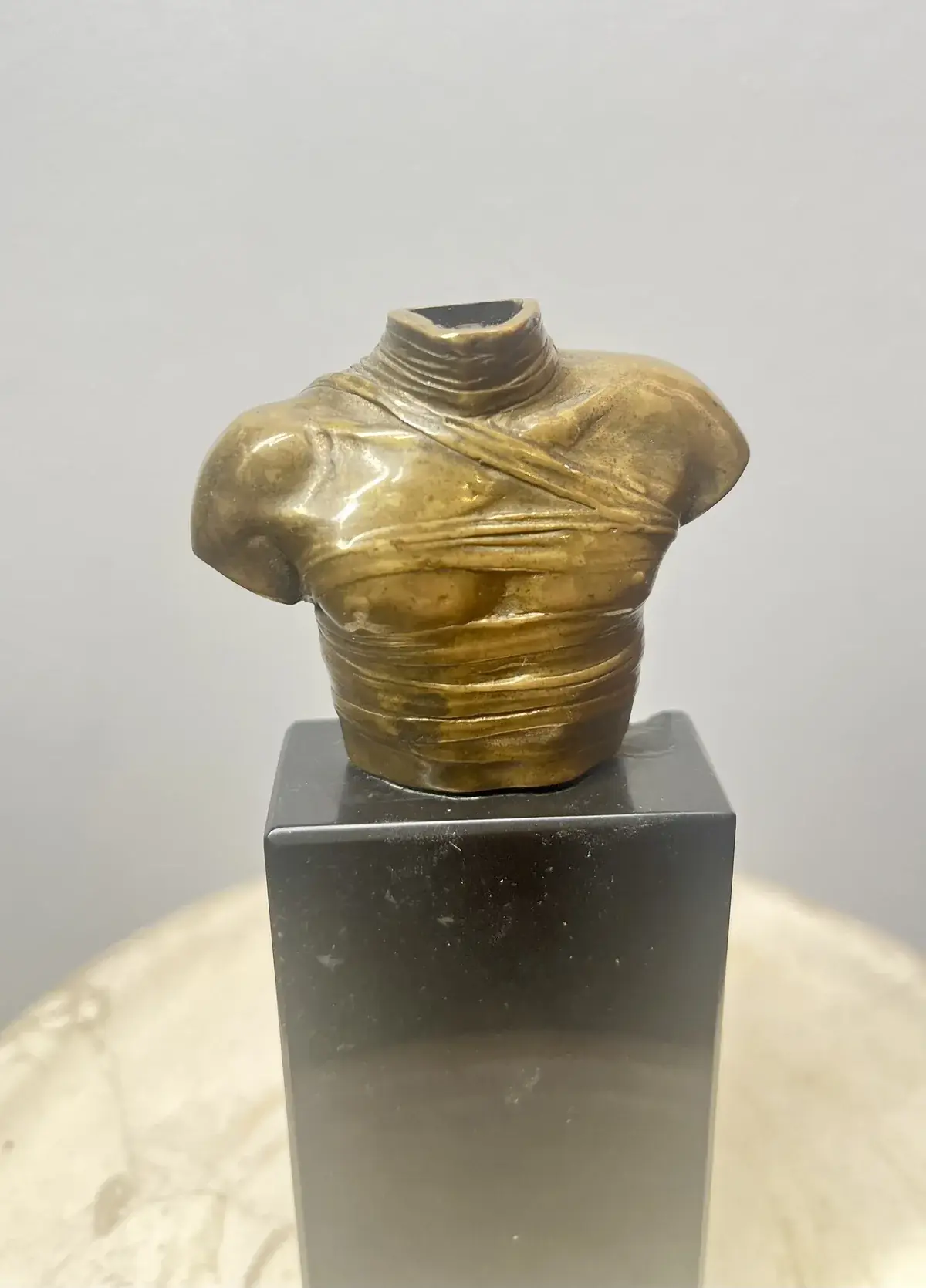
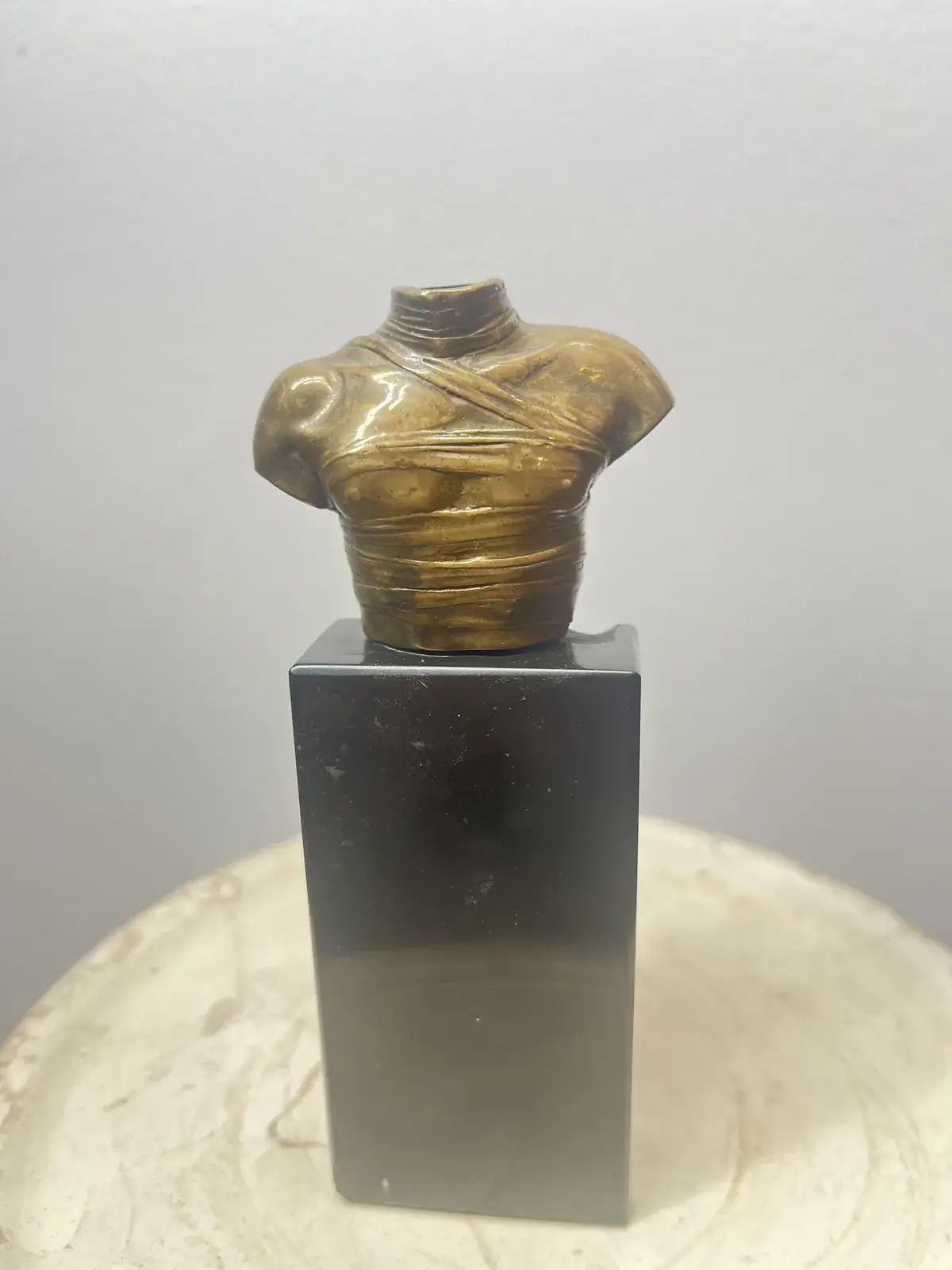
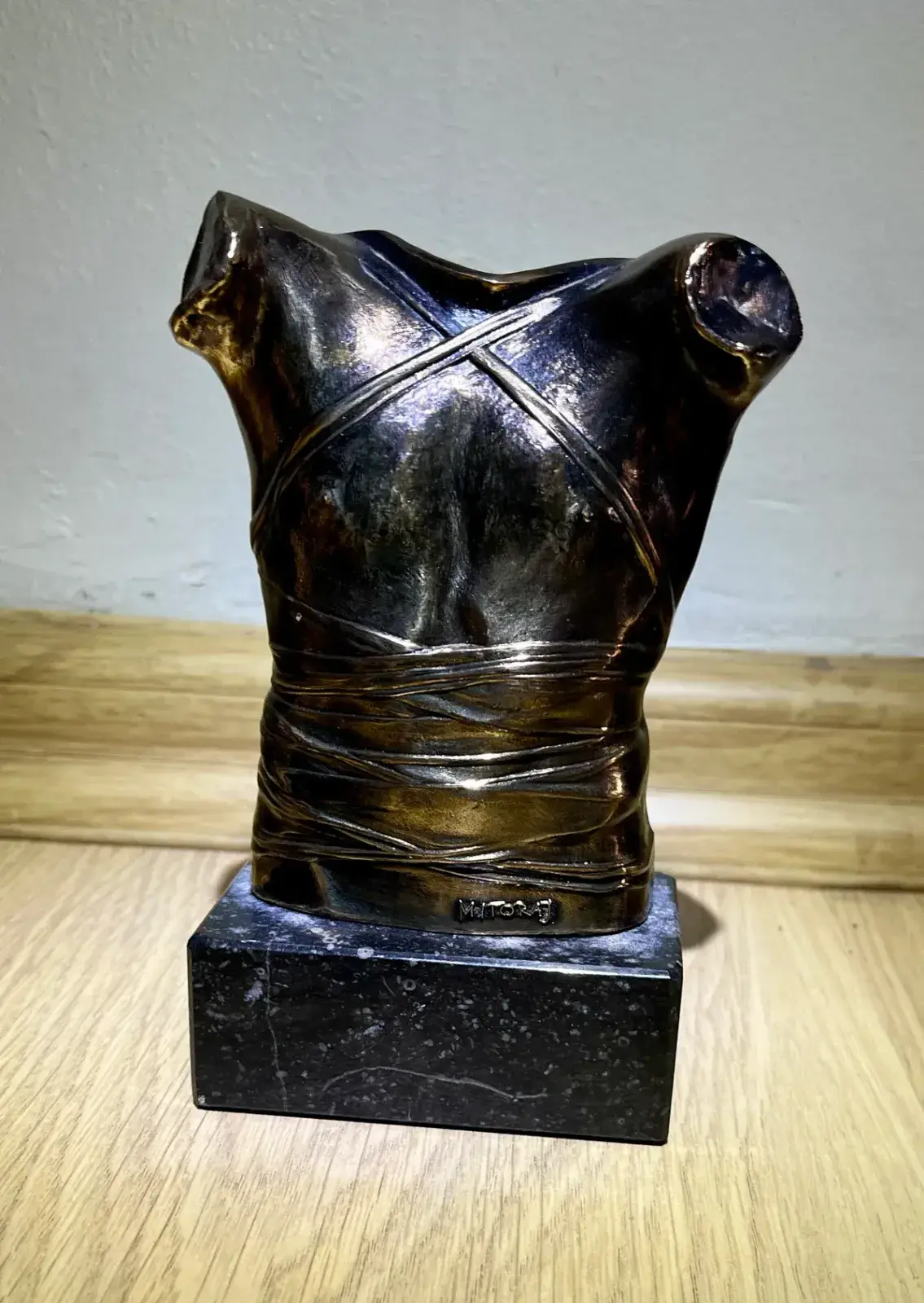
A small golden-patinated bronze torso tightly bound by horizontal wrapping straps, on a polished black marble base. The characteristic Mitoraj gesture: the body simultaneously armoured and constrained.

Close view of the diagonal strap crossing the chest and the intricate surface modelling of the bound torso.

Full view on its black marble pedestal, showing the proportions of the sculpture and the clean geometric base that grounds the fragmentary figure.

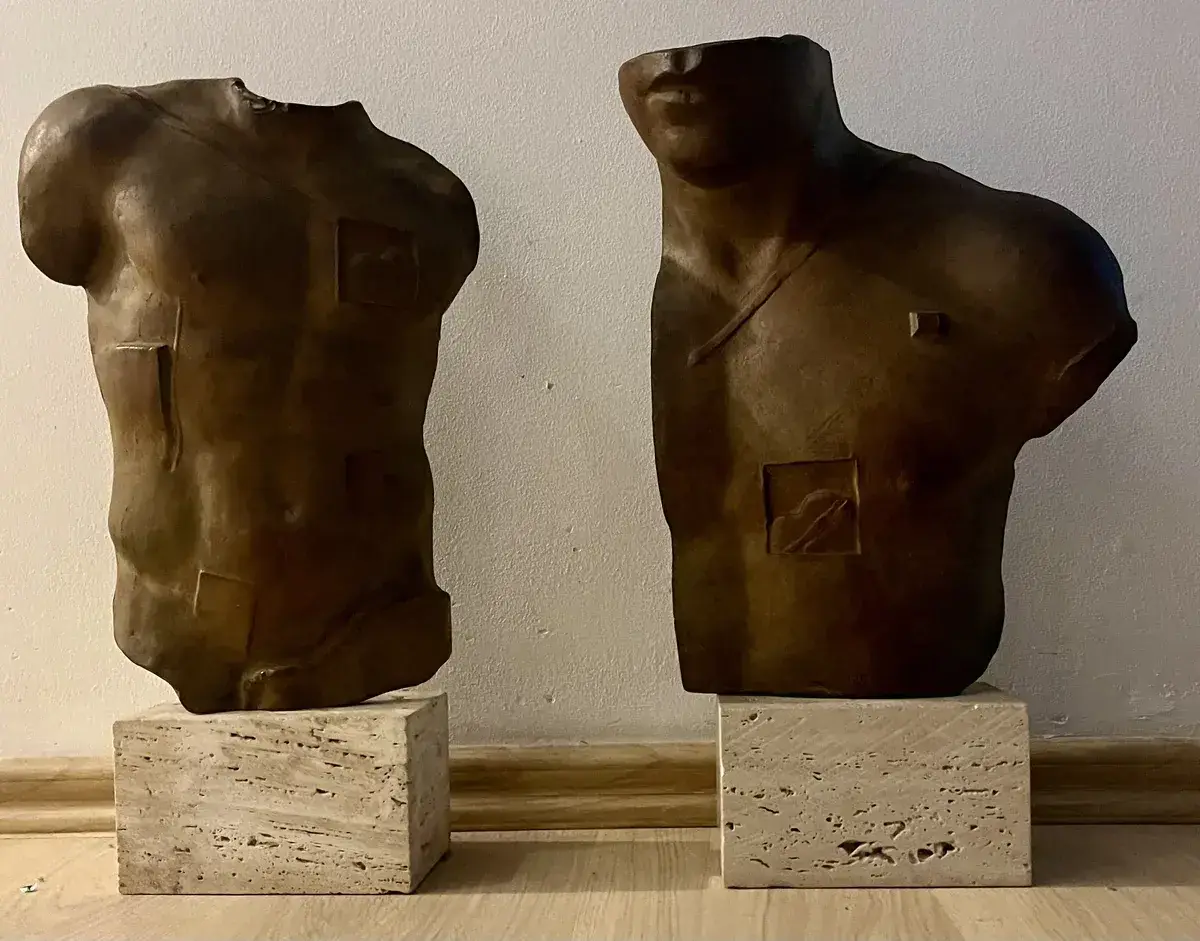
Persée (1988) and Asclépios (1988) side by side — both in warm brown patina, each on its travertine base. The two canonical Mitoraj torsos of the late 1980s, united in a single view.

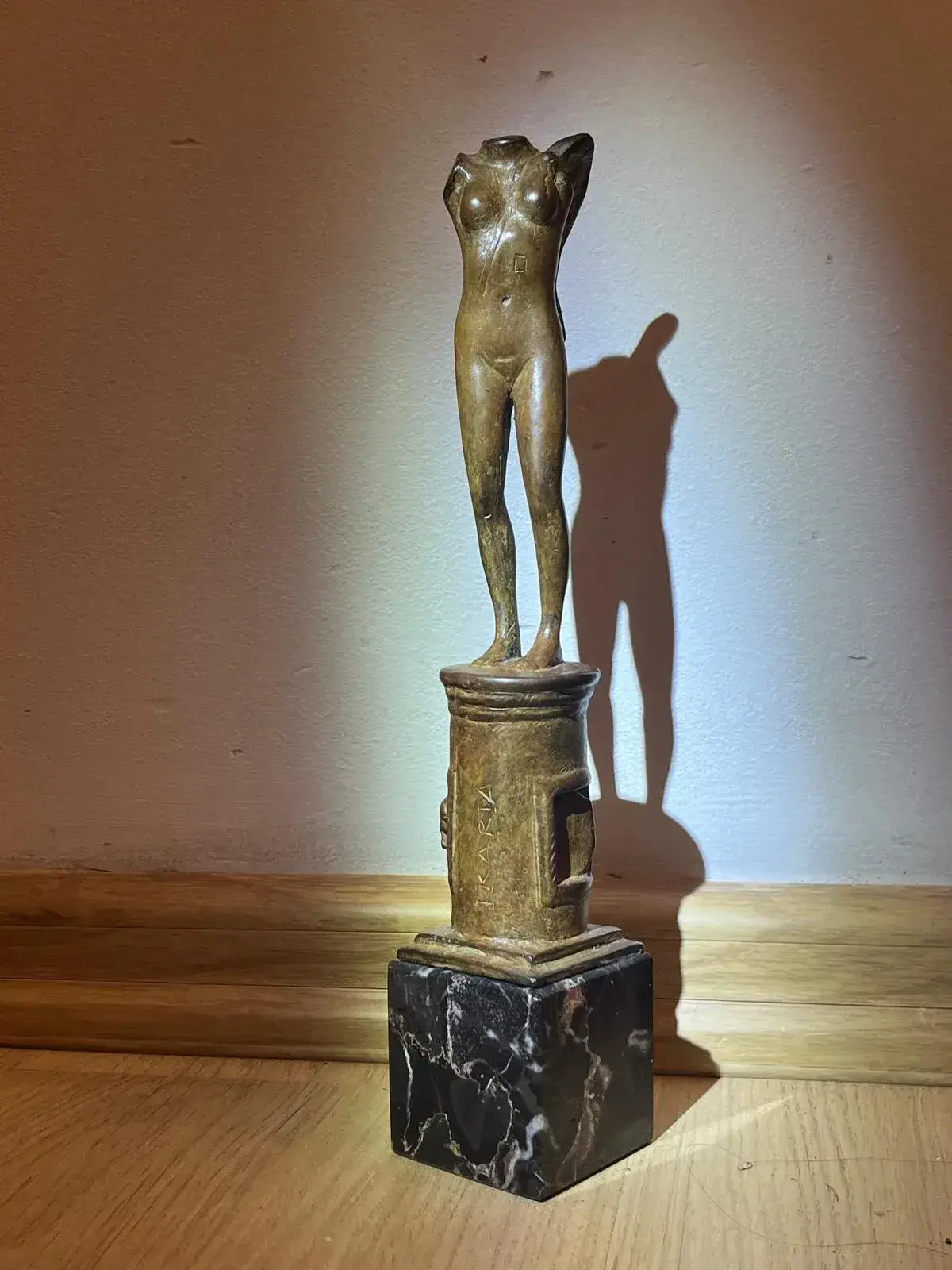
A small collector bronze of Ikaria — Mitoraj's winged figure, symbol of desire and flight that mirrors the myth of Icarus. Signed Mitoraj.

A bronze medal from the Conversation series — two faces in quiet dialogue across the disc. Signed Mitoraj.

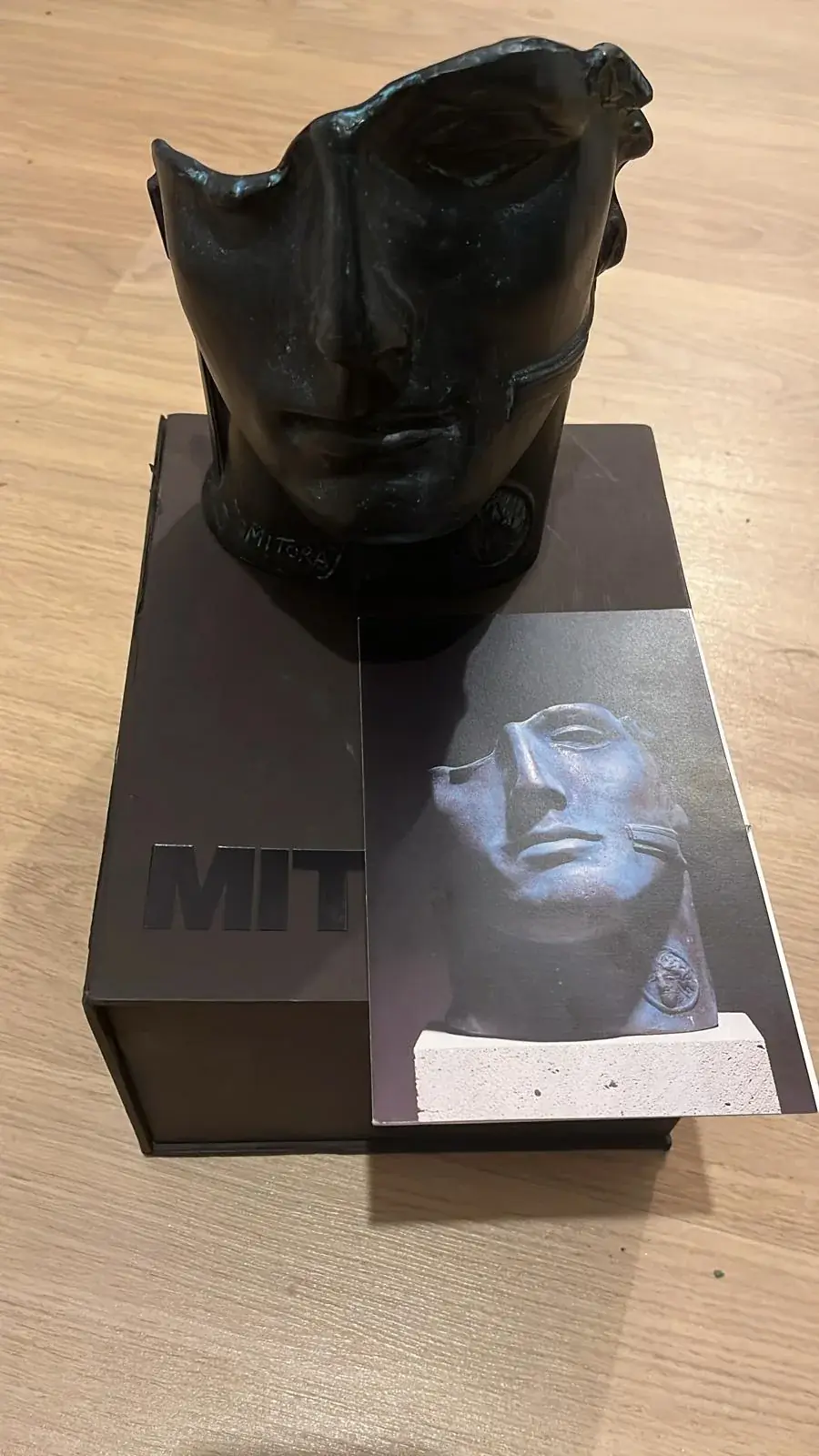
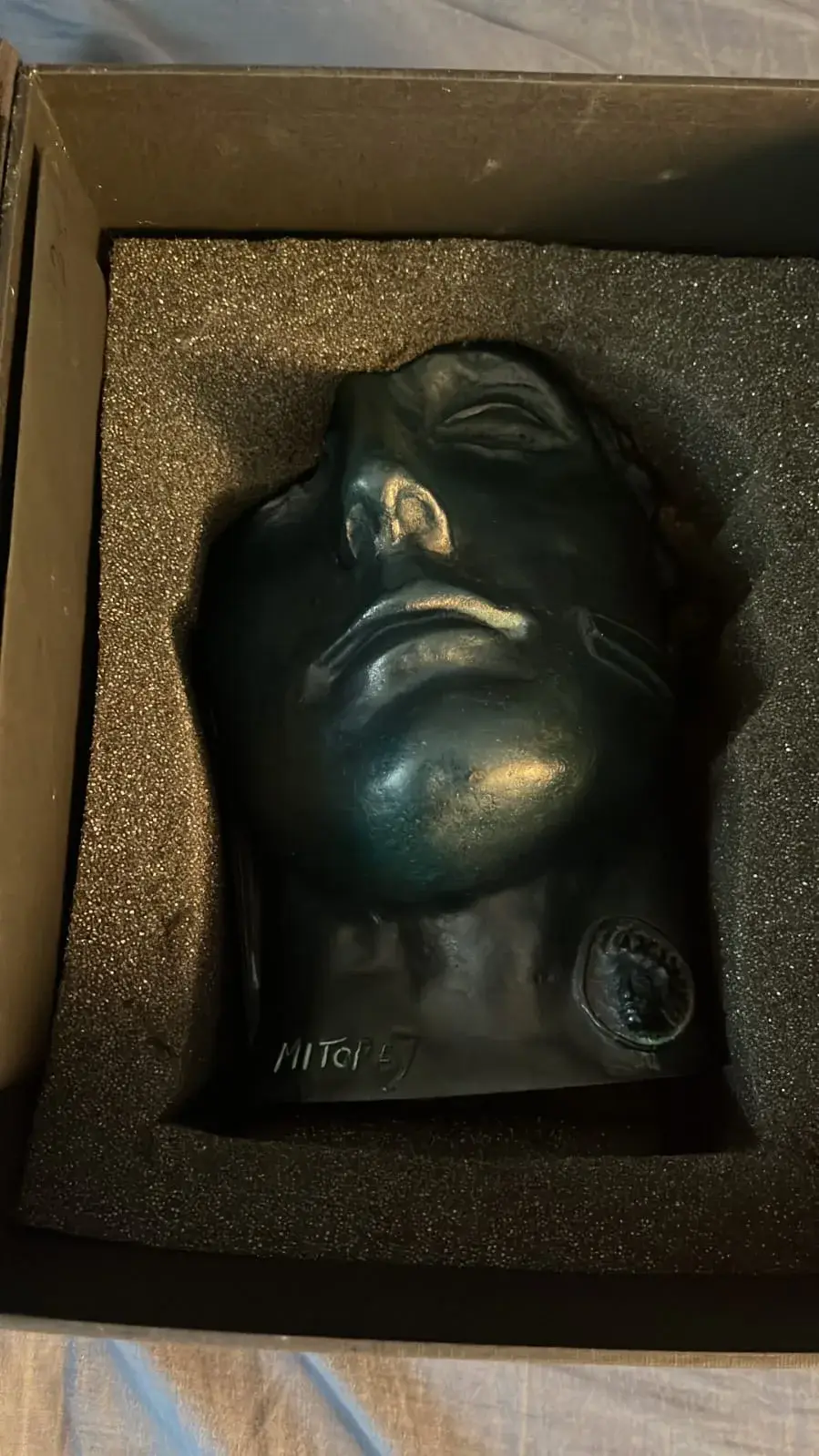
Centurione II (1987) with its original presentation box. Ed. 1500 · signed MITORAJ.

Persée (1988) — signed MITORAJ on travertine base. Ed. 1000 + HC · 38 cm without base.

Persée (1988) — signed MITORAJ on travertine base. Ed. 1000 + HC.

Dark-patinated Asclépios on travertine base, signed MITORAJ.

Centurione II (1987) in its original foam-lined presentation box. Dark patina and MITORAJ signature clearly visible. Ed. 1500.

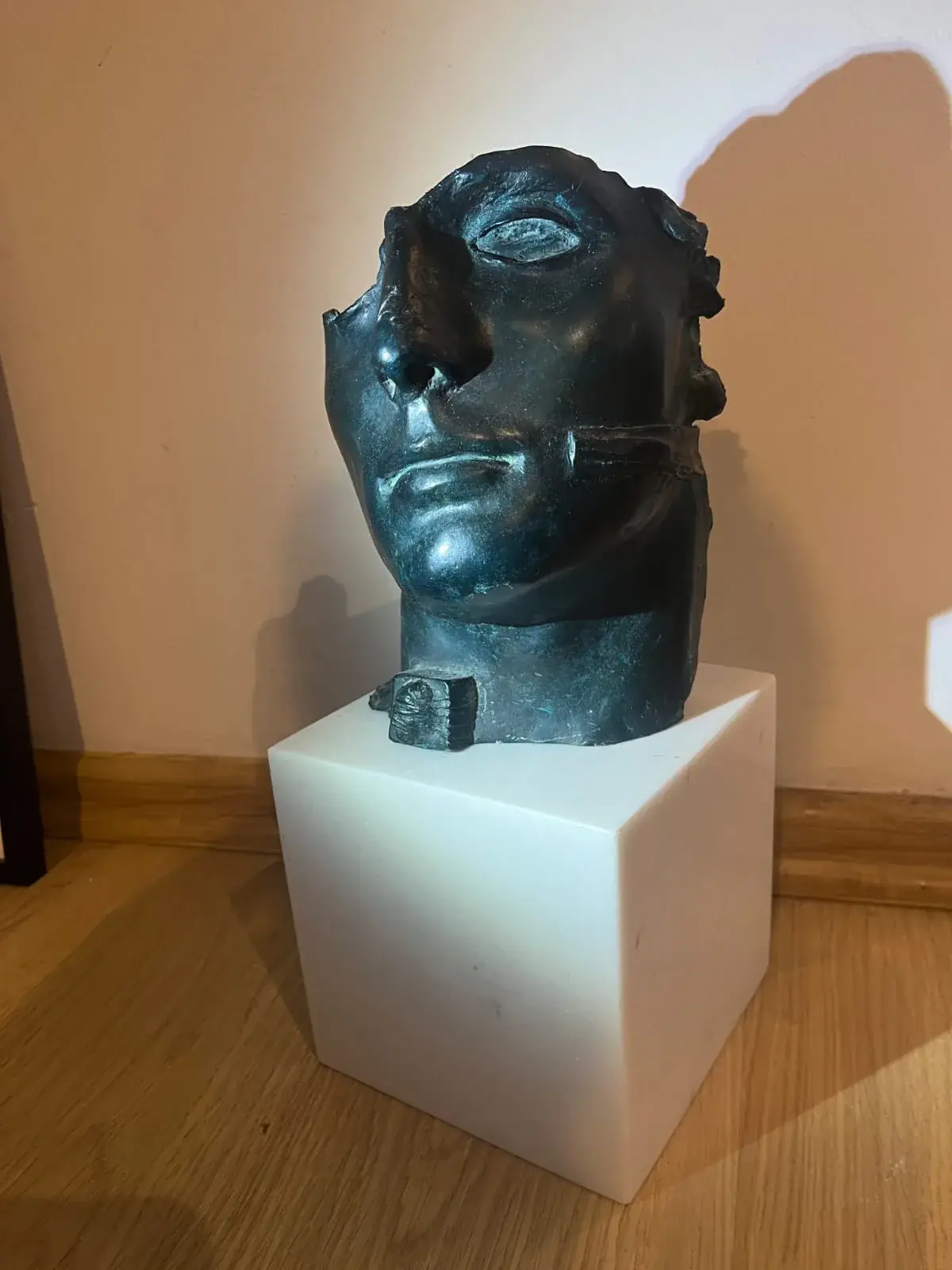
Large dark green-patinated Centurione I bronze head on a white marble cube base. The fragmented face tilted upward, characteristic of Mitoraj's centurion series. Ed. 250 · signed MITORAJ.

Dark copper-brown Kea bronze, 1979 — the two hands emerging from the fragmentary torso clearly visible, on the original round travertine base. Artcurial edition. Ed. 250 · signed Mitoraj.

Centurione II green-patinated bronze head, 1987 — the horizontal band across the face, Mitoraj's signature motif. Signed MITORAJ. Ed. 1500.

Centurione II green-patinated bronze head, second angle. Signed MITORAJ. Ed. 1500.

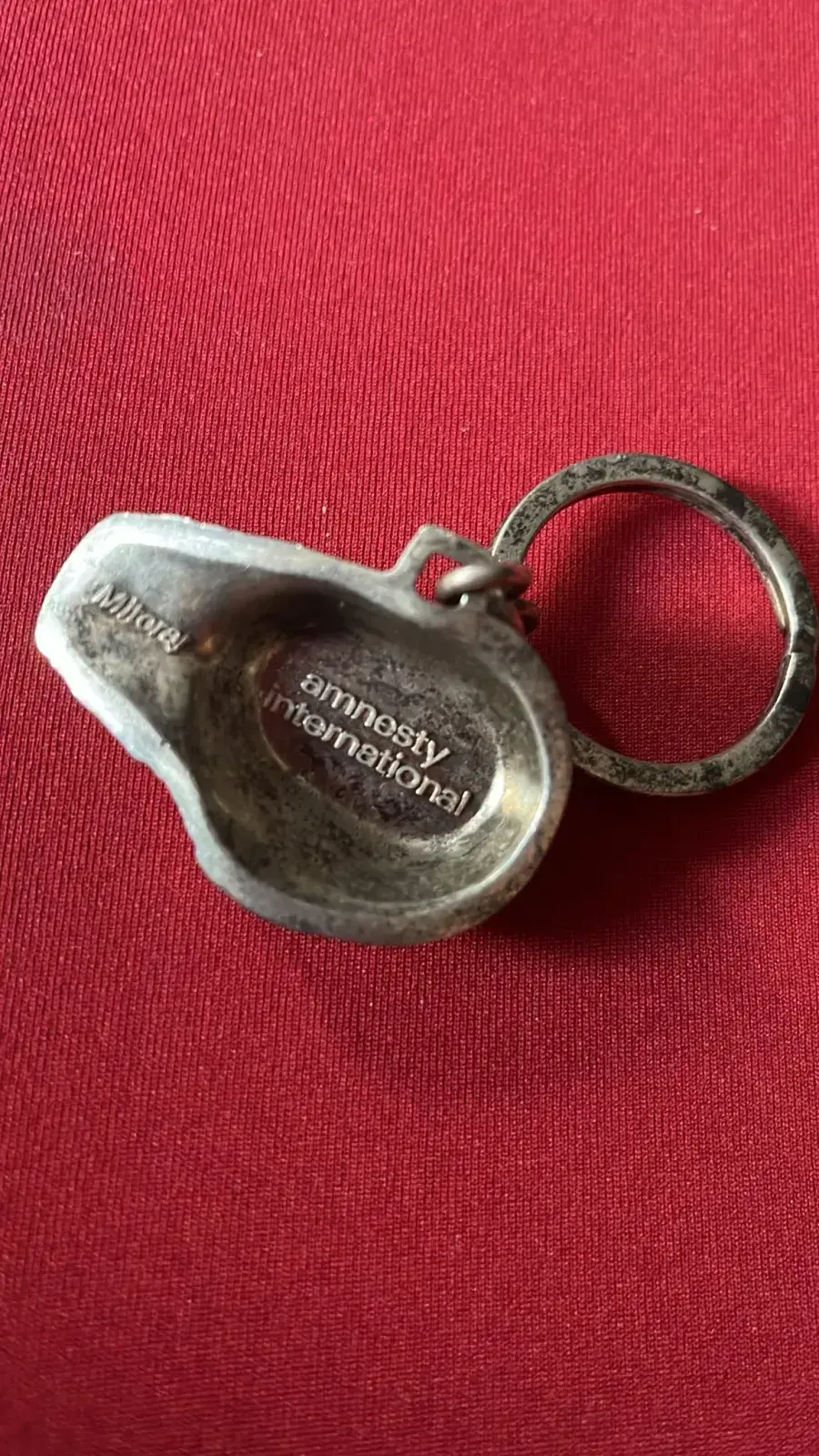
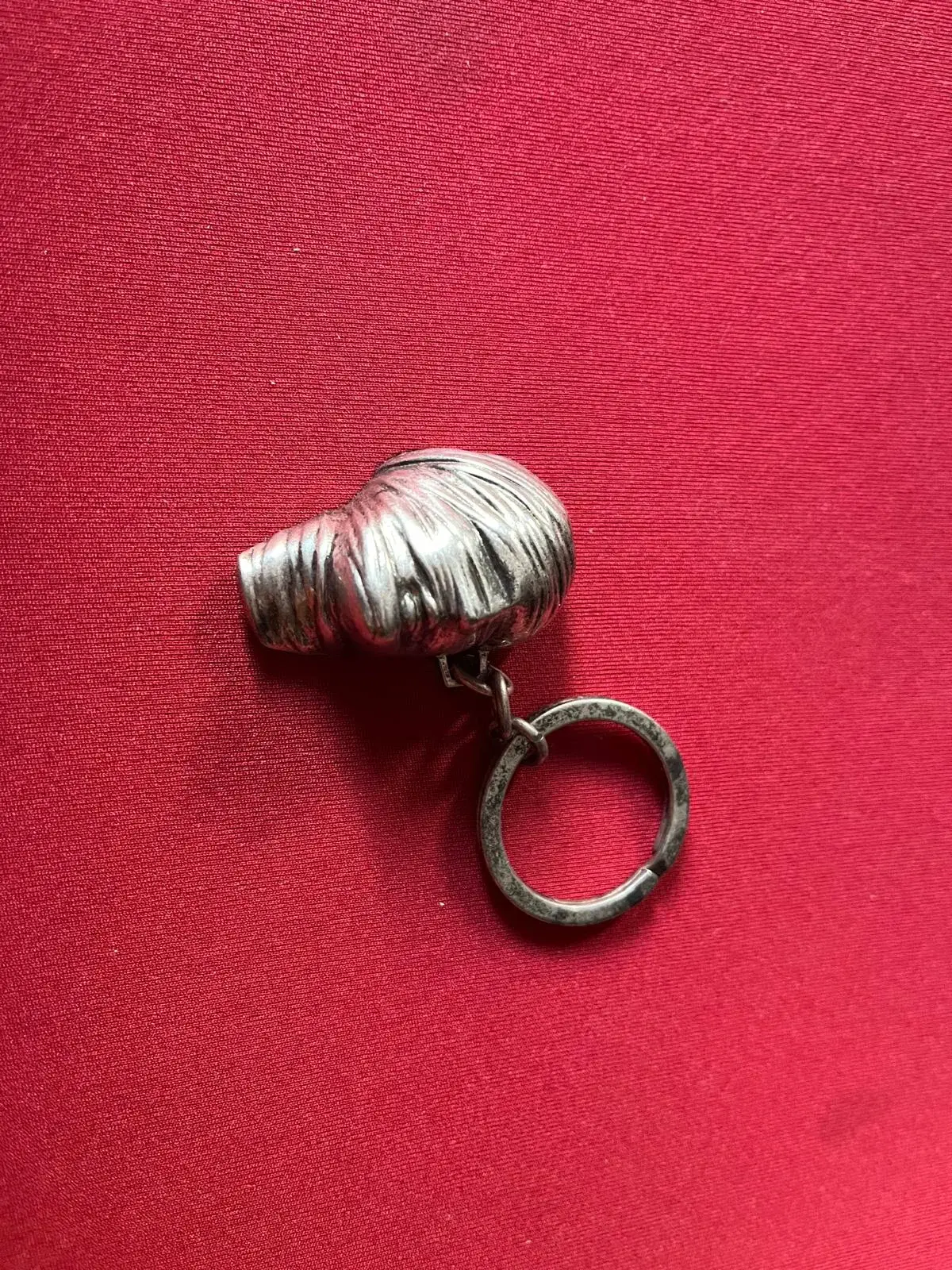
Silver keychain pendant — Testa Addormentata (Sleeping Head) created by Mitoraj for Amnesty International. Signed Mitoraj on the reverse with amnesty international inscription. A rare collectible piece.

Silver keychain pendant — Testa Addormentata (Sleeping Head) created by Mitoraj for Amnesty International. Signed Mitoraj on the reverse with amnesty international inscription. A rare collectible piece.

Bronze torso wrapped in crossed straps — Mitoraj's armour motif. Warm gold-brown patina, black marble base. Signed MITORAJ.

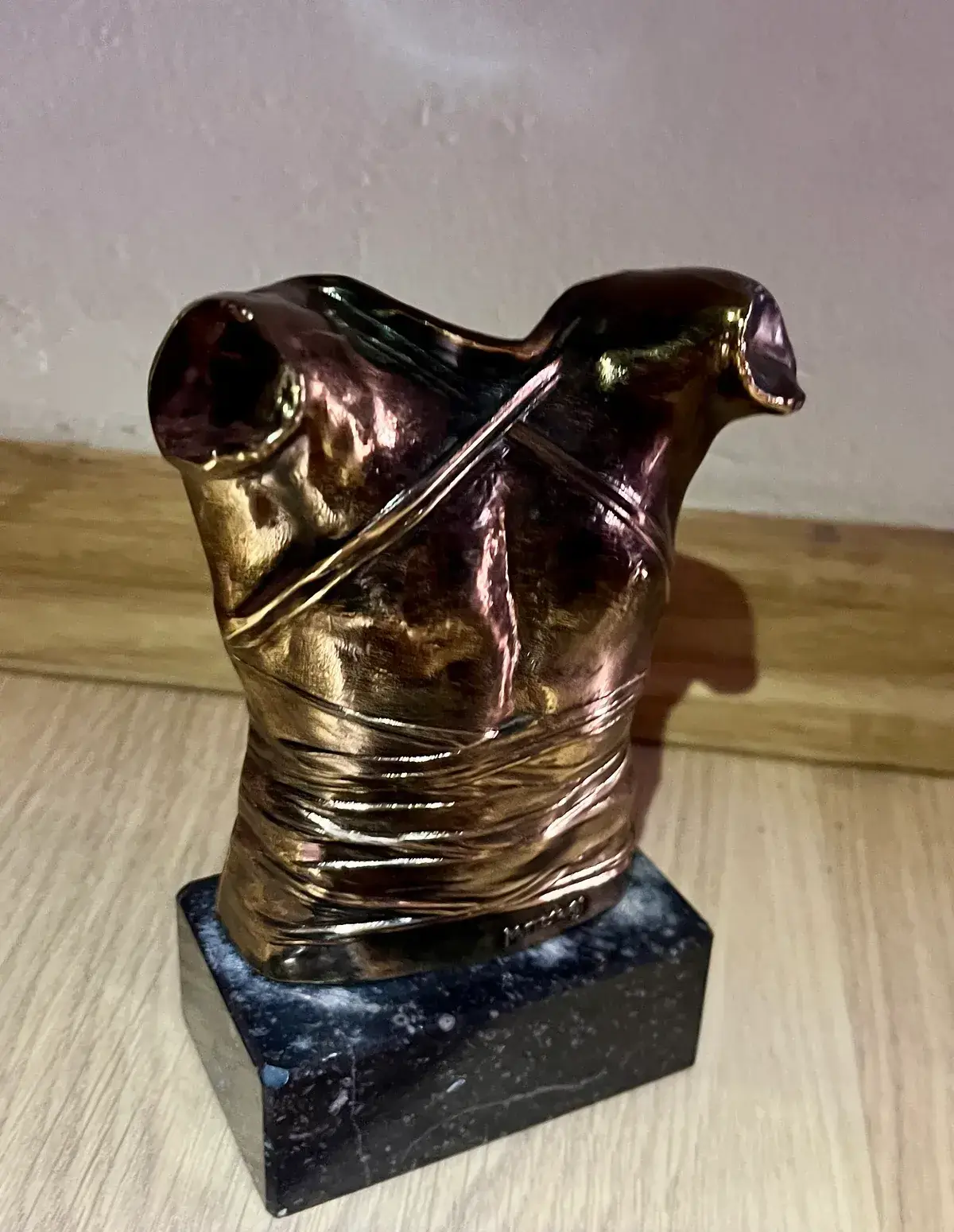
Side-front angle showing the diagonal strap crossing the chest. Warm gold patina. Signed MITORAJ on the base.

Right-side profile emphasising the sculptural silhouette and the rich copper-gold surface. Black marble base.

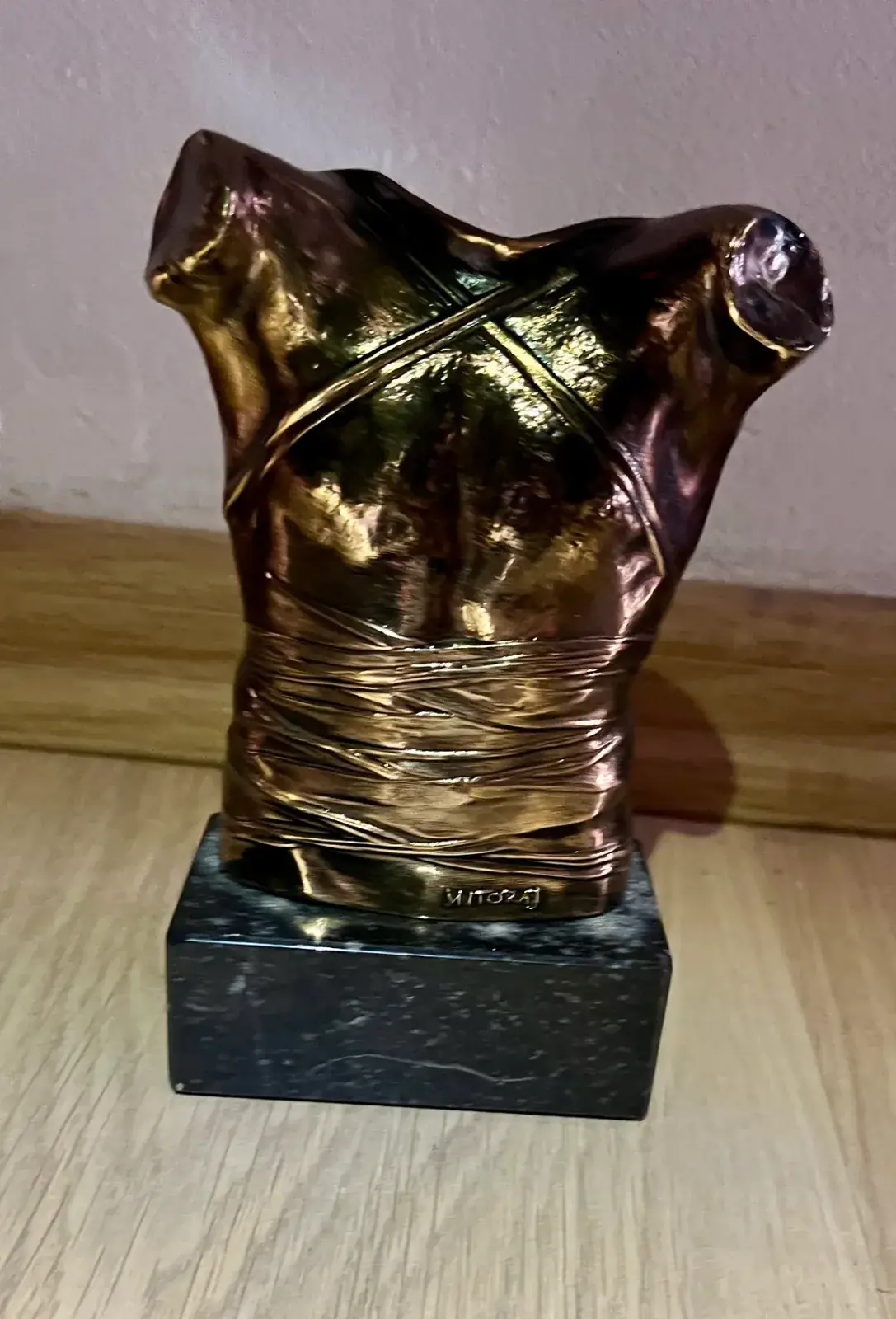
Front view showing the deeper dark-bronze tonality, with the crossed shoulder strap and collar detail defined.

Small collector bronze of Ikaria — Mitoraj's winged figure, symbol of desire and flight. Warm brown-gold patina. Signed MITORAJ.

Ikaria small edition from a different angle — the figure's outstretched form and dark patina base clearly visible.

Reverse of the Ikaria small bronze — showing the back of the figure and the dark square base with MITORAJ signature.
© mitoraj-search.com — photos free to use under CC BY 4.0: credit and link to this page required.
Research by Series
Izsoles nami nodrošina cenu pārredzamību, taču no pārdevējiem iekasē 10–18% komisiju no āmura cenas, pieprasa 4–12 nedēļas komisijas apstrādei un vēl 4–8 nedēļas maksājumam. Piemēram, par darbu, kas izsolē sasniedz 4 000 €, pārdevējs, kas maksā 30% komisiju, saņem tikai aptuveni 2 800 € — pēc četru līdz sešu mēnešu gaidīšanas. Tiešā pārdošana man nozīmē piedāvājumu tajā pašā dienā, maksājumu dažu dienu laikā un nulle komisijas.
Maksāju, pamatojoties uz pašreizējiem izsoles tirgus līmeņiem. Es nemeklēju lētas darījumus — es meklēju darbus nopietnas kolekcijas papildināšanai un maksāju atbilstoši. Katrs pieprasījums tiek apstrādāts ar pilnīgu diskrētumu: jūsu vārds, adrese un jebkāda informācija par darbu, ko kopīgojat, nekad netiek izpausta trešajām pusēm.
Vairāki faktori nosaka jebkura Mitoraja darba tirgus vērtību. Izdevuma lielums ir svarīgākais: Artcurial izdevums 8 eksemplāros (Prométhée) ir nesalīdzināmi retāks nekā izdevums 1500 (Centurione II). Mērogs ir ārkārtīgi svarīgs — 40 cm bronza ir trīs līdz četras reizes vērtīgāka nekā 20 cm tā paša motīva eksemplārs. Patīnas stāvoklis ir kritisks; pārmērīgi tīrītas vai restaurētas bronzas zaudē ievērojamu vērtību. Provenance — Atelier Mitoraj sertifikāts vai izsoles ieraksts — pievieno pārliecību, bet reti ir izšķirošs labi dokumentētiem izdevumiem. Oriģinālā bāze (travertīns, marmors vai koks atkarībā no darba) pievieno vērtību lielākajai daļai galda bronzu.
Es apskatīšu darbus jebkādā stāvoklī, ar sertifikātiem vai bez tiem, ar oriģinālajām bāzēm vai bez tām. Ja neesat pārliecināts par tā, ko jums pieder, autentiskumu, sniegšu jums godīgu novērtējumu — nav nekādu pārdošanas saistību.
Mitoraja tirgus ir ievērojami nostiprinājies kopš rekordizsolē Varšavā 2025. gadā, kurā Tindaro sasniedza 6,89 miljonus PLN (aptuveni 1,6 miljonus €) — augstāko cenu, kāda jebkad maksāta par Mitoraju Polijas izsolē. Šis rezultāts apstiprināja Polijas un starptautisko kolekciju kolekcionāru dziļo interesi par viņa darbu. Agrīnie Artcurial izdevumi (Tête Secrète, Kea, Prométhée) ir vieni no visvairāk pieprasītajiem sekundārajā tirgū.
Not sure if you want to sell? That's completely fine — just send a message and a photo if you have one. I reply to everyone personally, and there is absolutely no obligation.
Dzimis Vācijā no poļu mātes un franču tēva, Mitorajs studēja Krakovas Tēlotājmākslas akadēmijā pie Tadeusa Kantora, pirms nodibināja savu studiju Pietrasantā, Itālijā — starp tām pašām karjerām, kas apgādāja Mikelandželo.
Viņa fragmentētās figūras — sasietas, nogrieztas, mierīgas — smeltas no klasiskās senatnes, vienlaikus pilnīgi runājot par mūsdienu stāvokli. Viņa darbi atrodas Londonā, Parīzē, Pompējos un kolekcijās visā pasaulē.
Jūsu identitāte un jebkurš darbs paliek pilnīgi privāts. Neviena detaļa netiek koplietota ar trešajām pusēm.
Es sniedzu tiešus, godīgus piedāvājumus. Bez sarežģītiem vērtējumiem, bez spiediena — tikai godīga un vienkārša saruna.
Pēc vienošanās maksājums nonāk jūsu kontā 48 stundu laikā. Nav izsoles ciklu, nav galerijas komisijas.
Igors Mitorajs dzimis Ederānā, Vācijā, 1944. gadā poļu mātes un franču tēva ģimenē, uzaudzis Polijā netālu no Krakovas. Viņš studēja glezniecību pie Tadeusa Kantora Krakovas Tēlotājmākslas akadēmijā, pēc tam 1968. gadā pārcēlās uz Parīzi, lai studētu École Nationale Supérieure des Beaux-Arts. Viņa karjera kā skulptoram tika uzsākta ar solo izstādi Galerie La Hune Parīzē 1976. gadā — tajā pašā gadā viņš pirmo reizi apmeklēja Pietrasantu, mazo Toskānas pilsētiņu, kuras marmora karjeri un bronzas lietuves kļuva par viņa radošās pasaules centru nākamajās četrās desmitgadēs.
Viņa raksturīgais vārdu krājums — nogrieztie torsi, sasietas galvas, fragmentētas ekstremitātes, taisnstūrveida atveres cauri ķermenim — smēlās no klasiskās grieķu un romiešu skulptūras, vienlaikus runājot par mūsdienu stāvokli. Viņš teica: „Es jūtu, ka rokas vai kājas gabals runā daudz spēcīgāk nekā vesels ķermenis." Viņa publiskie pasūtījumi atrodas Pompejā, Londonā, Parīzē, Romā, Milānā, Varšavā, Krakovā, Bambergā, Sentluisā un visā Āzijā. Viņa darbi glabājas Britu muzejā, Hiršhornā, Losandželesu apgabala mākslas muzejā un nacionālajos muzejos Polijā un Itālijā.
Mitorajs nomira Parīzē 2014. gada 6. oktobrī un tika apglabāts Pietrasantā. Kopš viņa nāves viņa tirgus ir ievērojami nostiprinājies — ko veicina Polijas institucionālie kolekcionāri, itāļu galeriju mantojumi un 2025. gada Varšavas izsoles rekords 1,6 miljonu eiro apmērā par viņa monumentālo Tindaro. Ja jums pieder Igora Mitoraja darbs un jūs apsverat pārdošanu, sazinieties tieši ar kolekcionāru aiz šīs vietnes.
Oriģinālajām Mitoraj bronzām ir gravēts (nevis liets) paraksts — MITORAJ lielajiem burtiem vai igor mitoraj mazajiem burtiem agrīnajiem darbiem — kakla pamatnē vai apakšējā rumpī. Uz aizmugures ir izdevuma numurs n/kopā formātā. Pietrasantas lietuves zīmogi ir izplatīti. Atsūtiet man paraksta, izdevuma numura un kopējā darba fotoattēlu, un sniegšu jums godīgu vērtējumu bez maksas.
Value depends on the work, edition size, scale, condition, and current market. Vērtību nosaka darbs, izdevuma lielums, mērogs, stāvoklis un pašreizējais tirgus. Agrīnie Artcurial izdevumi (Tête Secrète, Kea, Prométhée) ir visvairāk pieprasītie. Atsūtiet fotoattēlu, un sniegšu godīgu vērtējumu.
Nē. Atelier Mitoraj sertifikāti no Pietrasantas ir vērtīgi, bet nav obligāti — paraksts, izdevuma numurs un lietuves zīmogs ir galvenie autentiskuma rādītāji. Daudzi oriģinālie darbi apgrozās bez sertifikātiem, īpaši tie, kas 1980. un 1990. gados tika pārdoti caur galerijām. Pērk darbus ar dokumentāciju un bez tās, un nepieciešamības gadījumā sniedz padomu par sertifikāta iegūšanu.
Atbildu uz katru ziņojumu personīgi, parasti dažu stundu laikā un vienmēr 24 stundu laikā. Nav automatizētas atbildes sistēmas — dzirdēsiet tieši no manis. Ja atsūtīsiet fotoattēlu, atbildē iekļaušu konkrētu jūsū darba vērtējumu.
Latvijā darbojas mākslas izsoles Rīgā. Dārgākiem darbiem piemērotas Christie's un Sotheby's Londonā vai Parīzē. Pārdevēja komisijas parasti ir 10–18 %. Tieša pārdošana privātam kolekcionāram caur mitoraj-search.com novērš šīs komisijas — atbilde 24 stundu laikā ar bezmaksas novērtējumu.
Tirāžas apjoms ir izšķirošs faktors: Artcurial bronzas ar 8 vnt. tirāžu (Prométhée, Kea, Tête Secrète) ir daudz vērtīgākas nekā darbi ar 1000+ tirāžu. Svarīgs ir arī mērogs — galda formāti no 1 500–3 000 €, monumentālās bronzas no 20 000–100 000 €+.
Collector Guides
Publiskās skulptūras Polijas galvaspilsētā
Wikimedia Commons, CC BY-SA 3.0 PL
Bronze · Zoliborz, ul. Wybrzeze Gdynskie 4
Monumentāls bronzas Ikārs stāv Olimpiskā centra priekšā — bez rokām, trūkst viena spārna. Mitoraja meditācija par cilvēka trauslumu un augstprātības mītu.
Viens no visvairāk pieprasītajiem Mitoraja monumentālā bronzas perioda piemēriem.
Wikimedia Commons, CC BY-SA
22 bronzes · Skwer Hoovera
Āra izstāde ar 22 skulptūrām, ieskaitot Romas Santa Maria degli Angeli bazilikas bronzas durvju veidnes, uzstādītas nedēļas pirms Eņģeļu durvju atklāšanas.
Šīs pagaidu izstādes dokumentācija ir reta un vērtīga kolekcionāriem.
✦
Nav pieejamas publiskā domēna fotogrāfijas
Bronza · ul. Swietojanska 10, Vecpilsēta
Četrus metrus augstas bronzas durvis, kas attēlo Pasludināšanu, radītas Žēlsirdīgās Jaunavas Marijas svētnīcas 400. gadadienai. Divi eņģeļi bez spārniem flankē Marijas figūru.
Unikāls sakrāls pasūtījums, pastāvīgi uzstādīts vēsturiskajā Varšavā.
✦
Nav pieejamas publiskā domēna fotogrāfijas
Bronza, 5 metri · ul. Bobrowiecka 6, Mokotow
Piecus metrus augsts vīriešu torss, liets no Mitoraja pirmās nopelnitās naudas — viņa cieņas apliecinājums Toskānai. Krūtis ir caurvērta ar tukšumu; iekšā sievietes seja raugās uz āru. Trešais un pēdējais liejums; pārējie atrodas Parīzē un Milānā.
Personīgi atklāts Mitoraja 2009. gadā. Tā privātā atrašanās vieta padara šo periodu īpaši meklētu.
Ja jums pieder Mitoraja darbs — sazinieties ar mums.
Private collector · Warsaw, Poland · Seeking works by Igor Mitoraj worldwide
Igor Mitoraj Bronze Sculptures Mitoraj Lithographs & Drawings Eiropas karte | Visas pilsētas | London | Rome | Pompeii | Pietrasanta | Paris | Kraków | Mitoraj in Poland & Warsaw Mitoraj Auction Prices
Keywords: Igor Mitoraj sculpture wanted · buy Mitoraj bronze · sell Mitoraj Poland · Mitoraj kolekcjoner Warszawa · Mitoraj Pietrasanta · Mitoraj Asclépios · Mitoraj Tindaro · Mitoraj Eros Bendato · Mitoraj auction · Mitoraj private sale